If you build it — bike infrastructure, bus lanes, and sidewalks, that is — they will come.


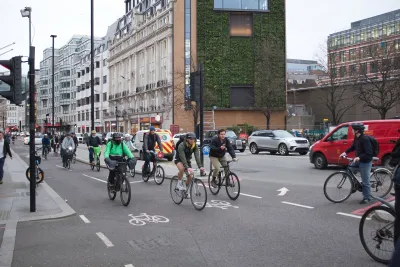
‘Induced demand’ is a common trope among planners, usually signifying the futility of building more vehicle lanes in an effort to reduce congestion. “If you build it, they will come,” lament multimodal transportation advocates.
But the same concept works both ways, writes Kea Wilson in Streetsblog USA. Building multimodal infrastructure, according to a new U.K. study, will also induce demand for biking, walking, and public transit.
In what may be a global first, a team of researchers at the University of Cambridge in the United Kingdom finally put hard, country-wide data behind the intuitive idea that building multimodal infrastructure like bike lanes and rail lines will — surprise! — get more people biking, taking transit, and leaving their cars at home, at least in their home country.
The research helps counter arguments that new bike lanes, bus lanes, and pedestrian infrastructure won’t be used once built. However, induced demand due to infrastructure is just one of several factors that influence mode choice. “When a driver takes a newly built highway lane, after all, that decision isn't just motivated by a desire for a slightly faster commute on some fresh asphalt — which that driver herself quickly undermines as she and all the other drivers quickly form a traffic jam. It's also fueled by public attitudes that stigmatize and even criminalize other ways of getting around, subsidies that make motoring artificially cheap, and a raft of non-infrastructural policies that make taking another modes inconvenient, dangerous, or outright impossible.”
FULL STORY: Confirmed: Non-Driving Infrastructure Creates ‘Induced Demand,’ Too


California Governor Signs Complete Streets Bill Into Law
The state’s transportation agency will be required to prioritize multimodal transportation infrastructure and improve transparency.
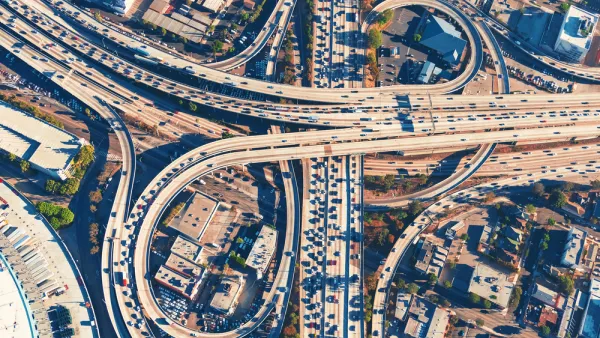
L.A. Times: California Must Shift Transportation Spending Priorities
Despite its ambitious emissions reduction goals, California continues to spend a majority of transportation funds on car-centric infrastructure.
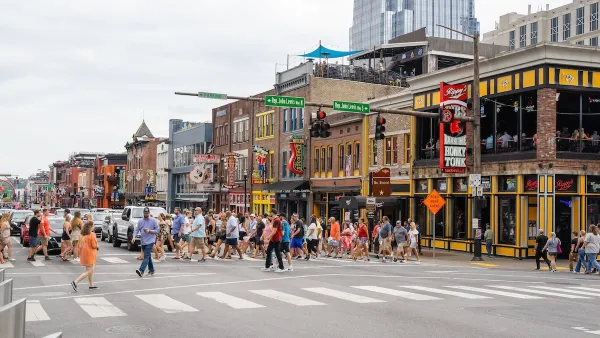
The Best Complete Streets Policies in the US, Ranked
San Antonio and Nashville top the list, with most large cities not making an appearance in the top 40.

The state-sanctioned urbicide of Austin
People don’t kill cities. Freeways do.

US to reduce Colorado River water deliveries to Mexico
A new Colorado Treaty amendment reduces Mexico’s Colorado River water allocation by 250,000 acre feet.

New Jersey’s second-largest city bans standalone data centers
Jersey City will continue to allow co-location facilities, such as those meant for research institutions that store their own data.

Amtrak not solely to blame for New Jersey commuter rail's unreliability, report finds
A new study from the Garden State Initiative found that NJ Transit’s budget grew 20% across a 4 year period, but reliability declined significantly over the same period.

EPA erases limits on planet-warming pollution from power plants
Under Monday’s plan, power plants would still have some limits on how much mercury, arsenic and other contaminants they can emit.

Phoenix announces new on-demand transit service, more frequent RAPID buses
Both new services will launch in October, and are part of Phoenix's Project Effective Access Solutions for Easing Congestion.

FREE Course: Walkable City 1: Why Walkability?
After describing his path towards focusing on walkability as the essence of good planning, Jeff Speck marches through his five principal reasons for making more walkable places.
Reinventing Malls: Planning Alchemy—Turning Gray Fields Into Gold
The course focuses on the opportunities and imperatives that shape reinvention of mall sites.

Eagle County Government
Harvard University Graduate School of Design
Nashville Planning Department
The Architects Foundation
University of Cincinnati Online
The Pocatello Development Authority
The Urban Renewal Agency of the City of Pocatello
Journal of the American Planning Association