The complete network would put a paved bike trail within one mile of 95% of Utah residents.


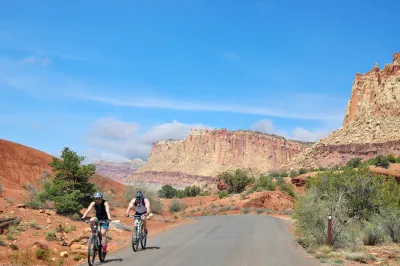
The Utah Department of Transportation announced a plan to build out a 3,100-mile bike trail network that would put a paved bike lane within one mile of 95 percent of the state’s residents, reports Graham Fee in Bike Mag.
According to the state, 500 miles of the paved network are already complete. “The plan includes a dedicated funding stream of up to $45 million per year pulled from six different tax sources — a sign the state is serious about giving bikes the same planning priority as cars.”
With the network complete, “Urban riders could pedal from Salt Lake City or Ogden to foothill trailheads with far less friction. Families could reach green-belt loops without worrying about road crossings. And visitors could land at the airport, hop on a bike, and ride straight into some of the most iconic mountain landscapes in the West.”
While obstacles remain, “for spots that are often bottlenecked by parking lots and non-driving access, a bike-first transportation grid feels like the beginning of a cultural shift and a solid move for a state that could benefit greatly from infrastructure like this.”
Read the full story: Utah’s 3,100-Mile Bike “Interstate” Could Revolutionize Riding Across the State
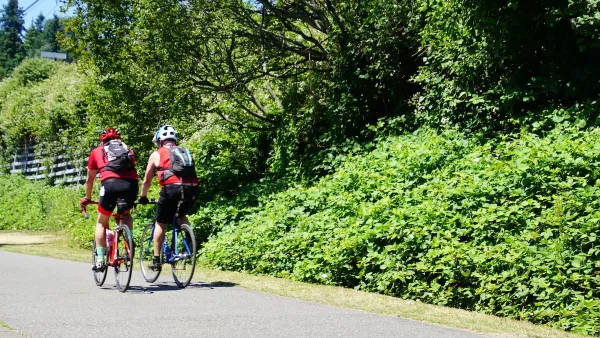
Washington State Plans Ambitious ‘Cycle Highway’ Network
The state is directing funding to close gaps in its existing bike network and make long-distance trips more accessible.
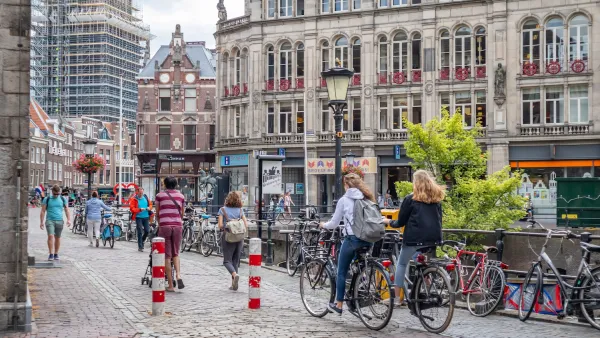
2025's 30 Most Bike-friendly Cities
Copenhagenize has released its list of top cities for cyclists. Spoiler alert: the United States doesn’t make the list.
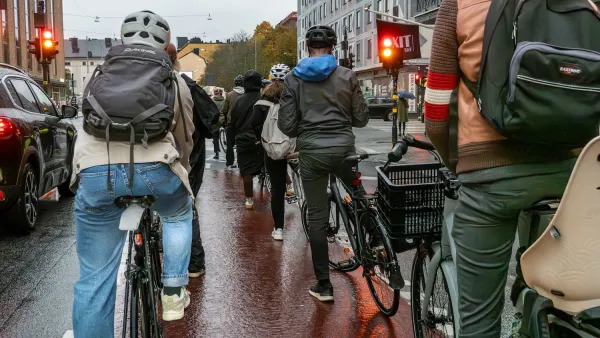
Cyclists may be Right to run Stop Signs and Red Lights. Here’s why
One researcher argues that the Idaho stop might not be such a bad idea after all.

Planetizen Federal Action Tracker
A weekly monitor of how Trump’s orders and actions are impacting planners and planning in America.

California plans to bury El Niño’s downpour
If the state plays its cards right, it may be able to store a billion acre-feet of El Niño’s water in aquifers.

Desperate measures: Advocates weigh draining Lake Powell to fill Colorado River
Draining the reservoir could reduce evaporation losses by a couple hundred thousand acre-feet.

In Texas, data centers are swallowing promised parkland
Residents who moved to Taylor, Texas for a rural community now have to contend with three data centers in their backyard.

How a Chicago-sized wind farm beat the odds and powered on
The project spanned five presidential administrations and a standoff with a U.S. military base.

MTA gives itself 30 days to transform pit into basketball court
The site has been under construction since 2022; the city originally estimated it would finish the court in 2024.

FREE Course: Walkable City 1: Why Walkability?
After describing his path towards focusing on walkability as the essence of good planning, Jeff Speck marches through his five principal reasons for making more walkable places.
Reinventing Malls: Planning Alchemy—Turning Gray Fields Into Gold
The course focuses on the opportunities and imperatives that shape reinvention of mall sites.

City of Rosemead
Rutgers University, Edward J. Bloustein School of Planning and Public Policy
One Hundred Miles
Hunter College, City University of New York (CUNY)
The Architects Foundation
University of Cincinnati Online
City of Cambridge
Montrose County
The Pocatello Development Authority