One researcher argues that the Idaho stop might not be such a bad idea after all.


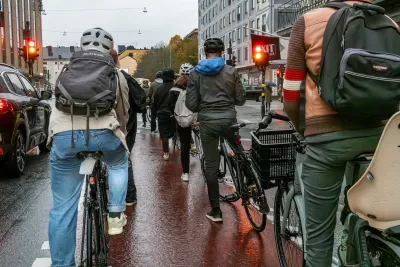
Interactions between different users on roads are often a source of frustration, the most prominent being those between motorists and cyclists.
For example, many motorists are frustrated when they see bicycles cross an intersection without coming to a complete stop, which drivers are required to do.
Many motorists consider this behaviour a sign of cyclists’ lack of discipline or even a double standard. In fact, cyclists don’t seem to run any real risk just slowing down at stop signs instead of making a complete stop.
By comparison, motorists risk a hefty fine for dangerous driving if they run a stop sign.
So should cyclists be required to follow the same traffic rules as motorists, or should we recognize that these rules do not always reflect the reality of cycling in a city?
As a professor of law at the University of Ottawa who specializes in urban law issues, I have studied various regulatory approaches that have been adopted around the world, each with different advantages and disadvantages.
Strict equality between cyclists and drivers
In Québec, as in many other jurisdictions, traffic laws apply to all users, whether they are motorists or cyclists.
For example, all users must come to a complete stop at stop signs and red lights. If cyclists break these rules, they have the “same rights and duties as a driver of a vehicle,” in the words of the Supreme Court of Canada.
In other words, regardless of the differences between a car and a bicycle, the law treats them equally. Of course, this equality often remains theoretical, as the application of the rules can vary depending on context and behaviour.
Deceptive equality
The uniform application of traffic rules may seem fair, but in reality, it can create a false sense of equality.
On the one hand, the risks associated with different modes of transport are incommensurate. A car that runs a red light can cause serious or even fatal injuries. A cyclist, on the other hand, is unlikely to cause the same degree of damage.

Furthermore, the efficiency of cycling depends on maintaining speed. Having to stop completely over and over discourages people from cycling, despite its many benefits for health, the environment and traffic flow.
Treating two such different modes of transport the same way, therefore, amounts to implicitly favouring cars, something akin to imposing the same speed limit on pedestrians and trucks.
The Idaho stop rule
Rather than treating bicycles and cars as equals, some jurisdictions have opted for a different approach. The state of Idaho is one good example.
Since 1982, cyclists in Idaho have been able to treat a stop sign as a yield sign and a red light as a stop sign. Several American states (such as Arkansas, Colorado, and Oregon) and countries, such as France and Belgium, have adopted similar regulations.
In Québec and other parts of Canada, discussions are underway to adopt such regulations.
It’s important to note that the goal of the Idaho stop rule is not to legalize chaos on the roads. Cyclists must still yield to cars ahead of them at stop signs, as well as to pedestrians at all times, and may only enter the intersection when it is clear.

The Idaho stop has three main advantages.
First, the rule recognizes that the dynamics of cycling are fundamentally different than those of driving, and therefore cannot be treated equally.
Second, the Idaho stop rule takes the burden of issuing fines off the courts and police.
Third, the efficiency of cycling depends on maintaining momentum. Coming to a complete stop over and over again discourages cycling, despite its many benefits for health, the environment and traffic flow.
The effects of the reform
Faced with these two very different approaches for bicycles, one may wonder which is the most appropriate.
Several empirical studies show that adopting the Idaho stop rule does not lead to an increase in road collisions.
Some studies even suggest a modest decrease in collisions with the Idaho stop regulation. This is because cyclists clear intersections more quickly, reducing their exposure to cars. In addition, motorists become more attentive to cyclists’ movements.

In fact, the majority of road users, both motorists and cyclists, often do not strictly obey stop signs. According to a study conducted by the Société de l'assurance automobile du Québec (SAAQ), only 35 per cent of motorists stop correctly. Also according to the SAAQ, only 27 per cent of cyclists report coming to a complete stop at mandatory stop signs.
In short, adopting the Idaho stop rule would not create chaos, but would regulate an already common practice without compromising public safety, contrary to some concerns. Cyclists who rarely come to a complete stop when there is no traffic generally slow down before crossing because they are aware of their vulnerability.
A cultural shift
Furthermore, the question of introducing the Idaho stop rule in Québec invites broader reflection.
For decades, our laws and road infrastructure have been designed primarily for cars. Many motorists still consider cyclists to be dangerous and engage in reckless behaviour.
However, it’s important to remember that cars are the main structural hazard on our roads and that cyclists are in fact vulnerable. This structural danger has increased with the growth of sports utility vehicles (SUVs) and pick-up trucks, which increases the risks for pedestrians and cyclists.
Adopting the Idaho stop rule would not give cyclists a free pass, but it would recognize their realities and legitimize cycling as a mode of transport, with traffic regulations adapted to its risks and benefits. This modest but symbolic reform could be part of a broader set of changes that would offer citizens true freedom and safety when travelling.
This article was originally published in The Conversation.


Research Affirms Safety of ‘Idaho Stop’
Allowing cyclists to treat stop signs as yield signs does not negatively impact safety and can help people on bikes more effectively navigate roadways.
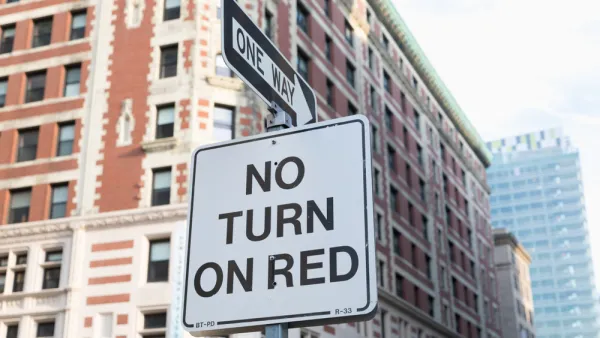
D.C. Could Legalize ‘Idaho Stop,’ Ban Right Turns on Red
Proposed legislation would allow cyclists to treat stop signs as yield signs and eliminate right turns on red in an effort to reduce cyclist and pedestrian fatalities.
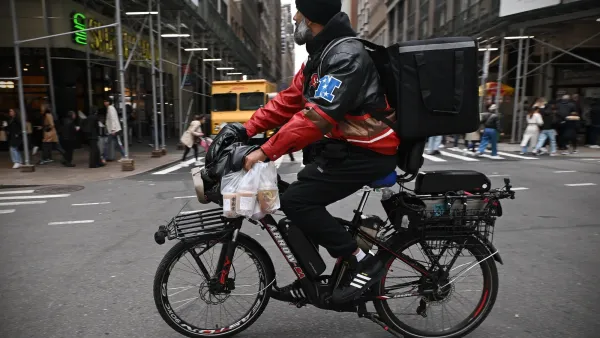
Study: Delivery Workers Are the Safest Cyclists on NYC Roads
A new study shows that delivery workers are more likely to stop at red lights and obey traffic rules than recreational or commuter riders.

The state-sanctioned urbicide of Austin
People don’t kill cities. Freeways do.

US to reduce Colorado River water deliveries to Mexico
A new Colorado Treaty amendment reduces Mexico’s Colorado River water allocation by 250,000 acre feet.

New Jersey’s second-largest city bans standalone data centers
Jersey City will continue to allow co-location facilities, such as those meant for research institutions that store their own data.

Amtrak not solely to blame for New Jersey commuter rail's unreliability, report finds
A new study from the Garden State Initiative found that NJ Transit’s budget grew 20% across a 4 year period, but reliability declined significantly over the same period.

EPA erases limits on planet-warming pollution from power plants
Under Monday’s plan, power plants would still have some limits on how much mercury, arsenic and other contaminants they can emit.

Phoenix announces new on-demand transit service, more frequent RAPID buses
Both new services will launch in October, and are part of Phoenix's Project Effective Access Solutions for Easing Congestion.

FREE Course: Walkable City 1: Why Walkability?
After describing his path towards focusing on walkability as the essence of good planning, Jeff Speck marches through his five principal reasons for making more walkable places.
Reinventing Malls: Planning Alchemy—Turning Gray Fields Into Gold
The course focuses on the opportunities and imperatives that shape reinvention of mall sites.

Eagle County Government
Harvard University Graduate School of Design
Nashville Planning Department
The Architects Foundation
University of Cincinnati Online
The Pocatello Development Authority
The Urban Renewal Agency of the City of Pocatello
Journal of the American Planning Association

