Strong Towns’ Charles Marohn argues that planning for ‘commerce’ perpetuates an unsustainable, car-centric development model.


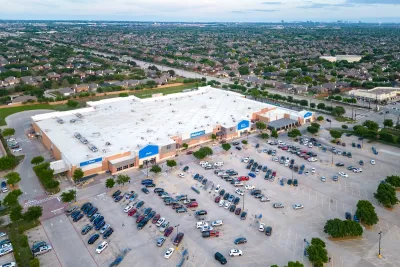
In the fourth of a series examining a major transportation project in Minnesota, Charles Marohn of Strong Towns outlines how the “buttonhook” project in Baxter, Minnesota is a stark example of how transportation planning is often bent to the will of commerce, not traffic safety or congestion.
According to Marohn, the Minnesota Department of Transportation is painting the project as an economic development tool — by which they mean it will direct traffic easily and swiftly to the big-box stores surrounding the cluster of new roundabouts. The project is funded by a program called Corridors of Commerce, which, in Marohn’s view, defines economic development as easing freight movement and expanding capacity.
Not resilient local businesses. Not entrepreneurship. Not neighborhoods where wealth circulates and grows over time. Instead: faster trucks, highway access for chain stores, and more square footage of disposable development.
To prove his point, Marohn digs into property tax data to understand whether the buttonhook will actually bring in more revenue than other options. “The state of Minnesota, through the Corridors of Commerce program, is spending $58 million to prop up $40.8 million of gas stations, strip malls, and big-box stores.” Essentially, Marohn finds that “The buttonhook isn’t an investment. It’s a life preserver. The only reason these properties in Baxter have any value at all is because the state built a highway to serve them.”
Marohn concludes that it’s time for a new development paradigm. “We don’t need another $2 billion poured into fragile highway strips that can’t even pay their own bills. If we’re serious about commerce, let’s invest where the returns are real.”
FULL STORY: The Absurdity of Highway Spending as Economic Development

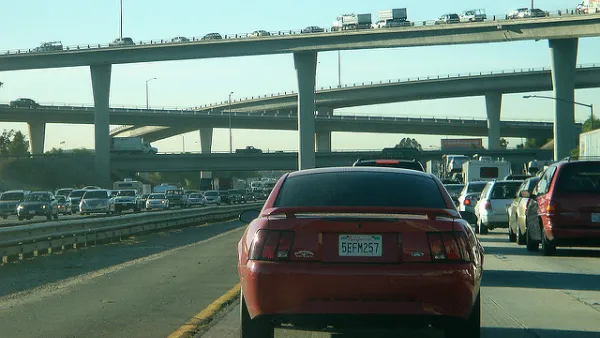
If You Build It, Cars Will Come: the Common-Sense Logic of 'Induced Demand'
Highway expansion has been shown, time and again, to increase traffic and congestion. Cities are finally getting the message.
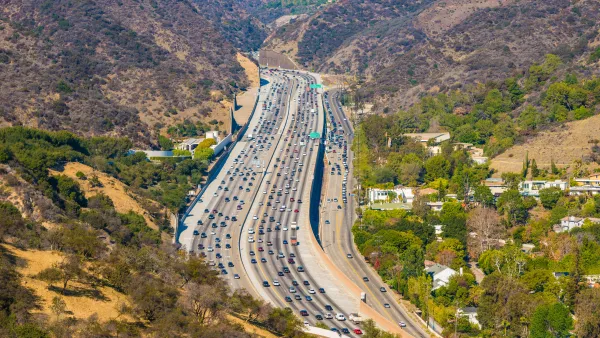
Congestion Pricing Could Be Coming to L.A.
The infamously car-centric city is weighing a proposed congestion pricing pilot program to reduce traffic and encourage public transit use.
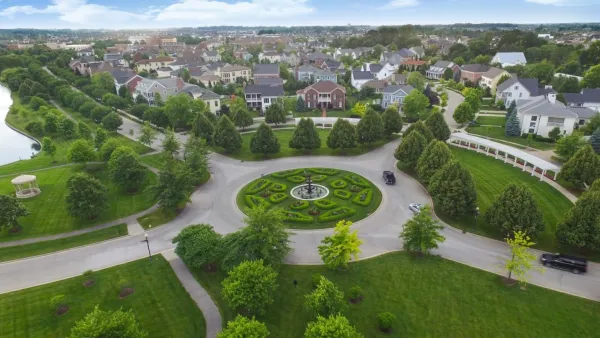
America's 'roundabout city' is in … Indiana?
Carmel, Indiana has built over 150 roundabouts as part of a broader mobility and development strategy.

Planetizen Federal Action Tracker
A weekly monitor of how Trump’s orders and actions are impacting planners and planning in America.

The state-sanctioned urbicide of Austin
People don’t kill cities. Freeways do.

US to reduce Colorado River water deliveries to Mexico
A new Colorado Treaty amendment reduces Mexico’s Colorado River water allocation by 250,000 acre feet.

5 New England states march closer to 800 megawatt wind energy project
Securing federal approval for the project may be complicated under the Trump administration, which has historically been hostile towards domestic wind power.

Baltimore to break ground on $50 million Transit Priority Project
The project will bring faster bus trips, safer streets and better bike connections to Baltimore.

Airbnb launches $250 million 'last-dollar financing' housing accelerator, makes first investment in Austin
The company will put $6.4 million towards affordable housing development in Texas’ capital.

FREE Course: Walkable City 1: Why Walkability?
After describing his path towards focusing on walkability as the essence of good planning, Jeff Speck marches through his five principal reasons for making more walkable places.
Reinventing Malls: Planning Alchemy—Turning Gray Fields Into Gold
The course focuses on the opportunities and imperatives that shape reinvention of mall sites.

Eagle County Government
Harvard University Graduate School of Design
Nashville Planning Department
The Architects Foundation
University of Cincinnati Online
The Pocatello Development Authority
The Urban Renewal Agency of the City of Pocatello
Journal of the American Planning Association