Irvine is deploying robots to assess accessibility issues on its sidewalks and trails network.



The city of Irvine, California is deploying robots to assess its sidewalk and trail network and identify accessibility issues, reports Hanna Kang in The Orange County Register.
According to Kang, “Since late August, the city has been deploying the sensor-equipped robots, developed by Oregon-based Daxbot, to scan for cracks, slopes and other barriers. Their measurements will feed into Irvine’s ADA self-evaluation program, a review officials say will help shape future upgrades.”
The automated process is up to five times faster than traditional data collection methods. “The robots are scanning for a variety of details that affect accessibility. That includes level changes that could be tripping hazards, slopes, pathway widths, low clearances, and obstructions. For curb ramps, they measure slope, length, width, landing space and whether detectable warning surfaces are in place.”
The program costs roughly $600,000, which city officials say is more cost-effective than a traditional inspection.
Read the full story: Irvine deploys robots to scout sidewalks for accessibility issues
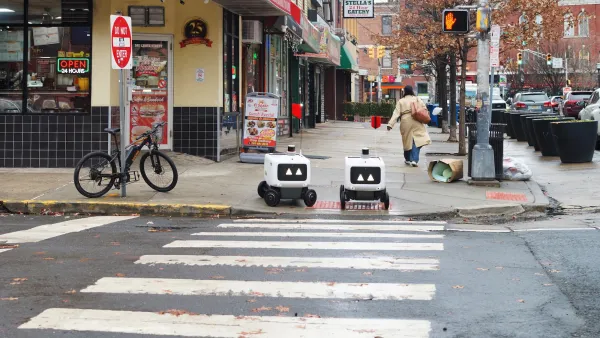
A robot army is assessing accessibility and mobility on Hoboken's streets
The city is deploying robotic scanners to identify gaps in the city's sidewalks, curb cuts and other mobility infrastructure.
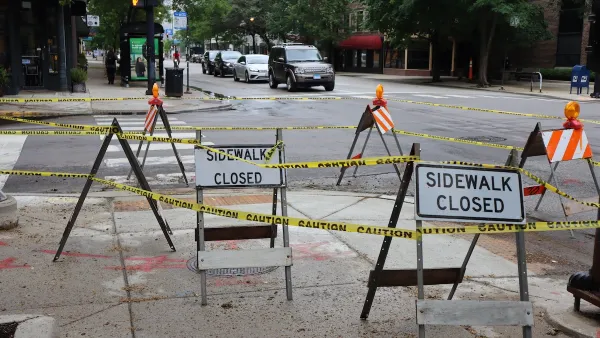
Chicago Residents Sue City Over Inaccessible Sidewalks
The suit alleges the city has failed to create a “coordinated, proactive system” for complying with ADA and ensuring accessibility on the city’s sidewalks and crosswalks.
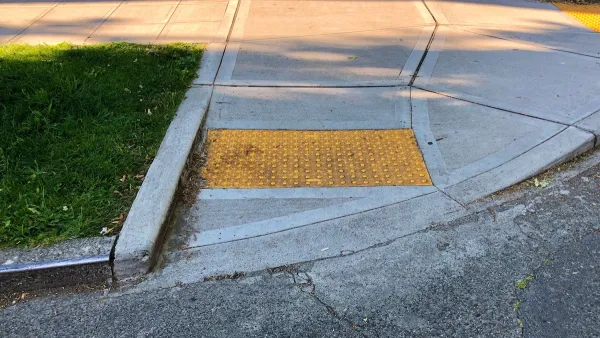
Baltimore Ordered to Improve Sidewalk Accessibility
The city is one of many to face lawsuits for failing to comply with the Americans with Disabilities Act.

Planetizen Federal Action Tracker
A weekly monitor of how Trump’s orders and actions are impacting planners and planning in America.

California plans to bury El Niño’s downpour
If the state plays its cards right, it may be able to store a billion acre-feet of El Niño’s water in aquifers.

Desperate measures: Advocates weigh draining Lake Powell to fill Colorado River
Draining the reservoir could reduce evaporation losses by a couple hundred thousand acre-feet.

Chicago voters approve permanent festival grounds, penalty for vacant property owners
Currently, major summer and fall festivals take over public parks for weeks at a time, drawing criticism from nearby residents

NYC votes to cut outdoor dining red tape, speed up permitting
New York City also voted to allow the Department of Transportation to begin work on urgent projects before notifying elected officials.

California appears to reject Prop. 45
The proposition would have expanded the projects that qualify for a streamlined environmental review, effectively paring down the California Environmental Quality Act.

FREE Course: Walkable City 1: Why Walkability?
After describing his path towards focusing on walkability as the essence of good planning, Jeff Speck marches through his five principal reasons for making more walkable places.
Reinventing Malls: Planning Alchemy—Turning Gray Fields Into Gold
The course focuses on the opportunities and imperatives that shape reinvention of mall sites.

City of Rosemead
Rutgers University, Edward J. Bloustein School of Planning and Public Policy
One Hundred Miles
Hunter College, City University of New York (CUNY)
The Architects Foundation
University of Cincinnati Online
City of Cambridge
Montrose County
The Pocatello Development Authority