Bus boardings fell for a second month amid fears of immigration raids.


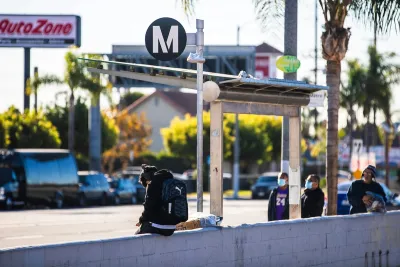
Los Angeles bus ridership is down slightly from June, when it dropped sharply due to widespread fears over immigration raid, reports Colleen Shalby in the Los Angeles Times. Latinos make up over 60 percent of Metro bus riders.
In July, Metro bus ridership dropped by close to 2 percent after declining by 13.5 percent in June. Meanwhile, rail ridership went up by 6.5 percent. “While it’s possible that concerns over safety have persisted as immigration raids continued to play out in the Los Angeles region, a drop in bus ridership from June to July in years past has not been uncommon, according to Metro data.”
June’s ridership was the lowest for a June since 2022, before ridership began recovering after the pandemic, prompting concerns about the agency’s health. “Metro, which recently approved a $9.4 billion budget, faces a deficit of more than $2.3 billion through 2030.”
FULL STORY: Metro bus ridership continues to dip. Are fears over ICE raids partly to blame?

Metro Data: LA Transit Ridership Fell Due to Immigration Raids
Metro ridership data reveal how the ICE raids sweeping Los Angeles are disrupting daily life and impacting how people move around the city.
LA Transit Ridership Plummets Amidst ICE Raids
LA Metro’s bus and rail lines are seeing up to 15 percent lower ridership in the wake of violent immigration arrests.
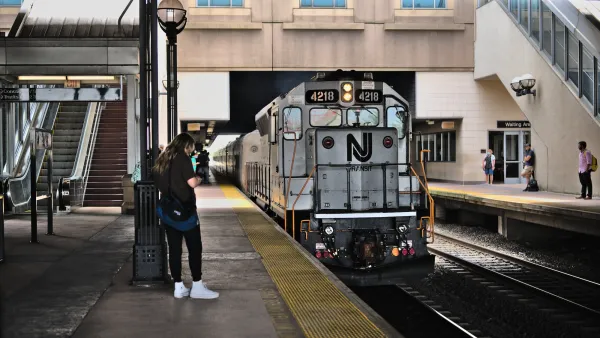
New Jersey AG Says Governor Can’t Bar ICE From Transit
An executive order prohibits ICE from using state-owned property, but the AG says it doesn’t apply to public spaces like train stations.

Planetizen Federal Action Tracker
A weekly monitor of how Trump’s orders and actions are impacting planners and planning in America.

The state-sanctioned urbicide of Austin
People don’t kill cities. Freeways do.

US to reduce Colorado River water deliveries to Mexico
A new Colorado Treaty amendment reduces Mexico’s Colorado River water allocation by 250,000 acre feet.

Mamdani overhauls NYC's Vision Zero plan with 100 new policy goals
The overhaul aims to reduce traffic deaths and make streets safer for pedestrians, cyclists and drivers through lower speed limits, new safety infrastructure and more.

Amtrak not solely to blame for New Jersey commuter rail's unreliability, report finds
A new study from the Garden State Initiative found that NJ Transit’s budget grew 20% across a 4 year period, but reliability declined significantly over the same period.

EPA erases limits on planet-warming pollution from power plants
Under Monday’s plan, power plants would still have some limits on how much mercury, arsenic and other contaminants they can emit.

FREE Course: Walkable City 1: Why Walkability?
After describing his path towards focusing on walkability as the essence of good planning, Jeff Speck marches through his five principal reasons for making more walkable places.
Reinventing Malls: Planning Alchemy—Turning Gray Fields Into Gold
The course focuses on the opportunities and imperatives that shape reinvention of mall sites.

Eagle County Government
Harvard University Graduate School of Design
Nashville Planning Department
The Architects Foundation
University of Cincinnati Online
The Pocatello Development Authority
The Urban Renewal Agency of the City of Pocatello
Journal of the American Planning Association