In Phoenix, a police officer who pulled over a Waymo driving in the wrong lane was “unable to issue citation to computer.”


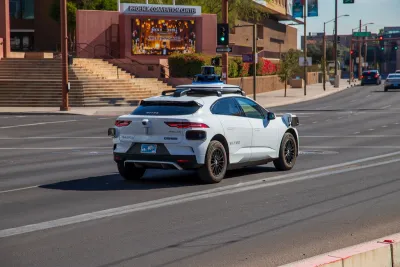
“What happens when an officer stops a car and there's no driver?” That’s the question people are asking in Phoenix, the largest market for autonomous car operator Waymo. reports Stacey Barchenger in Arizona Republic.
In June, a Waymo in Phoenix drove into oncoming traffic for roughly 30 seconds, prompting a police officer to pull it over. “The situation was cleared without further action. ‘UNABLE TO ISSUE CITATION TO COMPUTER,’ the police dispatch records say.”
Waymos are programmed to recognize law enforcement and pull over. “Officers can use an intercom in the car to speak to an operator in real time or call a dedicated phone number, according to Phoenix police spokesperson Sgt. Brian Bower. The cars can also be put into a manual override so first responders can move them if necessary, Bower said.”
Of the 31 incidents involving Waymo vehicles under investigation by the National Highway Traffic Safety Administration (NHTSA), 14 happened in Arizona. “ Those incidents included potential violations of traffic laws and crashes when the self-driving car was the only one involved.”
Read the full story: Your Waymo got pulled over. What happens next in Phoenix?
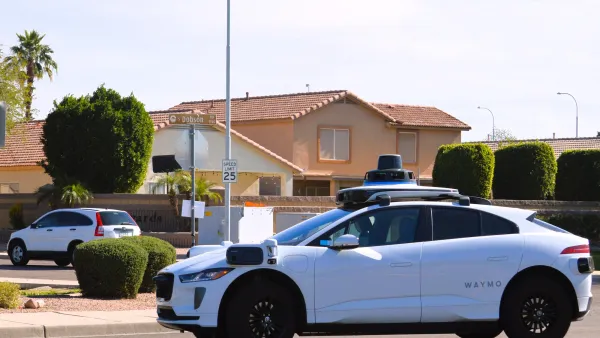
Uber and Waymo part ways in Phoenix
The companies ended a three-year pilot program, with Waymo saying it plans to keep its Phoenix robotaxi fleet available through its own app.
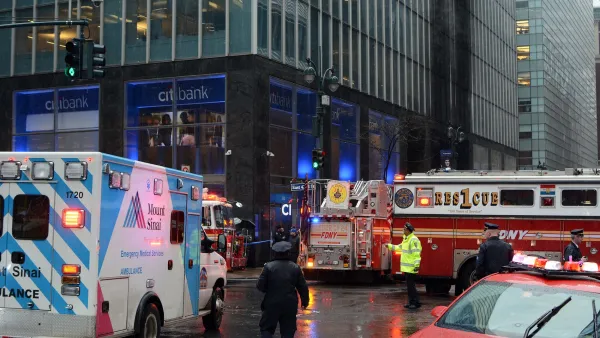
Waymo's troubles with emergency vehicles are getting worse
In one case, first responders waited 53 minutes to reach a Waymo support representative during an emergency.
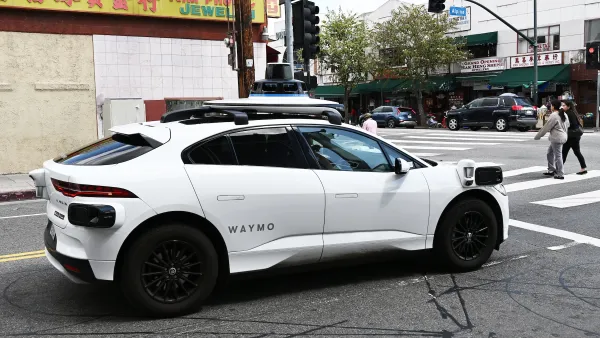
California cops will start ticketing robotaxis
The California DMV issued new guidance that allows law enforcement to give autonomous cars a "notice of noncompliance" when they break traffic laws.

Planetizen Federal Action Tracker
A weekly monitor of how Trump’s orders and actions are impacting planners and planning in America.

Eastern Nebraska is running out of electricity
Data centers and electrification are straining eastern Nebraska’s grid, throttling economic development.

Move over, LA: St. Louis gears up for Olympics, invests millions in downtown redevelopment
The Missouri city will host the 2028 Olympic soccer group stage and knockout matches.

Dallas releases zoning code overhaul to officials
The drafted overhaul is over 400 pages long.

NYC renovations for dangerous, ‘mercilessly crammed’ street delayed until 2027
Construction was supposed to begin this fall.

San Diego’s Midway Rising project gets greenlight from city council
The project looks to become the largest affordable housing development in California's history.

FREE Course: Walkable City 1: Why Walkability?
After describing his path towards focusing on walkability as the essence of good planning, Jeff Speck marches through his five principal reasons for making more walkable places.
Reinventing Malls: Planning Alchemy—Turning Gray Fields Into Gold
The course focuses on the opportunities and imperatives that shape reinvention of mall sites.

City of Rosemead
Rutgers University, Edward J. Bloustein School of Planning and Public Policy
One Hundred Miles
University of Michigan School for Environment and Sustainability (SEAS)
Hunter College, City University of New York (CUNY)
The Architects Foundation
City of Cambridge
The Pocatello Development Authority
The Urban Renewal Agency of the City of Pocatello