With over a trillion dollars spent on roads that are still falling apart, advocates propose a new “fix it first” framework.


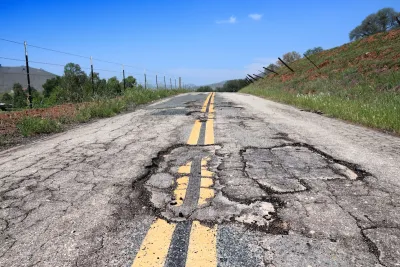
Is “Fix It First” at the heart of your transportation department’s strategy? In the first of a series of blog posts titled ‘Rethinking Authorization,’ Transportation for America argues that the federal government should direct transportation funding in ways that prioritize maintenance and repair over new roadways and capacity-expanding projects.
A new approach is urgently needed—one that makes fixing existing infrastructure a prerequisite before building anything new. How are we going to do that?
T4A’s proposal “focuses on the changes required to prioritize existing maintenance needs before building new things: require grantees of federal funding to maintain their infrastructure by setting targets for improving road and bridge conditions, and then hold them accountable for doing so.” They also call for assisting states that fail to hit their targets by directing funds to repair projects only.
T4A suggests that all states should set progressive targets for improving their roadways and bridges, including those that are not currently under federal oversight, create more transparency in their processes, and enact incentives for prioritizing repair and maintenance. To do this, T4A recommends changing federal matching rates to 80 percent for repair and maintenance projects and only 50 percent for capacity-expanding projects. “If you can’t improve the condition of your existing infrastructure, you should not be building more.”
FULL STORY: How to make repair the rule, not the exception

Trump Freezes $2.1 Billion for Chicago Transit and Infrastructure Projects
The administration plans to revoke federal funding over what it calls “discriminatory, illegal, and wasteful contracting practices.”

Portland Transportation Bureau Faces ‘Existential’ Cuts
PBOT’s director says the agency’s impending budget shortfall could imperil even basic transportation and infrastructure services.

LA County Receives Reconnecting Communities Grants
Seven grant awards totaling $162 million will be used for planning, capital projects, and regional partnerships to reduce environmental harm and improve access in disadvantaged communities.

Planetizen Federal Action Tracker
A weekly monitor of how Trump’s orders and actions are impacting planners and planning in America.

The state-sanctioned urbicide of Austin
People don’t kill cities. Freeways do.

US to reduce Colorado River water deliveries to Mexico
A new Colorado Treaty amendment reduces Mexico’s Colorado River water allocation by 250,000 acre feet.

5 New England states march closer to 800 megawatt wind energy project
Securing federal approval for the project may be complicated under the Trump administration, which has historically been hostile towards domestic wind power.

Baltimore to break ground on $50 million Transit Priority Project
The project will bring faster bus trips, safer streets and better bike connections to Baltimore.

Airbnb launches $250 million 'last-dollar financing' housing accelerator, makes first investment in Austin
The company will put $6.4 million towards affordable housing development in Texas’ capital.

FREE Course: Walkable City 1: Why Walkability?
After describing his path towards focusing on walkability as the essence of good planning, Jeff Speck marches through his five principal reasons for making more walkable places.
Reinventing Malls: Planning Alchemy—Turning Gray Fields Into Gold
The course focuses on the opportunities and imperatives that shape reinvention of mall sites.

Eagle County Government
Harvard University Graduate School of Design
Nashville Planning Department
The Architects Foundation
University of Cincinnati Online
The Pocatello Development Authority
The Urban Renewal Agency of the City of Pocatello
Journal of the American Planning Association