The President’s proposed 2026 budget would keep spending roughly the same for transit and rail and eliminate over $5 billion in funding for EV charging infrastructure.


What does Trump’s budget mean for transportation? In a piece for Smart Cities Dive, Dan Zukowski outlines five key takeaways.
According to Zukowski, “The Federal Transit Administration’s budget would remain in line with the current fiscal year at $21.2 billion, including $4.3 billion in advance appropriations from the Infrastructure Investment and Jobs Act. That is $1 billion less than authorized for fiscal 2026 by the infrastructure law.”
The proposed budget would increase public transit funding by 1.5 percent and keep Amtrak spending essentially the same while shifting spending from the Northeast Corridor to national rail projects. It call for $3.8 billion in Capital Investment Grants, but eliminates “certain IIJA allocations for New Start, Core Capacity, Small Starts and Expedited Project Delivery Pilot Program projects.” The budget requests an additional $500 million for the Consolidated Rail Infrastructure and Safety Improvements program, which funds passenger rail improvements.
The budget cuts roughly $5.7 billion in electric vehicle charging programs.
FULL STORY: 5 takeaways from Trump’s proposed 2026 budget for rail and public transit

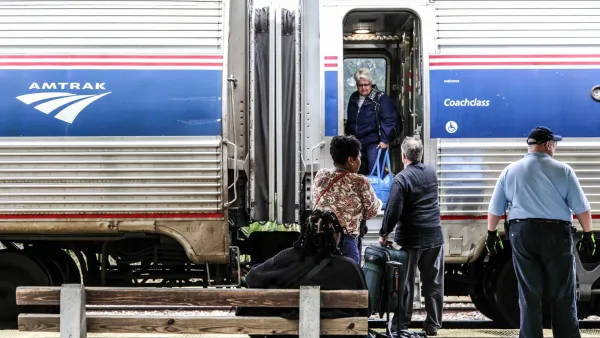
Trump budget slashes passenger rail funding by 82%
The White House's proposed FY2027 budget makes drastic cuts to public transit and eliminates high-speed rail funding altogether.
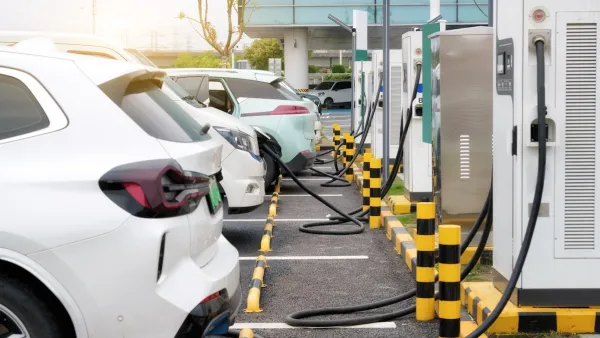
USDOT Issues New Rules for EV Charging Grants After Judge Forces Administration to Unfreeze Funds
The Trump administration is reviving the National Electric Vehicle Infrastructure program, revising its guidelines to eliminate consumer protections, environmental reviews, labor standards, and other provisions from the Biden-era program.
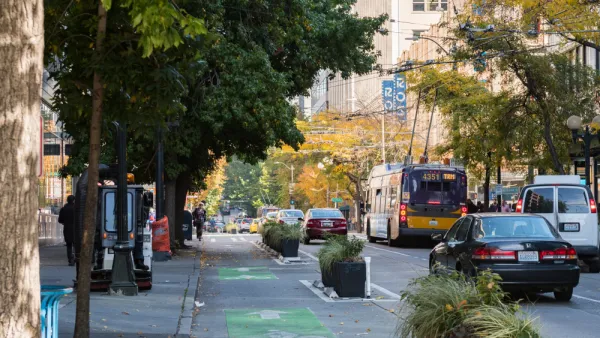
How Complete Streets Stands to Lose in the FY26 ‘Skinny Budget’
The President’s proposed budget could cut key resources for active transportation, public transit, and road safety programs.

Planetizen Federal Action Tracker
A weekly monitor of how Trump’s orders and actions are impacting planners and planning in America.

The state-sanctioned urbicide of Austin
People don’t kill cities. Freeways do.

US to reduce Colorado River water deliveries to Mexico
A new Colorado Treaty amendment reduces Mexico’s Colorado River water allocation by 250,000 acre feet.

Mamdani overhauls NYC's Vision Zero plan with 100 new policy goals
The overhaul aims to reduce traffic deaths and make streets safer for pedestrians, cyclists and drivers through lower speed limits, new safety infrastructure and more.

Amtrak not solely to blame for New Jersey commuter rail's unreliability, report finds
A new study from the Garden State Initiative found that NJ Transit’s budget grew 20% across a 4 year period, but reliability declined significantly over the same period.

EPA erases limits on planet-warming pollution from power plants
Under Monday’s plan, power plants would still have some limits on how much mercury, arsenic and other contaminants they can emit.

FREE Course: Walkable City 1: Why Walkability?
After describing his path towards focusing on walkability as the essence of good planning, Jeff Speck marches through his five principal reasons for making more walkable places.
Reinventing Malls: Planning Alchemy—Turning Gray Fields Into Gold
The course focuses on the opportunities and imperatives that shape reinvention of mall sites.


Eagle County Government
Harvard University Graduate School of Design
Nashville Planning Department
The Architects Foundation
University of Cincinnati Online
The Pocatello Development Authority
The Urban Renewal Agency of the City of Pocatello
Journal of the American Planning Association