The proposed FY 2025 budget keeps spending for public transit and passenger rail essentially the same as in 2024.



The House Appropriations Committee’s proposed budget for FY 2025 increases public transit investment by under 1 percent from last year, while passenger rail funding is decreased by 1 percent. According to an explainer from the American Public Transportation Association (APTA), “The bill eliminates all funding that was designated for earmarks in the FY 2024 THUD Appropriations Act.”
The bill includes $3.8 billion for Capital Investment Grants; for context, “communities are requesting more than $38.6 billion of CIG funds in FY 2025 and subsequent years to construct 58 projects in 25 states.”
The bill also “prohibits DOT from impeding or hindering a project from advancing or approving a project seeking a CIG Federal share of more than 40 percent” and lets projects under the Expedited Project Delivery for CIG Pilot Program be eligible for funding without further evaluation.
Read the full story: House Appropriations Committee Republican Leaders Unveil Full-Year Continuing Resolution
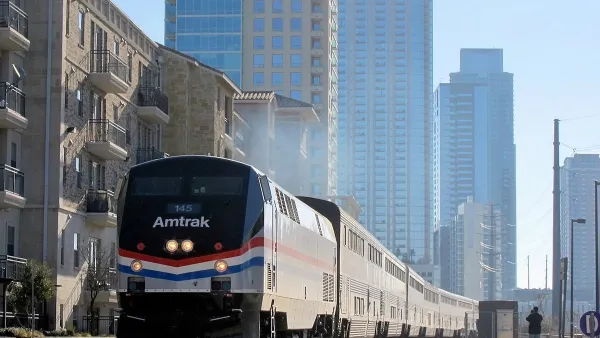
Five Key Transportation Funding Proposals in Trump’s Budget
The President’s proposed 2026 budget would keep spending roughly the same for transit and rail and eliminate over $5 billion in funding for EV charging infrastructure.
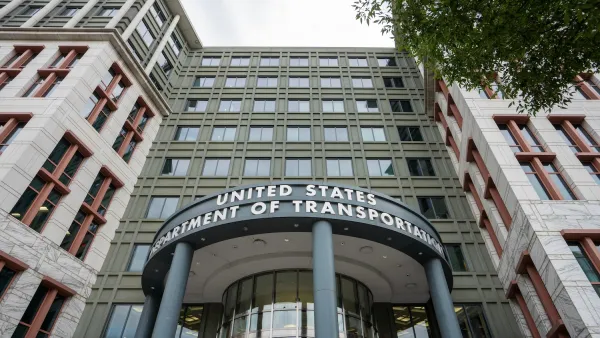
Where USDOT Awarded $3.2 Billion in Grants
The department announced awards for projects that include intercity rail, low-emission buses, and tech-driven transit improvements.
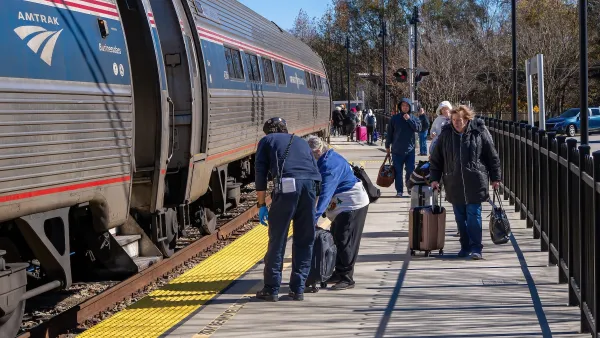
Rail advocates: BUILD America 250 Act could slash railway funding by 80%
Leaving rail funding up to annual appropriations threatens to drastically limit its reliability and effectiveness.

Planetizen Federal Action Tracker
A weekly monitor of how Trump’s orders and actions are impacting planners and planning in America.

California plans to bury El Niño’s downpour
If the state plays its cards right, it may be able to store a billion acre-feet of El Niño’s water in aquifers.

Desperate measures: Advocates weigh draining Lake Powell to fill Colorado River
Draining the reservoir could reduce evaporation losses by a couple hundred thousand acre-feet.

US buildings threatened, destroyed by fires set to triple by 2060
Researchers found a high fire risk for socioeconomically vulnerable neighborhoods in the American West.

LA residents may be allowed to paint their own crosswalks
Councilwoman Katy Yaroslavsky put out a motion instructing the Los Angeles Department of Public Transportation to study the feasibility of allowing volunteers to paint crosswalks.

Dallas moves to overhaul its zoning code
The city's zoning reform will allow more multi-family and mixed-use developments.

FREE Course: Walkable City 1: Why Walkability?
After describing his path towards focusing on walkability as the essence of good planning, Jeff Speck marches through his five principal reasons for making more walkable places.
Reinventing Malls: Planning Alchemy—Turning Gray Fields Into Gold
The course focuses on the opportunities and imperatives that shape reinvention of mall sites.

City of Rosemead
Rutgers University, Edward J. Bloustein School of Planning and Public Policy
One Hundred Miles
Hunter College, City University of New York (CUNY)
The Architects Foundation
University of Cincinnati Online
City of Cambridge
Montrose County
The Pocatello Development Authority