After a COVID-era move to eliminate fare inspections on city buses, King County Metro is reinstating checks for fare evasion.



King County Metro announced it will resume fare enforcement on March 31 after a pause of nearly five years, reports Nicholas Deshais for The Seattle Times. “The change has less to do with safety and revenue, and more to do with riders’ perceptions of fairness, according to Metro.” Inspectors will begin boarding buses to ask for proof of payment on March 31, and fare evaders will face fines after May 31.
The agency estimates that roughly 34 percent of riders don’t pay their fare. Violators will get two written warning, then could face tickets of up to $40. People will also have the option to load the $20 onto an Orca transit card, do two hours of community service, or enroll in a reduced fare program.
Fares were suspended under the Safety, Security and Fare Enforcement initiative in June 2020, then reinstated in December of that year. However, King County Metro pledged not to resume enforcement “until the agency could figure out a way to do it fairly.” The new approach eliminates the potential to funnel people into the criminal justice system (under old regulations, a third fare violation resulted in a misdemeanor charge).
Read the full story: Metro to resume bus fare inspections: What to expect


Sound Transit Adds ‘Fare Ambassadors’ to Enforce Payment
Riders found without proof of payment will have options to pay rather than receive a citation.
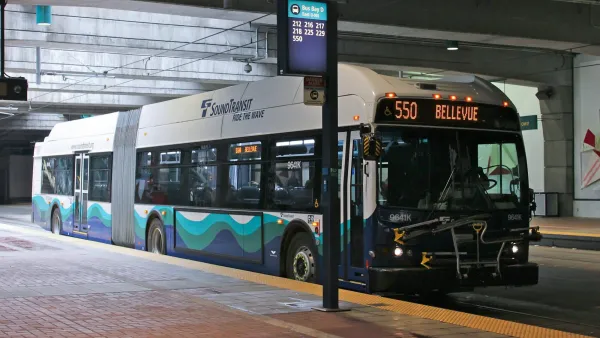
Sound Transit to Start Enforcing Fare Violations This Month
After two warnings, riders who fail to show proof of payment can be issued fines.
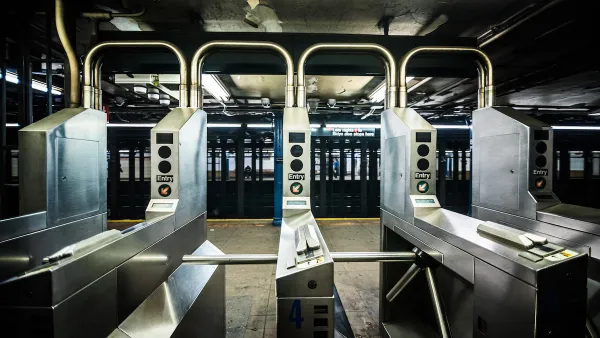
Opinion: Fare Evasion Is a Red Herring
The loss of revenue from fare evasion is a drop in the bucket compared to the fiscal cliff facing major U.S. transit agencies.

Planetizen Federal Action Tracker
A weekly monitor of how Trump’s orders and actions are impacting planners and planning in America.

California plans to bury El Niño’s downpour
If the state plays its cards right, it may be able to store a billion acre-feet of El Niño’s water in aquifers.

Chicago breaks ground on $3 billion megadevelopment
The new neighborhood, titled Foundry Park, will one day host 3,700 residences.

Satanic Place Names
From streams and lakes to valleys and canyons, I mapped more than 1,000 places named after the Devil.

California High-Speed Rail Authority CEO resigns after $600,000 scandal
Under Ian Choudri, the authority used taxpayer dollars to fund first class flights and trips to nightclubs.

Want to study the Missouri River? Soon, you may need unanimous approval from 10 states
Legislation would require 10 governors’ permission to study or build projects moving water outside the basin.

FREE Course: Walkable City 1: Why Walkability?
After describing his path towards focusing on walkability as the essence of good planning, Jeff Speck marches through his five principal reasons for making more walkable places.
Reinventing Malls: Planning Alchemy—Turning Gray Fields Into Gold
The course focuses on the opportunities and imperatives that shape reinvention of mall sites.

City of Rosemead
Rutgers University, Edward J. Bloustein School of Planning and Public Policy
One Hundred Miles
Hunter College, City University of New York (CUNY)
The Architects Foundation
University of Cincinnati Online
City of Cambridge
Montrose County
The Pocatello Development Authority