Riders found without proof of payment will have options to pay rather than receive a citation.


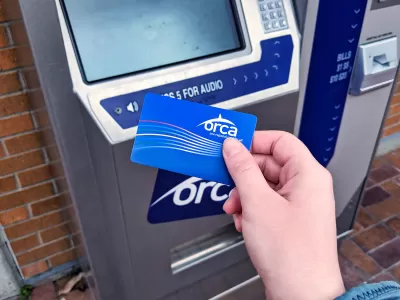
The Seattle-area Sound Transit agency will start requiring proof of payment before boarding to prevent fare evasion, writes Spencer Pauley for The Center Square.
According to Pauley, “The new process will have an initial rollout on June 3. Sound Transit’s ‘fare ambassadors’ have been checking passengers’ proof of payments on various trains throughout the day.” Riders found without proof of payment will be provided with options to pay instead of a citation.
As Pauley explains, “The new ‘fare paid zone inspections’ will occur only on the 1 Line at downtown Seattle stations at different times, and will be expanded in later phases.” The program will trial several methods of platform inspection over the summer prior to opening an extension of the 1 Line.
Sound Transit started boosting its fare enforcement efforts last year, citing reduced fare revenue.
FULL STORY: Sound Transit to enforce new fare policy to ensure riders pay

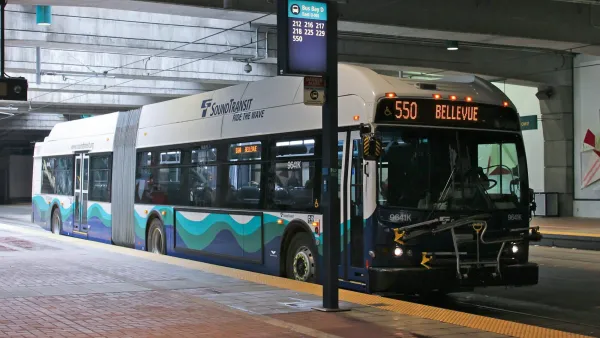
Sound Transit to Start Enforcing Fare Violations This Month
After two warnings, riders who fail to show proof of payment can be issued fines.
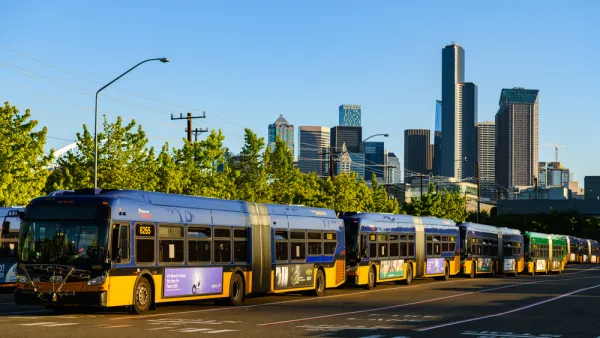
Seattle to Reinstate Bus Fare Enforcement
After a COVID-era move to eliminate fare inspections on city buses, King County Metro is reinstating checks for fare evasion.
Seattle Fare Enforcement Disproportionately Punishes Blacks, Data Show
Sound Transit says its fare enforcement system is design to be unbiased, but analysis about fare evader data indicates disparities.

The state-sanctioned urbicide of Austin
People don’t kill cities. Freeways do.

US to reduce Colorado River water deliveries to Mexico
A new Colorado Treaty amendment reduces Mexico’s Colorado River water allocation by 250,000 acre feet.

New Jersey’s second-largest city bans standalone data centers
Jersey City will continue to allow co-location facilities, such as those meant for research institutions that store their own data.

Amtrak not solely to blame for New Jersey commuter rail's unreliability, report finds
A new study from the Garden State Initiative found that NJ Transit’s budget grew 20% across a 4 year period, but reliability declined significantly over the same period.

EPA erases limits on planet-warming pollution from power plants
Under Monday’s plan, power plants would still have some limits on how much mercury, arsenic and other contaminants they can emit.

Phoenix announces new on-demand transit service, more frequent RAPID buses
Both new services will launch in October, and are part of Phoenix's Project Effective Access Solutions for Easing Congestion.

FREE Course: Walkable City 1: Why Walkability?
After describing his path towards focusing on walkability as the essence of good planning, Jeff Speck marches through his five principal reasons for making more walkable places.
Reinventing Malls: Planning Alchemy—Turning Gray Fields Into Gold
The course focuses on the opportunities and imperatives that shape reinvention of mall sites.

Eagle County Government
Harvard University Graduate School of Design
Nashville Planning Department
The Architects Foundation
University of Cincinnati Online
The Pocatello Development Authority
The Urban Renewal Agency of the City of Pocatello
Journal of the American Planning Association