A new plan from the city’s transit agency focuses on improving the rider experience and boosting safety, but remains uncommitted to previous plans to build new BRT lines.


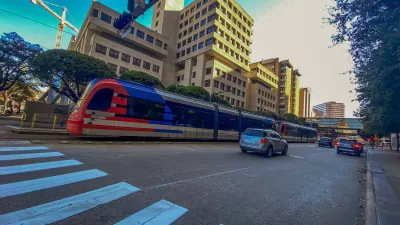
Houston’s Metropolitan Transit Authority of Harris County (METRO) unveiled a new plan
focused on reliability, cleanliness, safety, and accessibility that aims to increase ridership and improve the transit experience for users.
The agency’s plan, dubbed METRONow, is a revised version of the city’s prior METRONext plan, explains Dominic Walsh in Houston Public Media. It calls for 350 new buses and the replacement of 100 accessible vehicles, as well as accessibility improvements at bus stops. It includes a $7 million investment in security initiatives such as lighting, fences, and patrols on trains.
The agency previously scrapped bus rapid transit projects, citing cost concerns. Now, some of those projects might move forward under the new plan. However, the agency killed the proposed University Corridor BRT line, which would have linked multiple universities over a 25-mile line. It also demoted a planned BRT line along Interstate 10 to a shared high occupancy vehicle lane.
FULL STORY: Houston transit authority unveils ‘METRONow’ initiative focused on cleanliness, safety and ridership

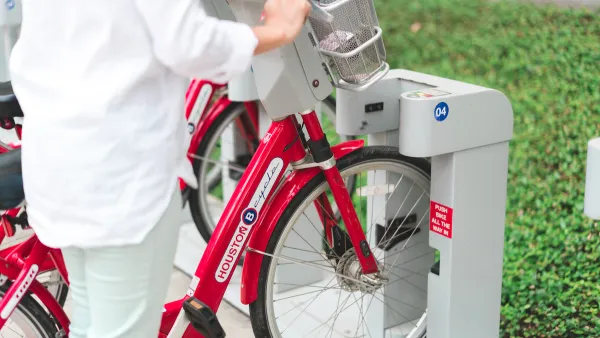
Houston Could Launch New Bike Share
Metro is considering a contract with a new operator that would focus bike share service on major transit hubs.
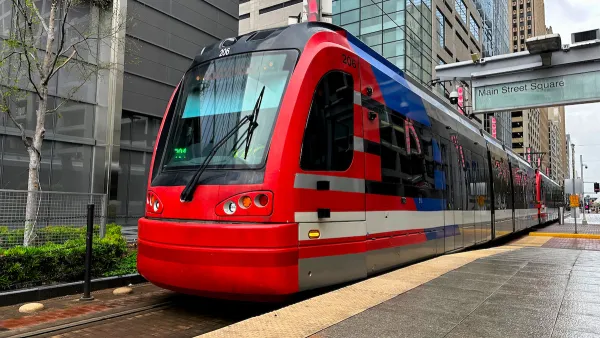
Houston Metro Adds Shuttle Buses, Trains for Beyoncé Concert
Transit surges during major concerts and sporting events are becoming a trend, prompting cities to add specialized transit service to handle extra crowds.
Houston Metro Seeks Proposals for Transit-Oriented Development
The agency will assess ways to more effectively use its surface parking lots and encourage more mixed-use development near transit hubs.

Planetizen Federal Action Tracker
A weekly monitor of how Trump’s orders and actions are impacting planners and planning in America.

The state-sanctioned urbicide of Austin
People don’t kill cities. Freeways do.

US to reduce Colorado River water deliveries to Mexico
A new Colorado Treaty amendment reduces Mexico’s Colorado River water allocation by 250,000 acre feet.

5 New England states march closer to 800 megawatt wind energy project
Securing federal approval for the project may be complicated under the Trump administration, which has historically been hostile towards domestic wind power.

Baltimore to break ground on $50 million Transit Priority Project
The project will bring faster bus trips, safer streets and better bike connections to Baltimore.

Airbnb launches $250 million 'last-dollar financing' housing accelerator, makes first investment in Austin
The company will put $6.4 million towards affordable housing development in Texas’ capital.

FREE Course: Walkable City 1: Why Walkability?
After describing his path towards focusing on walkability as the essence of good planning, Jeff Speck marches through his five principal reasons for making more walkable places.
Reinventing Malls: Planning Alchemy—Turning Gray Fields Into Gold
The course focuses on the opportunities and imperatives that shape reinvention of mall sites.

Eagle County Government
Harvard University Graduate School of Design
Nashville Planning Department
The Architects Foundation
University of Cincinnati Online
The Pocatello Development Authority
The Urban Renewal Agency of the City of Pocatello
Journal of the American Planning Association