Researchers are starting to understand how people with conditions like autism experience cities differently — and how to design for the neurodiverse brain.



“Cities and schools are not typically designed by, or for, people with conditions such as autism,” writes Alexandra Lange in Bloomberg CityLab. Now, architects are working to change that by understanding how neurodivergent people experience cities and designing spaces that address their needs.
A study conducted in a New York City public school surveyed students about their experience and prototyped designs that aim to engage kids in ways that are comfortable for them. The study included an engagement exercise on soundscapes, which had students identify sounds on their playground. The exercise resulted in the installation of three sound “pods” where students can listen to soothing soundscapes and buffer outside noise.
“The result, they hope, will be prototypes designed for typical urban conditions like playgrounds or plazas, made with a broader understanding of what urban comfort can be. This might be noise-buffering. It might be more welcoming signage. It could be plants, maybe some softer seating.” Like other design elements geared toward the needs of specific groups, these interventions would make public spaces more pleasant for all users.
Read the full story: How to Build a Neurodiverse City


The Death of the Living Room
High housing costs are squeezing out common shared spaces in many UK apartments, leading to social isolation and negative mental health impacts.
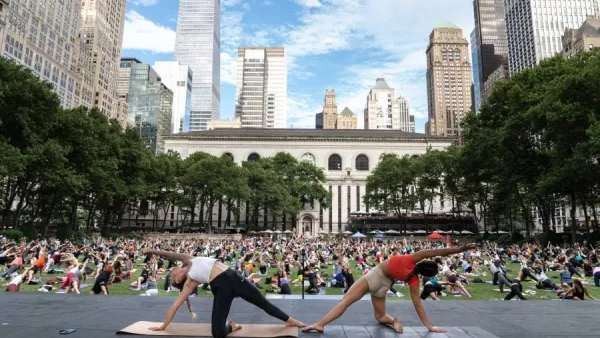
The Panacea of Outdoor Human Movement
Humans relish in over-complicating things, but the sweetest and healthiest things in life are the simplest.
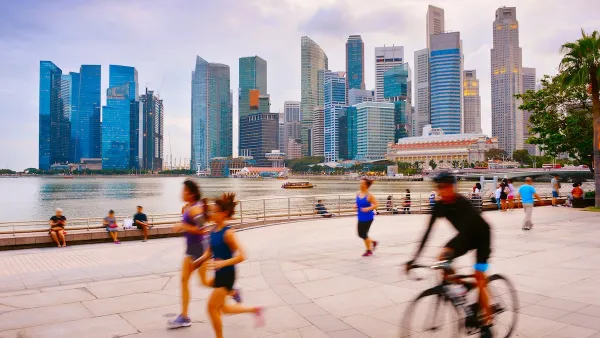
Singapore: A Model for Longevity and Quality of Life
Singapore's remarkable rise in life expectancy, driven by government policies on health, green spaces, and social cohesion, has earned it the distinction of being named the world's sixth “Blue Zone.”

Planetizen Federal Action Tracker
A weekly monitor of how Trump’s orders and actions are impacting planners and planning in America.

California plans to bury El Niño’s downpour
If the state plays its cards right, it may be able to store a billion acre-feet of El Niño’s water in aquifers.

Chicago breaks ground on $3 billion megadevelopment
The new neighborhood, titled Foundry Park, will one day host 3,700 residences.

Satanic place names
From streams and lakes to valleys and canyons, I mapped more than 1,000 places named after the Devil.

California High-Speed Rail Authority CEO resigns after $600,000 scandal
Under Ian Choudri, the authority used taxpayer dollars to fund first class flights and trips to nightclubs.

Want to study the Missouri River? Soon, you may need unanimous approval from 10 states
Legislation would require 10 governors’ permission to study or build projects moving water outside the basin.

FREE Course: Walkable City 1: Why Walkability?
After describing his path towards focusing on walkability as the essence of good planning, Jeff Speck marches through his five principal reasons for making more walkable places.
Reinventing Malls: Planning Alchemy—Turning Gray Fields Into Gold
The course focuses on the opportunities and imperatives that shape reinvention of mall sites.

City of Rosemead
Rutgers University, Edward J. Bloustein School of Planning and Public Policy
One Hundred Miles
Hunter College, City University of New York (CUNY)
The Architects Foundation
University of Cincinnati Online
City of Cambridge
Montrose County
The Pocatello Development Authority