Republican and Democrat lawmakers criticize the plan for its disproportionate negative impact on rural communities.


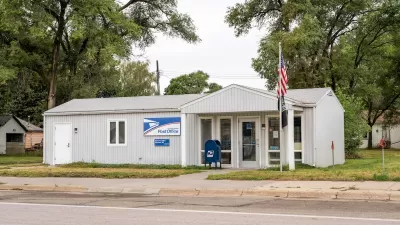
At least half of all zip codes in America will receive slower and downgraded mail service under Postmaster General Louis DeJoy’s Delivering for America Plan, according to an analysis by the Postal Regulatory Commission (PRC).
“While agreeing with DeJoy that the Postal Service faces extreme challenges and that change is necessary, the PRC said that Delivering for America relies on defective modeling, overly optimistic cost-savings, and fails to fully consider the negative impact to rural communities,” writes Renée Jean for Cowboy State Daily, quoting the PRC’s statement that the Postal Service would be “irreversibly changing its network without laying a foundation for success.”
The PRC analysis showed that the plan would disproportionately impact rural communities across the country, which also rely more heavily on mail, resulting in delays of six days or more.
FULL STORY: Postal Regulatory Commission Says Rural Populations Will Suffer Under ‘Delivering For America’ Plan

The EV “Charging Divide” Plaguing Rural America
With “the deck stacked” against rural areas, will the great electric American road trip ever be a reality?
New Data: Rural Remote Workers Concentrate in Recreation Hubs
Remote workers flock to ski towns, hiking spots and other popular recreation hubs.
Commentary: How Remote Work Supports Rural Communities
Allowing federal employees to work from home can deepen government agencies’ understanding of communities’ needs and create economic opportunities for local residents.

Planetizen Federal Action Tracker
A weekly monitor of how Trump’s orders and actions are impacting planners and planning in America.

The state-sanctioned urbicide of Austin
People don’t kill cities. Freeways do.

US to reduce Colorado River water deliveries to Mexico
A new Colorado Treaty amendment reduces Mexico’s Colorado River water allocation by 250,000 acre feet.

5 New England states march closer to 800 megawatt wind energy project
Securing federal approval for the project may be complicated under the Trump administration, which has historically been hostile towards domestic wind power.

Baltimore to break ground on $50 million Transit Priority Project
The project will bring faster bus trips, safer streets and better bike connections to Baltimore.

Airbnb launches $250 million 'last-dollar financing' housing accelerator, makes first investment in Austin
The company will put $6.4 million towards affordable housing development in Texas’ capital.

FREE Course: Walkable City 1: Why Walkability?
After describing his path towards focusing on walkability as the essence of good planning, Jeff Speck marches through his five principal reasons for making more walkable places.
Reinventing Malls: Planning Alchemy—Turning Gray Fields Into Gold
The course focuses on the opportunities and imperatives that shape reinvention of mall sites.

Eagle County Government
Harvard University Graduate School of Design
Nashville Planning Department
The Architects Foundation
University of Cincinnati Online
The Pocatello Development Authority
The Urban Renewal Agency of the City of Pocatello
Journal of the American Planning Association