William Fulton provides a personal perspective on Prof. Shoup's life and work: “His mission was to help people understand the underlying economics of public goods and services. Parking was simply the vehicle, one might say, that he chose to do so.”


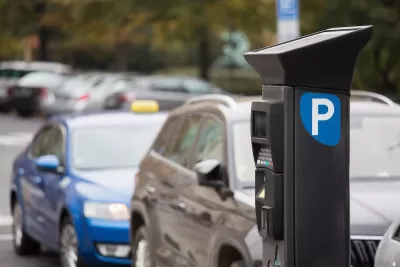
The passing of the legendary “parking guru” Donald Shoup has saddened everyone in the world of urban planning — especially former students like me. Don was an amazing guy. As an individual he was unfailingly kind and generous to everybody, although he did have an acerbic sense of humor. As an academic he was rigorous. And of course he changed the way the entire world looks at parking.
It is remarkable, in retrospect, that a quirky guy who had never been a prominent academic became in his later years the object of a cult-like following. He called himself “Shoup Dogg” and his devoted followers called themselves “Shoupistas.” Even when it was unfashionable to do so, I was always proud to count myself among the Shoupistas.
Read the full story: Donald Shoup Wasn't Just About Parking. He Was About The Economics Of Public Goods.

How Flexible Parking Requirements Spur Economic Development
A UCLA master's student and Don Shoup found that Santa Monica, CA's flexible parking requirements have led to significant fiscal and urban form benefits. A sample of parcels showed eight-times more sales tax revenue per sq. ft. than a control group.
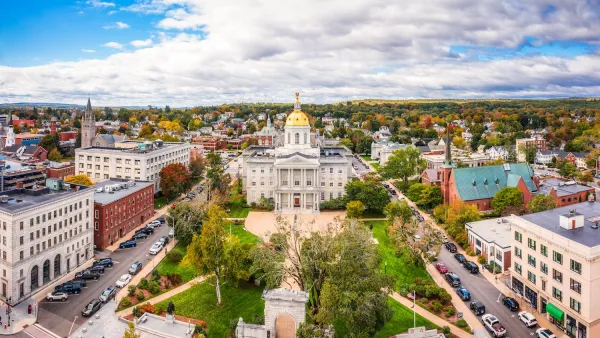
New Hampshire House Passes Parking Reform Bill
The revised bill, which caps parking requirements at one spot per residential unit and eliminates exemptions, will go back to the Senate for a new vote.

Washington State’s Parking Reform Law Could Unlock ‘Countless’ Acres for New Housing
A law that limits how much parking cities can require for residential amd commercial developments could lead to a construction boom.

Planetizen Federal Action Tracker
A weekly monitor of how Trump’s orders and actions are impacting planners and planning in America.

The state-sanctioned urbicide of Austin
People don’t kill cities. Freeways do.

US to reduce Colorado River water deliveries to Mexico
A new Colorado Treaty amendment reduces Mexico’s Colorado River water allocation by 250,000 acre feet.

Nation's most wind-powered state turns to coal as data centers increase energy demand
For the first time in decades, Iowa has increased its generation of coal power.

NYC cools commuters with city's first rain garden above a bus stop
New York City officials say the plants in the rain garden can absorb 16 gallons of rainwater during heavy storms.

Brightline West’s future may rely on $6 billion federal loan
The company has until Nov. 2 to make a $400 million equity investment into its proposed high-speed rail line.

FREE Course: Walkable City 1: Why Walkability?
After describing his path towards focusing on walkability as the essence of good planning, Jeff Speck marches through his five principal reasons for making more walkable places.
Reinventing Malls: Planning Alchemy—Turning Gray Fields Into Gold
The course focuses on the opportunities and imperatives that shape reinvention of mall sites.

Greater Baltimore Committee
Eagle County Government
Harvard University Graduate School of Design
The Architects Foundation
University of Cincinnati Online
The Pocatello Development Authority
The Urban Renewal Agency of the City of Pocatello
Journal of the American Planning Association