An executive order from the Department of the Interior could gut protections for public lands established under the Antiquities Act.


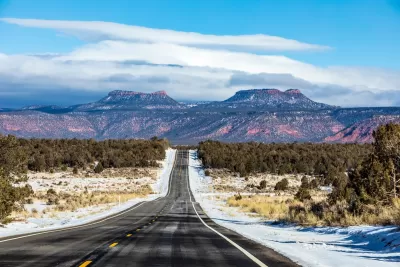
The Department of the Interior appears poised to open federal public lands, including national monuments, to more mining, per an executive order signed by newly appointed Interior Secretary Doug Burgum.
As Bobby Magill reports in Bloomberg Law, the order directs staff to “review and, as appropriate, revise all withdrawn public lands, consistent with existing law.” The order calls for a plan that will include coal mining and offshore oil and gas operations. “The order also directs Interior agencies to prioritize critical mineral development and help establish the US ‘as the leading producer and processor of nonfuel minerals, including rare earth minerals’ with additional focus on critical minerals.”
The move could imperil national monuments such as Bears Ears and Grand Staircase-Escalante in Utah, which were created through the 1906 Antiquities Act. However, experts warn that “The language of the order makes clear that withdrawing rights to mine minerals in monuments is to be done in ways that are consistent with existing law,” meaning the department will face a long process to reopen lands closed to development.
A case currently before the Tenth Circuit Court of Appeals, Garfield County v. Biden, also challenges the President’s authority to create new national monuments under the Antiquities Act.
Read the full story: Interior Considers Opening National Monuments to Mining

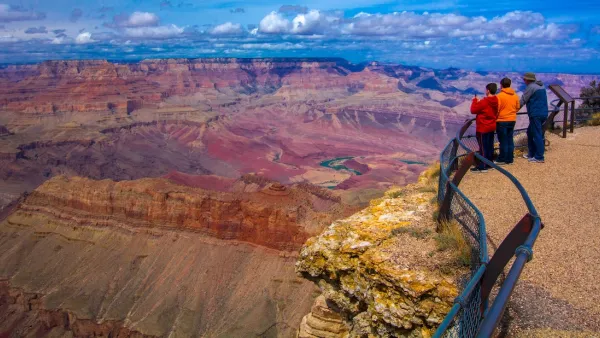
DOJ Says Trump Has Power to Roll Back National Monuments
The opinion sheds light on how the administration may justify its effort to eliminate protected public lands.
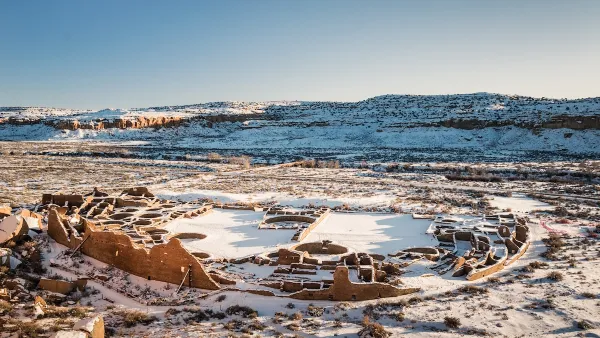
BLM Approves Controversial Oil and Gas Leases on Navajo Land
The parcels are located near a sensitive archaeological site, but some Indigenous leaders approve of the move, which will bring in millions in revenue.

Colorado oil and gas land lease on public land could imperil nation's largest elk herd
The federal government approved the largest land lease to oil and gas interests in Colorado history.

Planetizen Federal Action Tracker
A weekly monitor of how Trump’s orders and actions are impacting planners and planning in America.

California plans to bury El Niño’s downpour
If the state plays its cards right, it may be able to store a billion acre-feet of El Niño’s water in aquifers.

Chicago breaks ground on $3 billion megadevelopment
The new neighborhood, titled Foundry Park, will one day host 3,700 residences.

California High-Speed Rail Authority CEO resigns after $600,000 scandal
Under Ian Choudri, the authority used taxpayer dollars to fund first class flights and trips to nightclubs.

Want to study the Missouri River? Soon, you may need unanimous approval from 10 states
Legislation would require 10 governors’ permission to study or build projects moving water outside the basin.

Desperate measures: Advocates weigh draining Lake Powell to fill Colorado River
Draining the reservoir could reduce evaporation losses by a couple hundred thousand acre-feet.

FREE Course: Walkable City 1: Why Walkability?
After describing his path towards focusing on walkability as the essence of good planning, Jeff Speck marches through his five principal reasons for making more walkable places.
Reinventing Malls: Planning Alchemy—Turning Gray Fields Into Gold
The course focuses on the opportunities and imperatives that shape reinvention of mall sites.

City of Rosemead
Rutgers University, Edward J. Bloustein School of Planning and Public Policy
One Hundred Miles
Hunter College, City University of New York (CUNY)
The Architects Foundation
University of Cincinnati Online
City of Cambridge
Montrose County
The Pocatello Development Authority