The parcels are located near a sensitive archaeological site, but some Indigenous leaders approve of the move, which will bring in millions in revenue.


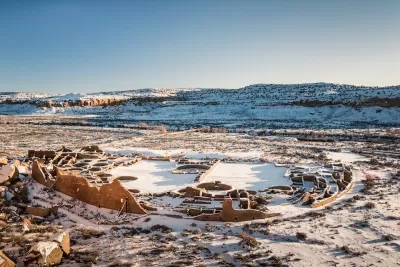
Indigenous leaders are expressing mixed views on the Bureau of Land Management’s decision to approve oil and gas leases on parcels near the Chaco Culture National Historical Park in New Mexico, a sensitive archaeological site. The decision came days before the presidential inauguration and applies to parcels sold at auction in 2019.
“One site is just over half a mile from the 10-mile buffer zone the Biden administration created to protect Chaco’s fragile cultural and environmental landscape,” explains Chad Bradley in High Country News. All 14 parcels are under review for eligibility for the National Register of Historic Places.
Acknowledging the potential of finding as-yet-undiscovered historical sites in the area, BLM Director of Minerals Michael Gibson said, “The lease sale itself does not directly authorize surface disturbance. Rather, leaseholders are granted future right of development to the leased mineral estate that is subject to site-specific analysis under (the National Environmental Policy Act of 1969).”
Some Navajo leaders object to the buffer zone, saying the tribe was not consulted and that tribal members could lose millions in potential revenue, and the Navajo Nation sued the BLM in January over these claims. “Meanwhile, another site in the Navajo community of Counselor Chapter is also up for review for a lease. Back in 2023, local residents joined with environmentalists and sued New Mexico for allegedly failing to prevent pollution from oil and gas production in the southeastern and northwestern areas of the state.”
Read the full story: Days before Trump took office, Interior approved oil and gas leases for land bought during 2019 public auction

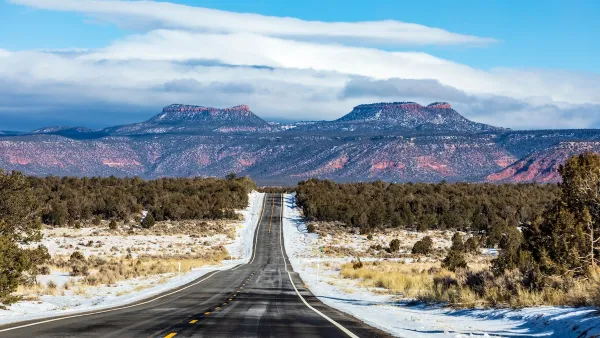
National Monuments Under Threat From Mining Under New Executive Order
An executive order from the Department of the Interior could gut protections for public lands established under the Antiquities Act.
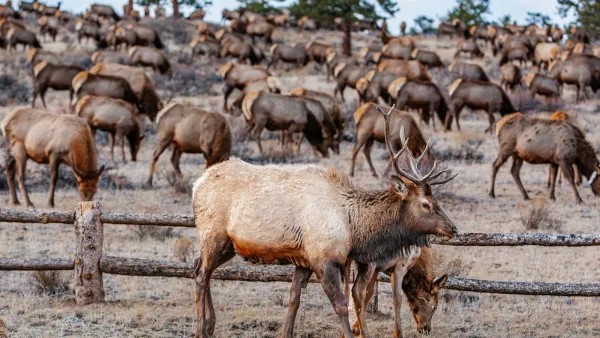
Colorado oil and gas land lease on public land could imperil nation's largest elk herd
The federal government approved the largest land lease to oil and gas interests in Colorado history.

The Osage Nation’s Effort to Clean Up Abandoned Oil Wells
The Osage Nation is leading a complex and long-term initiative to identify, plug, and remediate thousands of orphaned oil wells on its reservation, protecting land, water, and community health for future generations.

Planetizen Federal Action Tracker
A weekly monitor of how Trump’s orders and actions are impacting planners and planning in America.

California plans to bury El Niño’s downpour
If the state plays its cards right, it may be able to store a billion acre-feet of El Niño’s water in aquifers.

Chicago breaks ground on $3 billion megadevelopment
The new neighborhood, titled Foundry Park, will one day host 3,700 residences.

Satanic Place Names
From streams and lakes to valleys and canyons, I mapped more than 1,000 places named after the Devil.

California High-Speed Rail Authority CEO resigns after $600,000 scandal
Under Ian Choudri, the authority used taxpayer dollars to fund first class flights and trips to nightclubs.

Want to study the Missouri River? Soon, you may need unanimous approval from 10 states
Legislation would require 10 governors’ permission to study or build projects moving water outside the basin.

FREE Course: Walkable City 1: Why Walkability?
After describing his path towards focusing on walkability as the essence of good planning, Jeff Speck marches through his five principal reasons for making more walkable places.
Reinventing Malls: Planning Alchemy—Turning Gray Fields Into Gold
The course focuses on the opportunities and imperatives that shape reinvention of mall sites.

City of Rosemead
Rutgers University, Edward J. Bloustein School of Planning and Public Policy
One Hundred Miles
Hunter College, City University of New York (CUNY)
The Architects Foundation
University of Cincinnati Online
City of Cambridge
Montrose County
The Pocatello Development Authority