U.S. public lands management is undergoing a slow but significant shift.


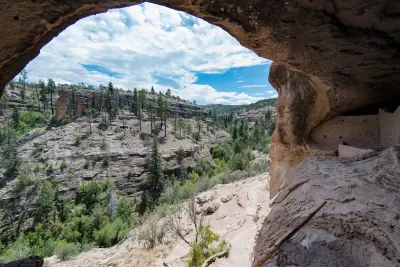
In an article for High Country News, Marissa Ortega-Welch describes the history of the 1964 federal Wilderness Act, “which required federal public land management agencies to consider large roadless areas for an extra level of protection — what some call ‘Big W’ wilderness,” and its relationship to the nation’s first protected wilderness, the Gila Wilderness, protected well before the Wilderness Act in 1924.
Today, many wilderness areas are under threat from a variety of sources. “More frequent, destructive fires and invasive species, both amplified by climate change, are arguably eroding its naturalness; more people, and more pinging smartphones, are making solitude harder to find. As our ideas about wilderness evolve, the landscapes designated as such are also changing in profound ways.”
Meanwhile, Indigenous Americans argue that these lands were not vacant and untouched. Ortega-Welch notes that designating the Gila Wilderness area for ‘protection’ also evicted thousands of Chiricahua-Warm Springs Apache who lived on the land and “utilized, changed, altered” it. Now, the U.S. government has begun to acknowledge the Indigenous history of ‘wilderness’ areas and, in some (very few) cases, restored land to native tribes or created co-management agreements. “In 2021, at Point Reyes National Seashore north of San Francisco, the National Park Service signed a co-stewardship agreement with the Federated Indians of Graton Rancheria, the tribal government of the Southern Pomo and Coast Miwok.”
FULL STORY: https://www.hcn.org/issues/56-6/as-the-gila-wilderness-turns-100-the-wilderness-act-is-still-a-living-law/

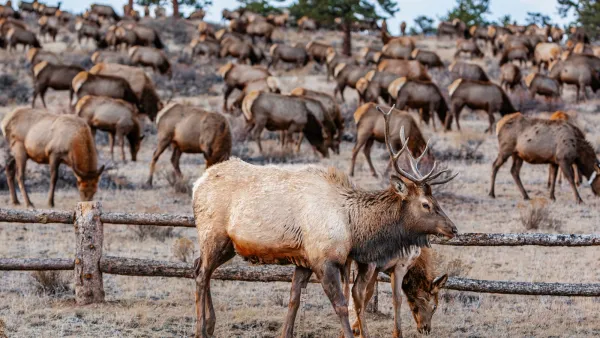
Colorado oil and gas land lease on public land could imperil nation's largest elk herd
The federal government approved the largest land lease to oil and gas interests in Colorado history.
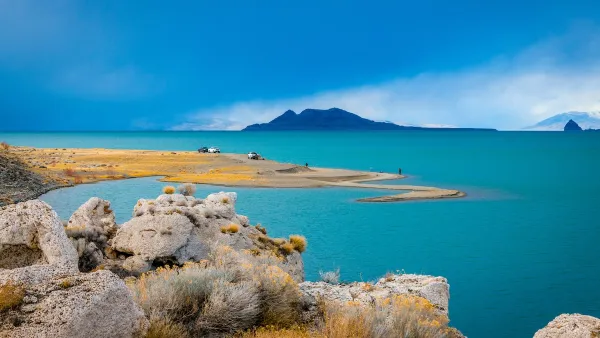
Nevada and Utah Groups Oppose Public Land Sell-Off Plan
A set of last-minute amendments to the budget reconciliation bill open up over half a million acres of federally managed land to sales.
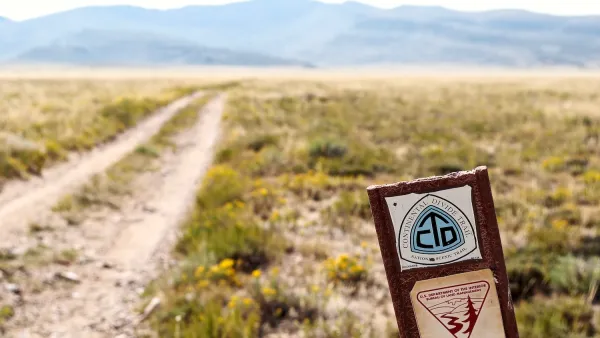
BLM To Rescind Public Lands Rule
The change will downgrade conservation, once again putting federal land at risk for mining and other extractive uses.

The state-sanctioned urbicide of Austin
People don’t kill cities. Freeways do.

US to reduce Colorado River water deliveries to Mexico
A new Colorado Treaty amendment reduces Mexico’s Colorado River water allocation by 250,000 acre feet.

New Jersey’s second-largest city bans standalone data centers
Jersey City will continue to allow co-location facilities, such as those meant for research institutions that store their own data.

Amtrak not solely to blame for New Jersey commuter rail's unreliability, report finds
A new study from the Garden State Initiative found that NJ Transit’s budget grew 20% across a 4 year period, but reliability declined significantly over the same period.

EPA erases limits on planet-warming pollution from power plants
Under Monday’s plan, power plants would still have some limits on how much mercury, arsenic and other contaminants they can emit.

Phoenix announces new on-demand transit service, more frequent RAPID buses
Both new services will launch in October, and are part of Phoenix's Project Effective Access Solutions for Easing Congestion.

FREE Course: Walkable City 1: Why Walkability?
After describing his path towards focusing on walkability as the essence of good planning, Jeff Speck marches through his five principal reasons for making more walkable places.
Reinventing Malls: Planning Alchemy—Turning Gray Fields Into Gold
The course focuses on the opportunities and imperatives that shape reinvention of mall sites.

Eagle County Government
Harvard University Graduate School of Design
Nashville Planning Department
The Architects Foundation
University of Cincinnati Online
The Pocatello Development Authority
The Urban Renewal Agency of the City of Pocatello
Journal of the American Planning Association