A proposal to build housing on five district-owned properties could yield 1,000 housing units for low- and moderate-income district employees.



The San Diego Unified School District is considering a proposal to build 1,000 units of workforce housing on five of its properties to help struggling teachers and staff access affordable housing.
As Kristen Taketa explains in Governing, the move could house 10 percent of the district’s employees. “School districts around California are increasingly pursuing the idea of building affordable housing for employees as a way to improve recruitment and retention amid a worsening housing crisis.”
The district already engages in real estate development, with about 50 low-income employee households living in a district-owned development in Scripps Ranch.
There are two proposed funding models for financing district-owned housing: low-income tax credits combined with long-term bank mortgage and state and local funding; or a permanent loan that could reduce the cost of construction per unit. “The district has also set aside about $206 million in bond funding from its Measure U, which voters passed two years ago, just for housing.”
Read the full story: San Diego Schools Could House 10 Percent of District Workforce


San Diego School District Plans to Build 3,000 Homes for Employees
The district wants to offer affordable housing to 10 percent of its staff by 2030.
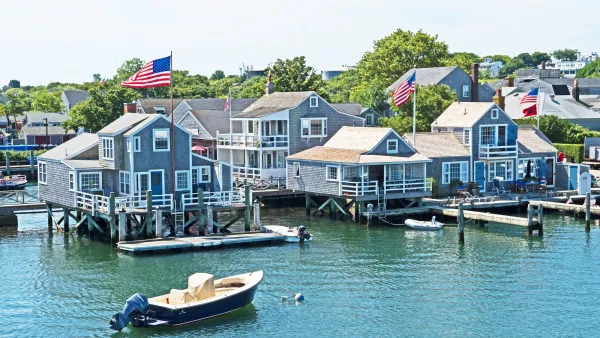
In Nantucket, where over half of homes are for seasonal use, workers struggle to find affordable housing
The island is short roughly 892 to 1,081 rental units.

A South Dakota hospital is funding a new subdivision for its employees
Some employees see investing in housing as the only way to stem the loss of workers moving away due to high housing costs.

Planetizen Federal Action Tracker
A weekly monitor of how Trump’s orders and actions are impacting planners and planning in America.

California plans to bury El Niño’s downpour
If the state plays its cards right, it may be able to store a billion acre-feet of El Niño’s water in aquifers.

Chicago breaks ground on $3 billion megadevelopment
The new neighborhood, titled Foundry Park, will one day host 3,700 residences.

Satanic Place Names
From streams and lakes to valleys and canyons, I mapped more than 1,000 places named after the Devil.

California High-Speed Rail Authority CEO resigns after $600,000 scandal
Under Ian Choudri, the authority used taxpayer dollars to fund first class flights and trips to nightclubs.

Want to study the Missouri River? Soon, you may need unanimous approval from 10 states
Legislation would require 10 governors’ permission to study or build projects moving water outside the basin.

FREE Course: Walkable City 1: Why Walkability?
After describing his path towards focusing on walkability as the essence of good planning, Jeff Speck marches through his five principal reasons for making more walkable places.
Reinventing Malls: Planning Alchemy—Turning Gray Fields Into Gold
The course focuses on the opportunities and imperatives that shape reinvention of mall sites.

City of Rosemead
Rutgers University, Edward J. Bloustein School of Planning and Public Policy
One Hundred Miles
Hunter College, City University of New York (CUNY)
The Architects Foundation
University of Cincinnati Online
City of Cambridge
Montrose County
The Pocatello Development Authority