SF Muni is the latest transit agency to sound the alarm on its funding woes, announcing a slate of massive proposed service cuts it will have to make without new revenue sources.


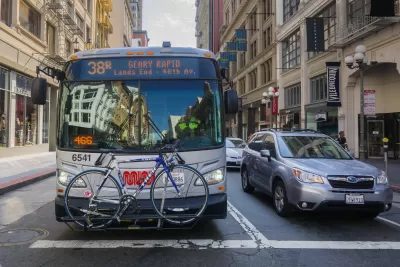
Like other transit operators around the country, San Francisco’s Municipal Transportation Agency faces steep service cuts without additional funding, reports Dan Brekke for KQED.
According to Brekke, “The service reductions that the SFMTA said could be needed to help reduce future annual deficits topping $300 million include reducing the frequency of many busy bus and train lines, ending service on bus routes with the lowest ridership and mothballing the city’s historic cable cars and trolleys.”
The news comes after a transit funding proposition failed to win out over a competing measure. “SFMTA Executive Director Jeff Tumlin told the Muni Funding Working Group on Wednesday that his goal in outlining the draconian service-reduction scenarios is to show the importance of coming up with a politically viable revenue solution that can get on the ballot in 2026.”
Other options for reducing the agency’s expenses include reducing fare discounts and subsidies. All of these steps, Brekke points out, would likely lead to a drop in ridership and “compromise Muni’s efforts to equitably serve a ridership that’s 38% low-income and 70% people of color.” Julie Kirschbaum, SFMTA’s director of transit, said the loss of transit service would slow the city’s overall economic recovery.
Read the full story: SF Muni Is in Dire Need of Funding. Without It, Cuts Could Be ‘Devastating’

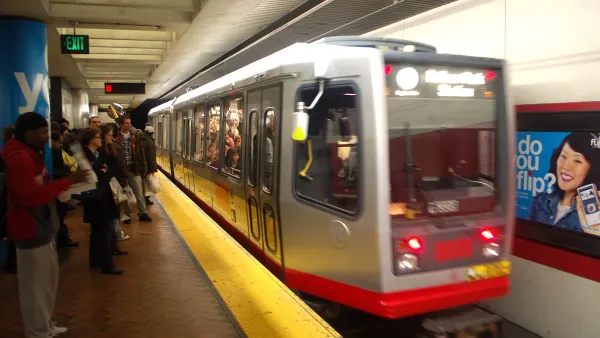
California Revives $750M Loan to Save Bay Area Transit
The state approved a $750 million loan as a stopgap measure to fund regional transit agencies until a 2026 ballot measure that could bring more permanent funding.

California Rejects Loan to Save Bay Area Transit
The state’s Department of Finance wants to extend negotiations about the loan, making it unlikely transit agencies will receive any assistance before the end of the year.
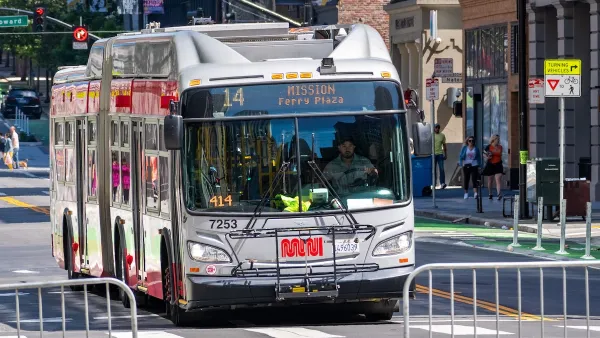
How to Fund SF’s Muni Without Cutting Service
Three solutions for bridging the San Francisco transit agency’s budget gap without reducing service for transit-dependent riders.

Planetizen Federal Action Tracker
A weekly monitor of how Trump’s orders and actions are impacting planners and planning in America.

Data reveals that NYC’s bet on congestion pricing has paid off
After almost two years of the program, reports show positive impacts on traffic and air quality and no disruptions to parking.

HUD modernizes 50-year-old manufactured housing framework
The Next Generation Manufactured Housing Action Plan establishes new energy-efficiency standards for manufactured homes, and new guidelines for anchoring them.

Data center backlash set to sway midterm elections
Data centers figure in state and federal races and are the subject of dozens of ballot measures.

Developers sue Mississippi landowners who object to pipeline through their land
Because the Federal Energy Regulatory Commission approved the pipeline project, the developer can use private land without the consent of the owner.

A gas leak in NYC is costing residents $300 million
More than 90% of NYC’s electricity is from natural gas. About 2% of that gas is leaking and escaping into the air.

FREE Course: Walkable City 1: Why Walkability?
After describing his path towards focusing on walkability as the essence of good planning, Jeff Speck marches through his five principal reasons for making more walkable places.
Reinventing Malls: Planning Alchemy—Turning Gray Fields Into Gold
The course focuses on the opportunities and imperatives that shape reinvention of mall sites.

One Hundred Miles
County of Mendocino
planning NEXT
The Architects Foundation
University of Cincinnati Online
Montrose County
Northern Illinois Transit Authority (NITA)
The Pocatello Development Authority