The city’s automated traffic enforcement cameras are issuing tickets at rates more aligned with the community’s racial makeup — unlike human police officers, according to a new analysis.


A study of Chicago’s controversial speed cameras indicates that they issue citations more equitably than human police officers. “Cameras can detect dangerous moving violations, such as serious speeding and running red lights, without the need for immediate police involvement. Automated enforcement alone won’t guarantee safe streets, but cameras have reduced fatal and serious injury crashes substantially where deployed, including in Chicago.”
Research by Wenfei Xu, David Levinson, Michael J. Smart, and Nebiyou Yonas Tilahun reveals that “when speed cameras are doing the ticketing, the proportion of tickets issued to Black and white drivers aligns closely with their respective share of roadway users. With human enforcement, in contrast, police officers stop Black drivers at a rate that far outstrips their presence on the road.” In areas of Chicago where half of drivers are Black, they account for 70 percent of police stops.
Using automated traffic enforcement can be one step toward more equitable policing. In Illinois, lawmakers are proposing to ban traffic stops “solely based on noncriminal and minor offenses such as improper vehicle registration, seat belt violations or lane usage mistakes,” while Berkeley is considering the use of trained civilians for routine traffic enforcement — similar to parking enforcement in most cities — to reduce the risk of interactions with armed law enforcement.
FULL STORY: Police stop more Black drivers, while speed cameras issue unbiased tickets − new study from Chicago

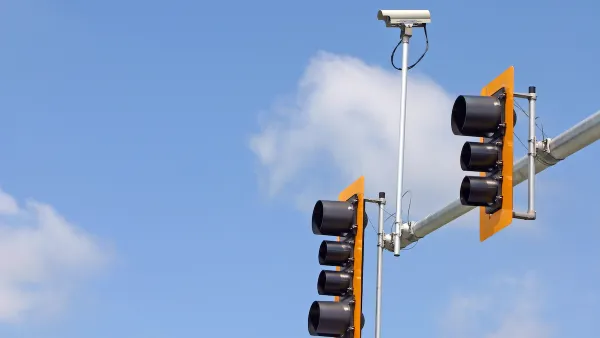
Study Assesses Attitudes on Traffic Cameras in Boston’s Black Communities
Residents are wary of the new technology’s potential for surveillance, but support boosting enforcement while reducing interaction with police.
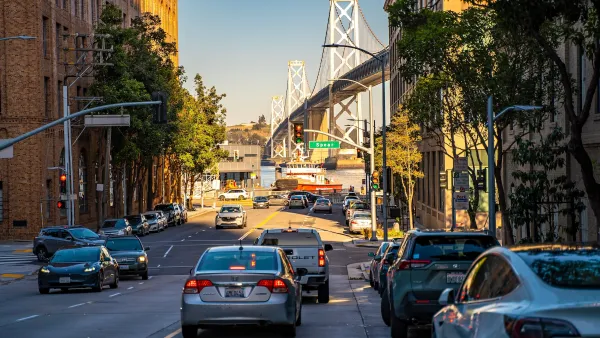
After San Francisco installed traffic cameras, speeding dropped by 80%
The city was allowed to install speed cameras as part of a five-year pilot program approved by California in 2023.
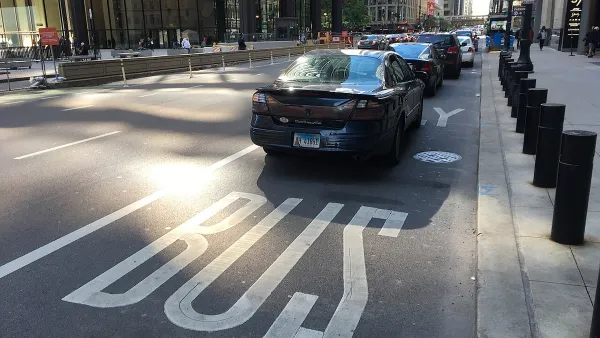
New Chicago Cameras Will Automatically Ticket Drivers Parked in Bus and Bike Lanes
The city is adding cameras to transit buses as part of a pilot program aimed at stopping drivers from blocking bus lanes.

Planetizen Federal Action Tracker
A weekly monitor of how Trump’s orders and actions are impacting planners and planning in America.

The state-sanctioned urbicide of Austin
People don’t kill cities. Freeways do.

US to reduce Colorado River water deliveries to Mexico
A new Colorado Treaty amendment reduces Mexico’s Colorado River water allocation by 250,000 acre feet.

5 New England states march closer to 800 megawatt wind energy project
Securing federal approval for the project may be complicated under the Trump administration, which has historically been hostile towards domestic wind power.

Baltimore to break ground on $50 million Transit Priority Project
The project will bring faster bus trips, safer streets and better bike connections to Baltimore.

Airbnb launches $250 million 'last-dollar financing' housing accelerator, makes first investment in Austin
The company will put $6.4 million towards affordable housing development in Texas’ capital.

FREE Course: Walkable City 1: Why Walkability?
After describing his path towards focusing on walkability as the essence of good planning, Jeff Speck marches through his five principal reasons for making more walkable places.
Reinventing Malls: Planning Alchemy—Turning Gray Fields Into Gold
The course focuses on the opportunities and imperatives that shape reinvention of mall sites.

Eagle County Government
Harvard University Graduate School of Design
Nashville Planning Department
The Architects Foundation
University of Cincinnati Online
The Pocatello Development Authority
The Urban Renewal Agency of the City of Pocatello
Journal of the American Planning Association