A plan to restore perennial plants to agricultural land could help reduce runoff and improve water quality across the Great Lakes region.


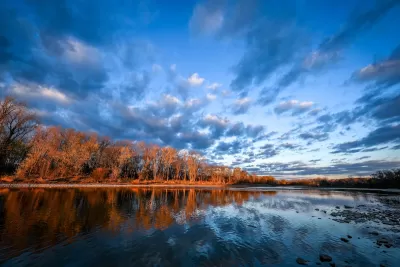
A group of nonprofits and land trusts in the Great Lakes region is collaborating on a new effort to improve water quality by returning certain croplands to perennial vegetation to reduce runoff and limit erosion.
According to an article in Midland Daily News, “Using state-of-the-art watershed modeling paired with local insights, the Greater Lakes Promise team selects high priority lands for conservation. These lands are then permanently protected with funding generated by individuals and businesses who live and work in the region.”
The restored land will enhance carbon storage and reduce pollution. “The team will develop a modeling framework to target areas with the highest potential for phosphorous loading, along with the lowest predicted land value, in order to maximize the overall return on investment and make sure funds are put to good use.”
If successful, the project offers a promising approach to the permanent conservation of ecologically important areas.
FULL STORY: New regional partnership to improve Great Lakes water quality

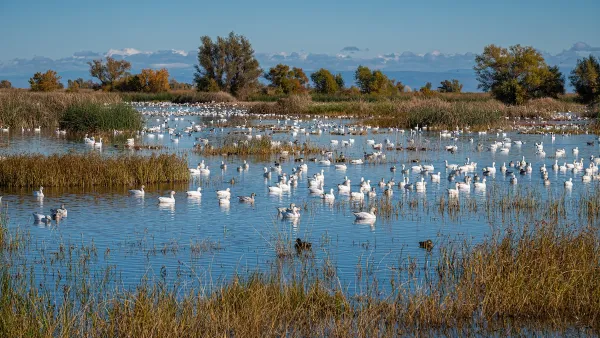
California Lawmakers Move to Protect Waterways
Anticipating that the Trump EPA will reinstate a 2017 policy that excluded seasonal wetlands and waterways from environmental protections.

Winter Road Salt is Making Waterways Toxic to Wildlife
Salt used to clear streets is accumulating in local creeks and rivers and seeping into groundwater, contaminating fresh water supplies.
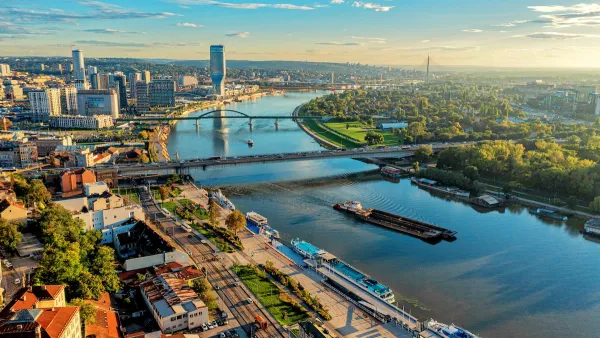
Report: European Rivers Are in Trouble
Some of the continent’s most important rivers are suffering from overuse and pollution.

Planetizen Federal Action Tracker
A weekly monitor of how Trump’s orders and actions are impacting planners and planning in America.

The state-sanctioned urbicide of Austin
People don’t kill cities. Freeways do.

US to reduce Colorado River water deliveries to Mexico
A new Colorado Treaty amendment reduces Mexico’s Colorado River water allocation by 250,000 acre feet.

5 New England states march closer to 800 megawatt wind energy project
Securing federal approval for the project may be complicated under the Trump administration, which has historically been hostile towards domestic wind power.

Baltimore to break ground on $50 million Transit Priority Project
The project will bring faster bus trips, safer streets and better bike connections to Baltimore.

Airbnb launches $250 million 'last-dollar financing' housing accelerator, makes first investment in Austin
The company will put $6.4 million towards affordable housing development in Texas’ capital.

FREE Course: Walkable City 1: Why Walkability?
After describing his path towards focusing on walkability as the essence of good planning, Jeff Speck marches through his five principal reasons for making more walkable places.
Reinventing Malls: Planning Alchemy—Turning Gray Fields Into Gold
The course focuses on the opportunities and imperatives that shape reinvention of mall sites.

Eagle County Government
Harvard University Graduate School of Design
Nashville Planning Department
The Architects Foundation
University of Cincinnati Online
The Pocatello Development Authority
The Urban Renewal Agency of the City of Pocatello
Journal of the American Planning Association