The guide contains actionable steps local and state governments can take to protect vulnerable residents from the impacts of extreme heat.



As policymakers at all levels of government are beginning to recognize the significant threat posed by extreme heat, particularly to vulnerable populations such as children and the elderly., the U.S. Department of Housing and Urban Development (HUD) issued an Extreme Heat Playbook designed to help cities understand the public health risks of extreme heat and provide best practices for building resilience and mitigating the impacts.
According to a press release from HUD, “The Extreme Heat ‘Playbook’ is an actionable guide for planning and implementing measures, emphasizing evaluating existing community strengths, weaknesses, and capabilities; updating policies and protocols to address current and future conditions; lowering cooling costs; and highlighting the critical importance of resilience amid climate change, given the increase of severe extreme heat events.”
The guide identifies 16 strategies, complete with examples and a list of federal funding sources and resources. “Built upon four clear action tracks, the playbook includes multiple strategies within each section and provides project profiles that illustrate how other communities have addressed the impacts of extreme heat.”
The press release adds, “The ‘Playbook’ aligns with the National Heat Strategy introduced by the Biden-Harris Administration to coordinate a ‘whole-of-government’ approach to extreme heat from 2024 through 2030, as well as the newly-launched Extreme Heat Call to Action and the White House Climate Resilience Framework.”
FULL STORY: HUD Commits to Protect Households Across the Nation from Extreme Heat

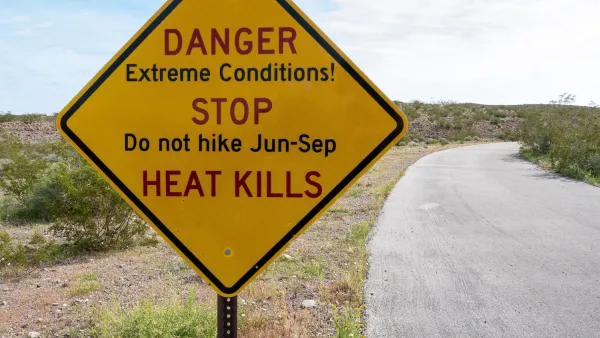
Record Temperatures Prompt Push for Environmental Justice Bills
Nevada legislators are proposing laws that would mandate heat mitigation measures to protect residents from the impacts of extreme heat.
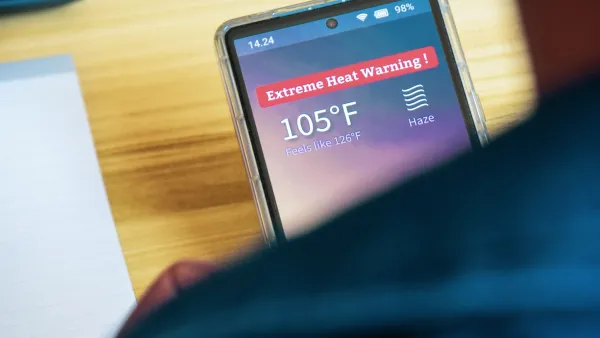
Experts Call for Extreme Heat Action Plans as Communities Face Growing Risks
Experts are urging cities and counties to develop heat action plans and personalized heat warnings as extreme heat becomes a leading cause of climate-related deaths.

Designing Cooler Cities: Lessons from Ancient Civilizations
Ancient Rome had ways to counter the urban heat island effect. As climate change raises global temperatures, can urban planners and designers apply any of those lessons to cities today?

Planetizen Federal Action Tracker
A weekly monitor of how Trump’s orders and actions are impacting planners and planning in America.

The state-sanctioned urbicide of Austin
People don’t kill cities. Freeways do.

US to reduce Colorado River water deliveries to Mexico
A new Colorado Treaty amendment reduces Mexico’s Colorado River water allocation by 250,000 acre feet.

5 New England states march closer to 800 megawatt wind energy project
Securing federal approval for the project may be complicated under the Trump administration, which has historically been hostile towards domestic wind power.

Baltimore to break ground on $50 million Transit Priority Project
The project will bring faster bus trips, safer streets and better bike connections to Baltimore.

Airbnb launches $250 million 'last-dollar financing' housing accelerator, makes first investment in Austin
The company will put $6.4 million towards affordable housing development in Texas’ capital.

FREE Course: Walkable City 1: Why Walkability?
After describing his path towards focusing on walkability as the essence of good planning, Jeff Speck marches through his five principal reasons for making more walkable places.
Reinventing Malls: Planning Alchemy—Turning Gray Fields Into Gold
The course focuses on the opportunities and imperatives that shape reinvention of mall sites.

Eagle County Government
Harvard University Graduate School of Design
Nashville Planning Department
The Architects Foundation
University of Cincinnati Online
The Pocatello Development Authority
The Urban Renewal Agency of the City of Pocatello
Journal of the American Planning Association