Despite warnings that drivers should remain attentive, people behind the wheel of cars equipped with ‘autonomous’ assistance often take their eyes off the road.


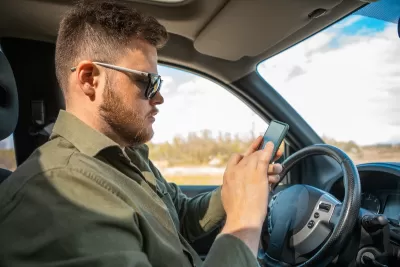
A study from the Insurance Institute for Highway Safety (IIHS) and Massachusetts Institute of Technology (MIT) reveals that drivers using cars with automation software are more likely to engage in distracting behaviors. “Although most automakers advertise their driver assistance software packages as a convenient tool to make driving less of a chore, abuse is known to be common.”
The study tested Volvo’s Pilot Assist and Tesla’s Autopilot systems, explains William Gavin in an article in Quartz. “Drivers were distracted more than 30% of the time they used Pilot Assist, the IIHS found.”
In Tesla’s case, drivers learned how to placate the steering wheel sensor that detects the driver’s hands without changing their behavior. “The IIHS noted that the longer drivers used Autopilot, the less time it took for them to take their hands of the wheel after the alerts stopped.” According to IIHS President David Harkey, “If you train [people] to think that paying attention means nudging the steering wheel every few seconds, then that’s exactly what they’ll do.”
Gavin notes that both the Volvo and Tesla systems received a “poor” safety rating from the IIHS earlier this year.
FULL STORY: Drivers using tech like Tesla's Autopilot are more likely to goof off, study says

Tesla Found Partly Liable in Fatal Autopilot Crash
The Miami ruling is the first to find the company partly responsible in a crash that killed one pedestrian and injured another.
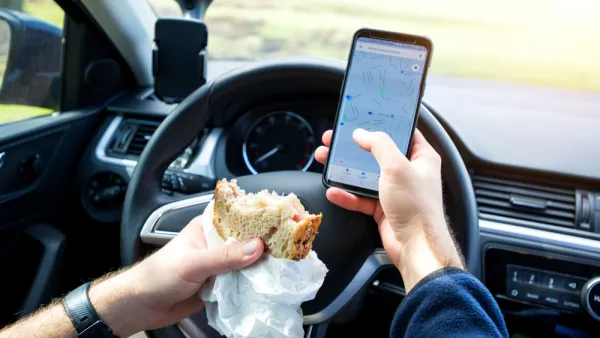
Study: Many Driver Assist Users Consider Their Cars Self-Driving
Almost half of drivers using Tesla and GMC driver assist technology report feeling comfortable treating their cars as fully autonomous.
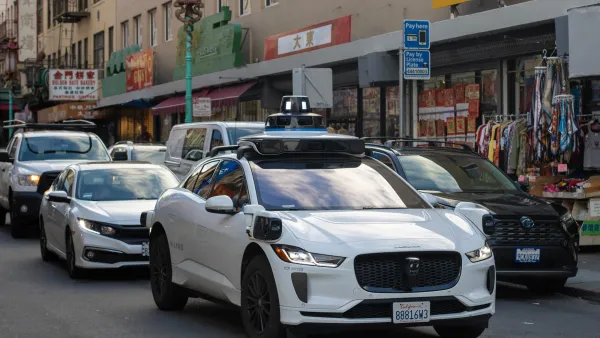
New Jersey bill would require AVs to use 3 sensing technologies — banning Tesla's robotaxi fleet
Elon Musk has been 'largely alone' in his conviction that radar and lidar sensors are not necessary for the safe operation of autonomous cars.

Planetizen Federal Action Tracker
A weekly monitor of how Trump’s orders and actions are impacting planners and planning in America.

The state-sanctioned urbicide of Austin
People don’t kill cities. Freeways do.

US to reduce Colorado River water deliveries to Mexico
A new Colorado Treaty amendment reduces Mexico’s Colorado River water allocation by 250,000 acre feet.

5 New England states march closer to 800 megawatt wind energy project
Securing federal approval for the project may be complicated under the Trump administration, which has historically been hostile towards domestic wind power.

Baltimore to break ground on $50 million Transit Priority Project
The project will bring faster bus trips, safer streets and better bike connections to Baltimore.

Airbnb launches $250 million 'last-dollar financing' housing accelerator, makes first investment in Austin
The company will put $6.4 million towards affordable housing development in Texas’ capital.

FREE Course: Walkable City 1: Why Walkability?
After describing his path towards focusing on walkability as the essence of good planning, Jeff Speck marches through his five principal reasons for making more walkable places.
Reinventing Malls: Planning Alchemy—Turning Gray Fields Into Gold
The course focuses on the opportunities and imperatives that shape reinvention of mall sites.

Eagle County Government
Harvard University Graduate School of Design
Nashville Planning Department
The Architects Foundation
University of Cincinnati Online
The Pocatello Development Authority
The Urban Renewal Agency of the City of Pocatello
Journal of the American Planning Association