Small towns and communities around the country are eliminating parking requirements at a faster rate than big cities.


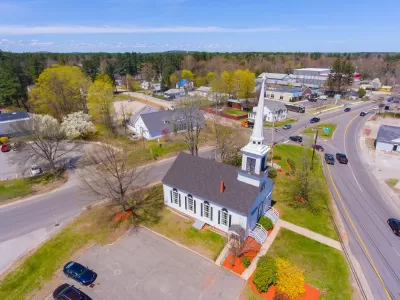
In an article for Sightline, Catie Gould provides three examples of small towns that have eliminated parking minimums, noting that more small towns have done so than big cities. According to Gould, “While large cities like San Jose, California, and Austin, Texas, garner national press coverage for eliminating parking mandates, this policy reform is most commonly enacted in towns with fewer than 25,000 residents.”
For every U.S. city with populations of over 250,000 that has repealed parking requirements, two small towns (under 25,000) have done so. This is in part due to the fact that there are more small towns than big cities — “But small jurisdictions are also likely underrepresented in the Parking Reform Network data. With little to no media coverage of zoning changes in places like Gilman, Wisconsin, or Canandaigua, New York, those parking reforms are less likely to make it onto the map in the first place.” Gould also points out that many small and rural communities never enacted parking mandates in the first place.
Gould highlights Ecorse, Michigan, where deindustrialization and population loss left the town with ample underused parking and vacant buildings. Eliminating parking requirements has made it easier to redevelop properties, says town planner Nani Wolf.
FULL STORY: Twice As Many Small Towns Have Eliminated Parking Mandates As Large Cities

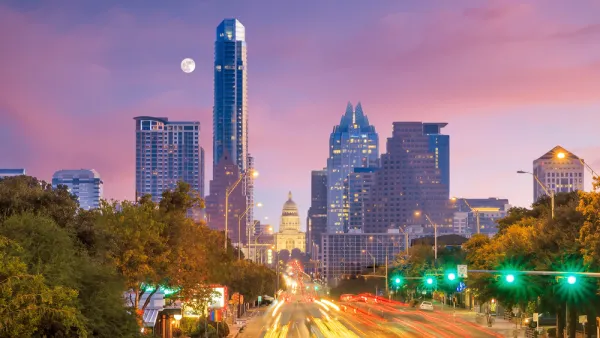
Austin Eliminates Parking Requirements
After eliminating downtown parking requirements ten years ago, the city will now end minimum parking mandates citywide.
Parking Reform Bill to be Introduced at Federal Level
The legislation, which would ban parking requirements near transit to encourage housing development and bring down housing costs, would be a rare federal preemption of local control.
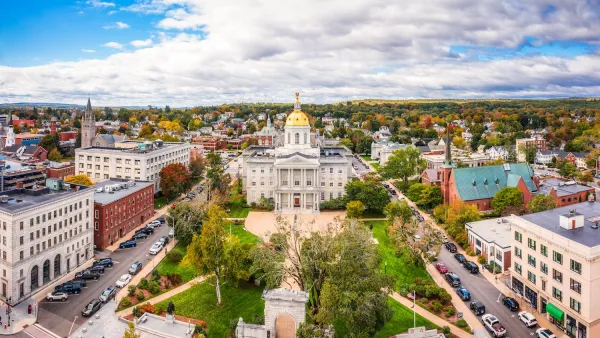
New Hampshire House Passes Parking Reform Bill
The revised bill, which caps parking requirements at one spot per residential unit and eliminates exemptions, will go back to the Senate for a new vote.

Planetizen Federal Action Tracker
A weekly monitor of how Trump’s orders and actions are impacting planners and planning in America.

The state-sanctioned urbicide of Austin
People don’t kill cities. Freeways do.

US to reduce Colorado River water deliveries to Mexico
A new Colorado Treaty amendment reduces Mexico’s Colorado River water allocation by 250,000 acre feet.

5 New England states march closer to 800 megawatt wind energy project
Securing federal approval for the project may be complicated under the Trump administration, which has historically been hostile towards domestic wind power.

Baltimore to break ground on $50 million Transit Priority Project
The project will bring faster bus trips, safer streets and better bike connections to Baltimore.

Airbnb launches $250 million 'last-dollar financing' housing accelerator, makes first investment in Austin
The company will put $6.4 million towards affordable housing development in Texas’ capital.

FREE Course: Walkable City 1: Why Walkability?
After describing his path towards focusing on walkability as the essence of good planning, Jeff Speck marches through his five principal reasons for making more walkable places.
Reinventing Malls: Planning Alchemy—Turning Gray Fields Into Gold
The course focuses on the opportunities and imperatives that shape reinvention of mall sites.

Eagle County Government
Harvard University Graduate School of Design
Nashville Planning Department
The Architects Foundation
University of Cincinnati Online
The Pocatello Development Authority
The Urban Renewal Agency of the City of Pocatello
Journal of the American Planning Association