Groups including the Sierra Club say the expansion of I-94 would negatively impact communities of color and increase flood risks.


A group of environmental organizations is suing the U.S. Department of Transportation at the Wisconsin Department of Transportation in an attempt to stop the expansion of Interstate 94, reports Christina Van Zelst for Fox 6 Milwaukee.
According to Van Zelst, “The $1.7 billion project plans to expand I-94 from six to eight lanes between 16th and 70th streets in Milwaukee. The project recommendation includes modifications to the Stadium Interchange, such as eliminating left-hand exit and entrance ramps, ‘right-sizing’ the interchange to a diverging diamond and reconstructing the full corridor to a full four lanes in each direction.”
The group says the project, which is already federally approved, “will perpetuate the negative impacts of highway expansion on communities of color, increase climate emissions, exacerbate water pollution and flooding, and compound decades of disinvestment in public transportation in Milwaukee.”
The plaintiffs point out that the project does not include any considerations for public transit, which many local residents rely on.
FULL STORY: I-94 expansion in Milwaukee project; opposition takes legal action

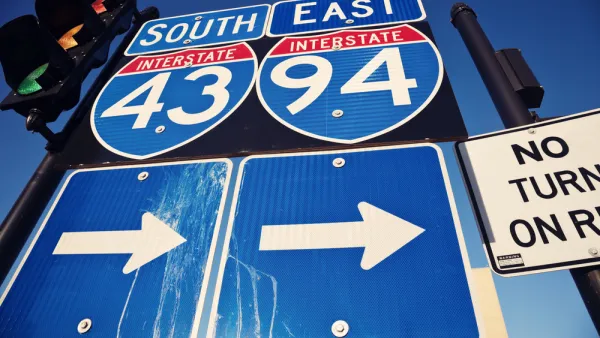
Wisconsin To Expand Interstate 94 in Milwaukee
The state’s department of transportation is moving forward with a proposal that will expand the freeway to eight lanes, rejecting a ‘Fix at Six’ plan that would have kept the existing six lanes.
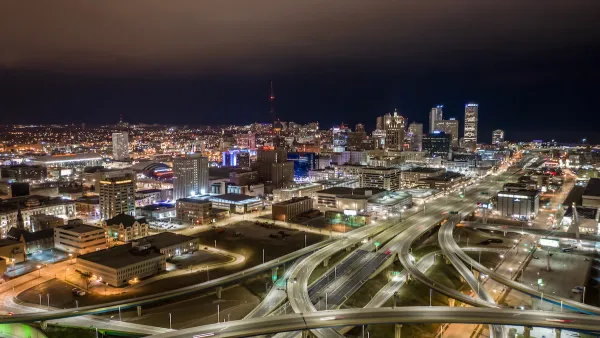
Milwaukee Residents Challenge Freeway Expansion
Residents are voicing opposition to a planned expansion of Interstate 94, arguing that the project would eliminate the limited green space in the neighborhood.
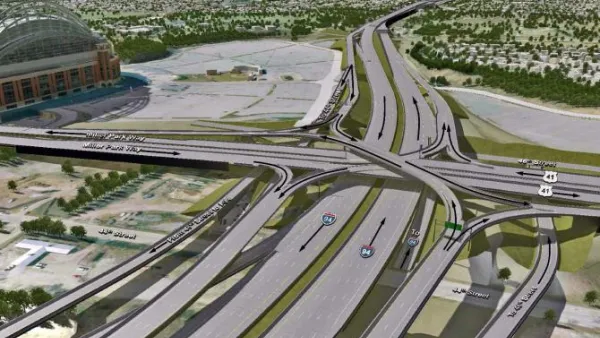
Opinion: Proposed I-94 Expansion a 'Fiasco' for Milwaukee
An opinion piece published by Urban Milwaukee argues against a proposed expansion of three miles of Interstate 94 in Milwaukee.

Planetizen Federal Action Tracker
A weekly monitor of how Trump’s orders and actions are impacting planners and planning in America.

The state-sanctioned urbicide of Austin
People don’t kill cities. Freeways do.

US to reduce Colorado River water deliveries to Mexico
A new Colorado Treaty amendment reduces Mexico’s Colorado River water allocation by 250,000 acre feet.

Mamdani overhauls NYC's Vision Zero plan with 100 new policy goals
The overhaul aims to reduce traffic deaths and make streets safer for pedestrians, cyclists and drivers through lower speed limits, new safety infrastructure and more.

Amtrak not solely to blame for New Jersey commuter rail's unreliability, report finds
A new study from the Garden State Initiative found that NJ Transit’s budget grew 20% across a 4 year period, but reliability declined significantly over the same period.

EPA erases limits on planet-warming pollution from power plants
Under Monday’s plan, power plants would still have some limits on how much mercury, arsenic and other contaminants they can emit.

FREE Course: Walkable City 1: Why Walkability?
After describing his path towards focusing on walkability as the essence of good planning, Jeff Speck marches through his five principal reasons for making more walkable places.
Reinventing Malls: Planning Alchemy—Turning Gray Fields Into Gold
The course focuses on the opportunities and imperatives that shape reinvention of mall sites.

_03.jpg)
Eagle County Government
Harvard University Graduate School of Design
Nashville Planning Department
The Architects Foundation
University of Cincinnati Online
The Pocatello Development Authority
The Urban Renewal Agency of the City of Pocatello
Journal of the American Planning Association