Federal support for offshore wind projects is helping the industry grow, with nine projects approved so far this year.


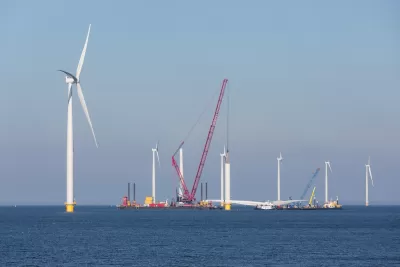
In a piece for Sierra magazine, Sarah Giltz and Nancy Pyne highlight the growth of the offshore wind industry in the United States. “Today there are enough offshore wind projects moving forward to power nearly 5 million homes,” Giltz and Pyne write.
According to the authors, a new plan from the Department of the Interior “increases transparency and predictability and creates greater regulatory certainty for offshore wind,” while other federal agencies are also working to develop policy recommendations and modernize renewable energy infrastructure. “By 2030, offshore wind is expected to create 77,000 family-sustaining jobs, support thousands of small businesses, and inject hundreds of millions of dollars in local communities.”
The authors emphasize the need for project labor agreements to ensure that the industry provides stable, high-quality jobs. “It’s clear that partnerships are key as developers, unions, conservation organizations and communities work to build this new industry together. Collaboration will be essential to build on the current momentum and ensure the offshore wind industry creates good jobs and provides real benefits to local communities.”
Read the full story: Offshore Wind Development in the US is Reaching Gale Force

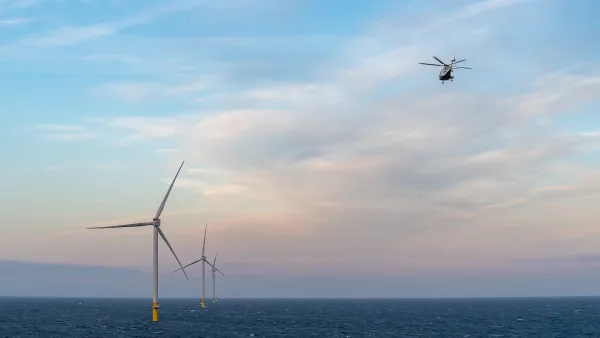
California presses forward on offshore wind
The state is taking steps to prepare its grid and port infrastructure for offshore wind projects despite the federal government's pushback on the technology.
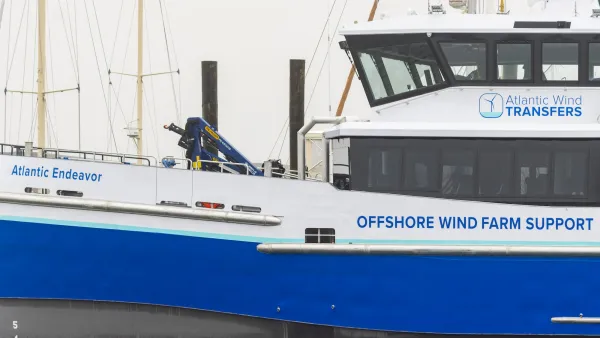
Nation’s Largest Offshore Wind Project, Suspended by Trump, Restarts Construction
A judge issued a temporary restraining order against the Trump administration’s suspension of five East Coast offshore wind projects.
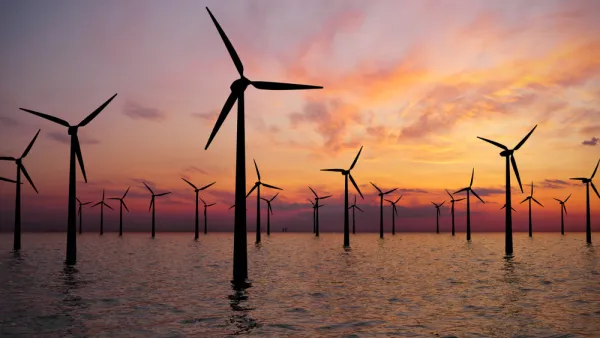
Bringing Community Voices Into Renewable Energy Planning
The MIT Renewable Energy Clinic helps coastal communities navigate the complexities of offshore wind development through neutral, inclusive engagement that surfaces local concerns and supports fair decision-making.

Planetizen Federal Action Tracker
A weekly monitor of how Trump’s orders and actions are impacting planners and planning in America.

Amtrak, CN end decades-long dispute with eight-year agreement
The new operating agreement establishes an updated framework for the companies to work together, including processes to resolve disputes.

Judges permit Denver to divert 77,000 acre feet from the Colorado River for reservoir expansion
Overuse and climate change have caused the Colorado River’s water levels to plummet.

Boston has spent millions making the Green Line more accessible — and there’s no end in sight
While the city has invested millions into expanding and adding platforms to the Green Line to make it more accessible, new train cars set to arrive next year will be too tall for disabled passengers to board without raising the current platforms.

Idaho may see an 18% drop in federal surface transit funding — the largest estimated cut in the US
Transit systems in rural communities are much more reliant on federal funding to provide their services.

How ‘post-disaster gentrification’ alters neighborhoods after natural calamities
After hurricanes, fires or other calamities, the original residents of a community are often replaced by younger, wealthier residents.

FREE Course: Walkable City 1: Why Walkability?
After describing his path towards focusing on walkability as the essence of good planning, Jeff Speck marches through his five principal reasons for making more walkable places.
Reinventing Malls: Planning Alchemy—Turning Gray Fields Into Gold
The course focuses on the opportunities and imperatives that shape reinvention of mall sites.

City of Wisconsin Rapids
Harvard University Graduate School of Design
KFH Group Inc.
The Architects Foundation
University of Cincinnati Online
The Pocatello Development Authority
The Urban Renewal Agency of the City of Pocatello