In New Orleans, the third act begins on a famous outdoor stage.


Charles Moores Piazza dItalia is like one of those fruity, rummy Hurricane cocktails that you sip through a straw from a curvy glass garnished with an orange slice and maraschino cherry: colorful, over the top, and made of questionable ingredients. In 1978, when the piazza went up in downtown New Orleans, urbane critics were quick to decipher the architectural in-jokes for those in the derriere-garde. They elucidated the "concentrical hemicyclical" colonnades painted bright yellow, ochre, and red. They gushed over the esoteric water features"wetopes," Moore called them. And they winked knowingly at twin cartouches of Moores benevolent face on an arch above the piazzas St. Josephs Fountain. Reported The New York Times, "This place...may be the most significant new urban plaza any American city has erected in years."
Thanks to Jeffrey Lofton, APR
Read the full story: That ’70s Show


Planetizen Federal Action Tracker
A weekly monitor of how Trump’s orders and actions are impacting planners and planning in America.

‘Going backwards:’ Baltimore mayor, students rally against state's transit funding plan
Maryland's proposed six-year plan provides no funding for Baltimore’s BMORE bus program and reduces its road maintenance funding.
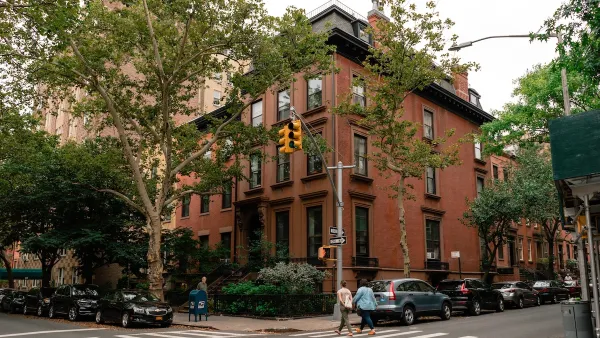
Mamdani sent nearly 6,000 pied-à-terre tax warnings to homes that didn’t qualify
A judge has ordered the administration to cancel thousands of pied-à-terre tax notices after it sent 35% of them erroneously.

Mamdani sent nearly 6,000 pied-à-terre tax warnings to homes that didn’t qualify
A judge has ordered the administration to cancel thousands of pied-à-terre tax notices after it sent 35% of them erroneously.

Detroit to transform waterfront with $2.2 billion investment
Developers will convert about 18 acres of unused parking lot space into civic spaces.

‘Going backwards:’ Baltimore mayor, students rally against state's transit funding plan
Maryland's proposed six-year plan provides no funding for Baltimore’s BMORE bus program and reduces its road maintenance funding.

FREE Course: Walkable City 1: Why Walkability?
After describing his path towards focusing on walkability as the essence of good planning, Jeff Speck marches through his five principal reasons for making more walkable places.
Reinventing Malls: Planning Alchemy—Turning Gray Fields Into Gold
The course focuses on the opportunities and imperatives that shape reinvention of mall sites.

City of Thousand Oaks
City of Wisconsin Rapids
Harvard University Graduate School of Design
The Architects Foundation
University of Cincinnati Online
Northern Illinois Transit Authority (NITA)
The Pocatello Development Authority
The Urban Renewal Agency of the City of Pocatello