The city added leading pedestrian interval technology to over 600 intersections, giving pedestrians time to cross before vehicles.


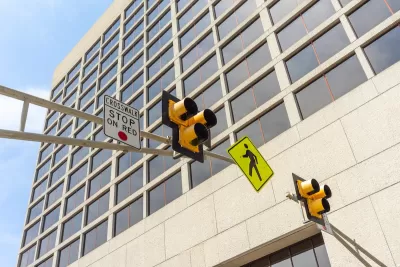
This summer, the Austin Transportation and Public Works Department added pedestrian safety improvements to over 640 intersections in the Texas capital, reports Kelsey Thompson for KXAN.
The changes include leading pedestrian intervals (LPIs), which give pedestrians a lead time to begin crossing before cars get a green light. National research shows LPI reduce pedestrian-vehicle crashes by 13 percent, and “December 2021 data from Austin’s Vision Zero program reported an additional 18% reduction in the number of pedestrian-vehicle crashes each year involving left-turning vehicles at treated intersections.”
The new traffic signals being installed also feature accessibility improvements to assist people with visual impairment. According to Thompson, “City crews are installing the LPIs using funding from the city’s 2020 mobility bond, as well as dollars from the national Safe Streets and Roads for All grant program.”
FULL STORY: These Austin intersection treatments are reducing pedestrian-involved crashes


The Florida Cities Risking Everything to Save Rainbow Sidewalks
Gov. DeSantis has threatened to withhold state transportation funding and remove local leaders who don’t comply with an order to remove painted crosswalks.
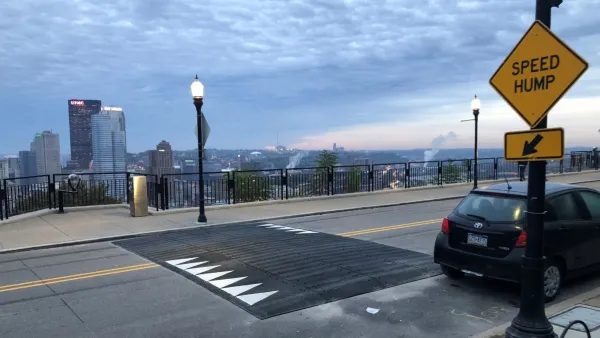
Pittsburgh Excels at Low-Cost, Quick-Build Traffic Calming
The city’s traffic calming initiative has led to a 6 percent average reduction in speeds on corridors with recent interventions.

Austin Completes First Round of Vision Zero Projects
Small, localized interventions such as changes to signal timing and crosswalk improvements are saving lives and improving traffic safety.

Planetizen Federal Action Tracker
A weekly monitor of how Trump’s orders and actions are impacting planners and planning in America.

The state-sanctioned urbicide of Austin
People don’t kill cities. Freeways do.

US to reduce Colorado River water deliveries to Mexico
A new Colorado Treaty amendment reduces Mexico’s Colorado River water allocation by 250,000 acre feet.

5 New England states march closer to 800 megawatt wind energy project
Securing federal approval for the project may be complicated under the Trump administration, which has historically been hostile towards domestic wind power.

Baltimore to break ground on $50 million Transit Priority Project
The project will bring faster bus trips, safer streets and better bike connections to Baltimore.

Airbnb launches $250 million 'last-dollar financing' housing accelerator, makes first investment in Austin
The company will put $6.4 million towards affordable housing development in Texas’ capital.

FREE Course: Walkable City 1: Why Walkability?
After describing his path towards focusing on walkability as the essence of good planning, Jeff Speck marches through his five principal reasons for making more walkable places.
Reinventing Malls: Planning Alchemy—Turning Gray Fields Into Gold
The course focuses on the opportunities and imperatives that shape reinvention of mall sites.

Eagle County Government
Harvard University Graduate School of Design
Nashville Planning Department
The Architects Foundation
University of Cincinnati Online
The Pocatello Development Authority
The Urban Renewal Agency of the City of Pocatello
Journal of the American Planning Association