In the first legal challenges since June’s U.S. Supreme Court decision that cities can enforce outdoor sleeping bans, the ACLU filed a lawsuit alleging Washington’s anti-camping laws violate the state constitution.


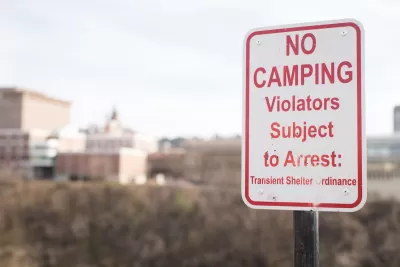
According to an Associated Press article published by ABC News by Clarie Rush, the American Civil Liberties Union filed a lawsuit against the city of Spokane, Washington, on Thursday, alleging that its anti-camping laws violate the state's constitution. Experts believe this is the country's first such legal challenge since the U.S. Supreme Court ruled in June that cities can enforce outdoor sleeping bans even when alternate shelter is not available.
The Supreme Court’s ruling, which many call a landmark decision, found that Grants Pass, Oregon’s camping bans do not violate the Eighth Amendment, which protects against cruel and unusual punishment, even when shelter space is not available. Jazmyn Clark, director of the ACLU of Washington’s Smart Justice Policy Program, told The Associated Press, that Washington State’s constitution only prohibits cruel punishment, with no mention of unusual punishment, which means that if punishing sleeping outside with fines and jail time — Spokane’s ordinances make camping, sitting, or lying on public property misdemeanor crimes, which under state law are punishable by a fine up to $1,000 or jail up to 90 days — is found to be cruel, “that alone is a violation of the state constitution.” Thus, Washington’s state constitution provides more protection than the Eighth Amendment because you do not need to show that the punishment is also unusual.
The lawsuit comes as cities across the country have instituted their own camping bans, following the Supreme Court decision. And while this case is specific to Washington, it could have implications beyond state lines. According to the article, other state constitutions, including those of Pennsylvania, Delaware, Rhode Island, Kentucky and South Dakota, similarly prohibit cruel punishment without mentioning “unusual” punishment.
Read the full story: ACLU sues Washington state city over its anti-homeless laws after a landmark Supreme Court ruling

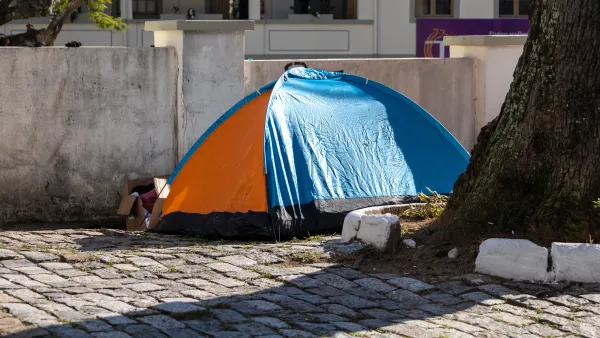
U.S. Supreme Court Upholds Camping Bans, but Challenges of Addressing Homelessness Remain
In Grants Pass v. Johnson, the Supreme Court upheld an Oregon city’s ban on camping in public places, paving the way for similar bans in cities across the country but doing nothing to solve the cause of homelessness.
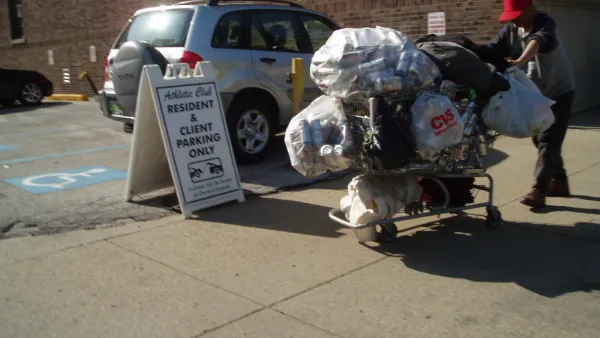
Indiana bans public homelessness
A new law prohibits sleeping or camping on public property.
Gallatin County, Montana Passes Ban on Public Camping
The Gallatin County Commission last week approved an ordinance banning camping on public property and within public rights-of-way.

Amtrak, CN end decades-long dispute with eight-year agreement
The new operating agreement establishes an updated framework for the companies to work together, including processes to resolve disputes.

Judges permit Denver to divert 77,000 acre feet from the Colorado River for reservoir expansion
Overuse and climate change have caused the Colorado River’s water levels to plummet.
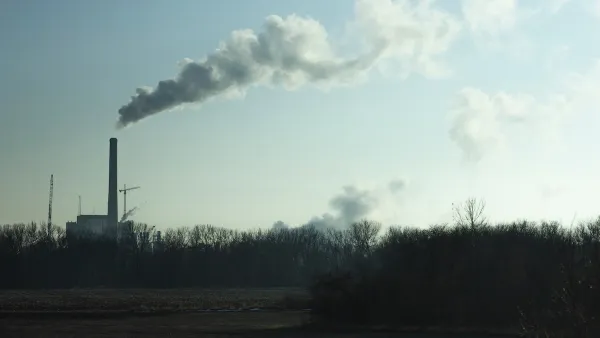
Nation's most wind-powered state turns to coal as data centers increase energy demand
For the first time in decades, Iowa has increased its generation of coal power.

Boston has spent millions making the Green Line more accessible — and there’s no end in sight
While the city has invested millions into expanding and adding platforms to the Green Line to make it more accessible, new train cars set to arrive next year will be too tall for disabled passengers to board without raising the current platforms.

Idaho may see an 18% drop in federal surface transit funding — the largest estimated cut in the US
Transit systems in rural communities are much more reliant on federal funding to provide their services.

How ‘post-disaster gentrification’ alters neighborhoods after natural calamities
After hurricanes, fires or other calamities, the original residents of a community are often replaced by younger, wealthier residents.

FREE Course: Walkable City 1: Why Walkability?
After describing his path towards focusing on walkability as the essence of good planning, Jeff Speck marches through his five principal reasons for making more walkable places.
Reinventing Malls: Planning Alchemy—Turning Gray Fields Into Gold
The course focuses on the opportunities and imperatives that shape reinvention of mall sites.

City of Wisconsin Rapids
Harvard University Graduate School of Design
KFH Group Inc.
The Architects Foundation
University of Cincinnati Online
The Pocatello Development Authority
The Urban Renewal Agency of the City of Pocatello