Voters with disabilities often have a hard time getting to the polls. Mail-in voting helps, but some states are limiting it.


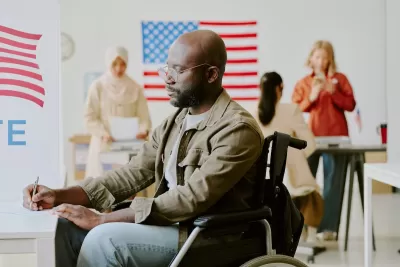
The movement in some states to limit mail-in voting is making it harder for some people with disabilities to access polls, reports Julia Métraux in Mother Jones.
“Scheduling paratransit to the polls is one option—but in rural areas, that can also be more challenging than it should, says Michelle Bishop, manager of voter access at the National Disability Rights Network.” For voters with disabilities, Uber and Lyft are often unreliable options, if they exist at all. “A 2018 report from New York Lawyers for the Public Interest found that, when requested, barely half of New York City riders received accessible vehicles from Uber—and below five percent for Lyft.”
Nonprofit organizations like RideShare2Vote and the NAACP are working to provide transportation to polls. According to Michelle Bishop of the National Disability Rights Network, the nation needs a voting system “where we have just a whole menu of options for voters, and they can figure out what makes it work for them.”
Read the full story: Rideshare to Vote? Not So Easy When You’re Disabled.
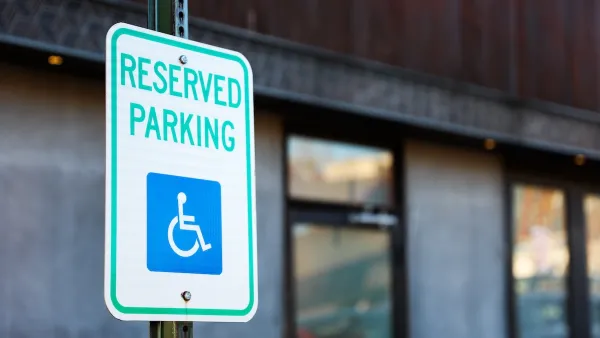
Raleigh Pilots App-Based Feedback Program for Accessible Parking
The city is using the program to collect real-time information about accessibility issues and correct them quickly.
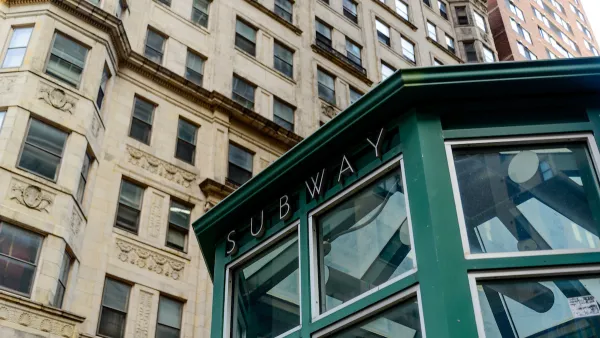
FTA Announces Accessibility Funding for ‘Legacy Stations’
The 2024 budget includes close to $350 million for accessibility improvements at transit stations.
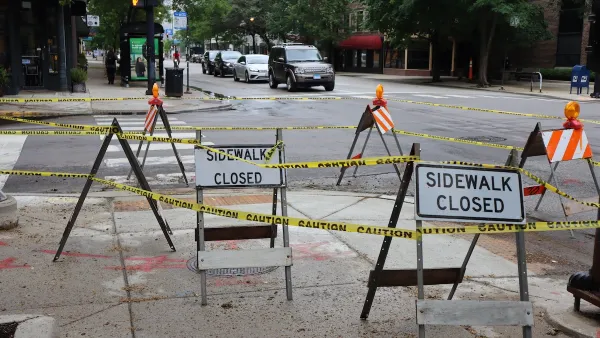
Chicago Residents Sue City Over Inaccessible Sidewalks
The suit alleges the city has failed to create a “coordinated, proactive system” for complying with ADA and ensuring accessibility on the city’s sidewalks and crosswalks.

Planetizen Federal Action Tracker
A weekly monitor of how Trump’s orders and actions are impacting planners and planning in America.

Eastern Nebraska is running out of electricity
Data centers and electrification are straining eastern Nebraska’s grid, throttling economic development.

Study reveals best places in the U.S. for cycling, walking
New research from Streetlight Data examines bicycle and pedestrian miles per capita in the 100 largest U.S. cities by population.

Instead of building new housing, LA developers are turning mansions into mega-mansions
In the richest areas, the number of houses valued at $30 million with demolition permits has skyrocketed since 2018.

Illinois considers spending $1 billion in taxpayer money on data center
A quantum computing campus and data center are currently under construction in Chicago.

As development costs rise, Boston moves to lessen affordable housing requirements
The Boston Zoning Commission and the City Council still need to approve Boston Mayor Michelle Wu’s proposed changes

FREE Course: Walkable City 1: Why Walkability?
After describing his path towards focusing on walkability as the essence of good planning, Jeff Speck marches through his five principal reasons for making more walkable places.
Reinventing Malls: Planning Alchemy—Turning Gray Fields Into Gold
The course focuses on the opportunities and imperatives that shape reinvention of mall sites.

City of Charlotte
City of Rosemead
Rutgers University, Edward J. Bloustein School of Planning and Public Policy
University of Michigan School for Environment and Sustainability (SEAS)
Hunter College, City University of New York (CUNY)
The Architects Foundation
City of Cambridge
The Pocatello Development Authority
The Urban Renewal Agency of the City of Pocatello