Agency-funded projects will be required to be elevated at least 2 feet above the projected local flood level.


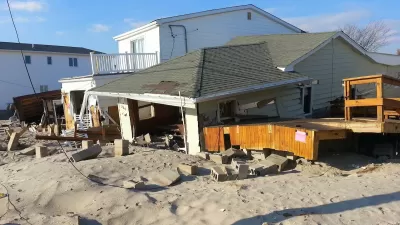
A new policy from the Federal Emergency Management Agency (FEMA) will require projects using FEMA funding to demonstrate improved resilience, reports Julie Strupp for Construction Dive.
“Starting Sept. 9 new projects and infrastructure rebuilt after a disaster with FEMA funding must be elevated at least 2 feet above the area flood level, using up-to-date data and accounting for likely impacts of climate change, per the new Federal Flood Risk Management Standard,” Strupp explains. The rule aims to build resilience into the reconstruction process to protect infrastructure from future flooding.
The agency says previous approaches are outdated due to growing flood risk. “FEMA’s new standards will increase the flood elevation and the floodplain in order to reflect both current and future flood risk. The requirement that jurisdictions account for flooding that is likely to occur in the future under climate change is new.”
The new rule will apply to roughly 35,000 FEMA-funded projects in the next decade “involving new construction, substantial improvement or repairs to substantial damage, as well as to Hazard Mitigation Assistance projects involving structure elevation, dry floodproofing and mitigation reconstruction.”
FULL STORY: Federal infrastructure projects get a (flood) raise

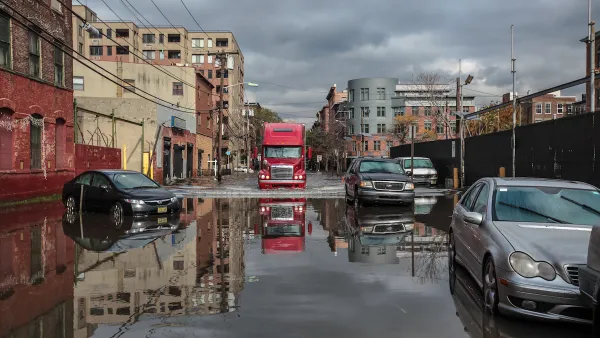
FEMA Resilience Program Cuts Grant Funding
The Building Resilient Infrastructure and Communities program funded projects from flood prevention to power station upgrades.
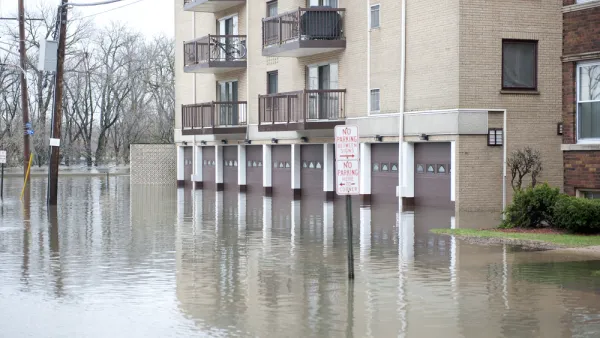
New Study Reveals Massive, Unaccounted Flood Risk
The Federal Emergency Management Agency undercounts the humber of homes at substantial risk of flooding by some 70 percent, according to a report released this week.
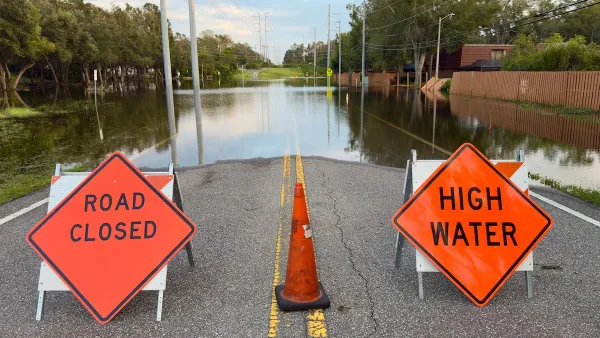
FEMA Suspends Flood Rebuilding Standard
The rule was designed to prevent the rebuilding of government-funded projects in areas prone to repeated floods.

Planetizen Federal Action Tracker
A weekly monitor of how Trump’s orders and actions are impacting planners and planning in America.

The state-sanctioned urbicide of Austin
People don’t kill cities. Freeways do.

US to reduce Colorado River water deliveries to Mexico
A new Colorado Treaty amendment reduces Mexico’s Colorado River water allocation by 250,000 acre feet.

Mamdani overhauls NYC's Vision Zero plan with 100 new policy goals
The overhaul aims to reduce traffic deaths and make streets safer for pedestrians, cyclists and drivers through lower speed limits, new safety infrastructure and more.

Amtrak not solely to blame for New Jersey commuter rail's unreliability, report finds
A new study from the Garden State Initiative found that NJ Transit’s budget grew 20% across a 4 year period, but reliability declined significantly over the same period.

EPA erases limits on planet-warming pollution from power plants
Under Monday’s plan, power plants would still have some limits on how much mercury, arsenic and other contaminants they can emit.

FREE Course: Walkable City 1: Why Walkability?
After describing his path towards focusing on walkability as the essence of good planning, Jeff Speck marches through his five principal reasons for making more walkable places.
Reinventing Malls: Planning Alchemy—Turning Gray Fields Into Gold
The course focuses on the opportunities and imperatives that shape reinvention of mall sites.

Eagle County Government
Harvard University Graduate School of Design
Nashville Planning Department
The Architects Foundation
University of Cincinnati Online
The Pocatello Development Authority
The Urban Renewal Agency of the City of Pocatello
Journal of the American Planning Association