A new report recommends a comprehensive, nationwide affordable housing plan as the ‘single most effective’ method of ending homelessness.


A report from the Urban Institute outlines strategies for ending and preventing homelessness.
According to the report, “The single most effective way to end homelessness nationwide would be to fund a comprehensive affordable housing plan that would include a universal voucher program. This would both help more people exit homelessness and prevent more people from entering into homelessness.”
The report recommends that Congress and the Biden administration take a series of actions including the expansion of voucher programs, incentivizing communities to end the criminalization of homelessness and fund programs to reduce unsheltered homelessness, and increasing access to healthcare and other services. The authors also recommend focusing on eviction prevention mechanisms that keep people from falling into homelessness in the first place.
The authors note that, with the right approach, the crisis is solvable. “Reducing homelessness is a math equation: help people exit homelessness faster than they are entering.”
FULL STORY: Ending and Preventing Homelessness and Evictions


Cleveland program has housed 200 people since 2024
The A Home For Every Neighbor initiative successfully moves people into housing in under two weeks.
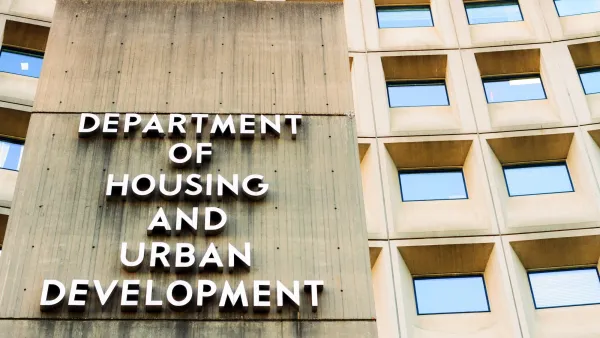
Judge halts 'hasty' HUD changes to homelessness grants
Service providers said the sudden changes would have imperiled thousands of Americans and forced more people into homelessness.

Federal cuts to voucher program put 9,000 New Yorkers at risk of homelessness
The Emergency Housing Voucher program is ending years ahead of schedule, forcing housing agencies to find new ways to support roughly 70,000 households nationwide.

The state-sanctioned urbicide of Austin
People don’t kill cities. Freeways do.

US to reduce Colorado River water deliveries to Mexico
A new Colorado Treaty amendment reduces Mexico’s Colorado River water allocation by 250,000 acre feet.

New Jersey’s second-largest city bans standalone data centers
Jersey City will continue to allow co-location facilities, such as those meant for research institutions that store their own data.

Amtrak not solely to blame for New Jersey commuter rail's unreliability, report finds
A new study from the Garden State Initiative found that NJ Transit’s budget grew 20% across a 4 year period, but reliability declined significantly over the same period.

EPA erases limits on planet-warming pollution from power plants
Under Monday’s plan, power plants would still have some limits on how much mercury, arsenic and other contaminants they can emit.

Phoenix announces new on-demand transit service, more frequent RAPID buses
Both new services will launch in October, and are part of Phoenix's Project Effective Access Solutions for Easing Congestion.

FREE Course: Walkable City 1: Why Walkability?
After describing his path towards focusing on walkability as the essence of good planning, Jeff Speck marches through his five principal reasons for making more walkable places.
Reinventing Malls: Planning Alchemy—Turning Gray Fields Into Gold
The course focuses on the opportunities and imperatives that shape reinvention of mall sites.

Eagle County Government
Harvard University Graduate School of Design
Nashville Planning Department
The Architects Foundation
University of Cincinnati Online
The Pocatello Development Authority
The Urban Renewal Agency of the City of Pocatello
Journal of the American Planning Association