One of solar’s biggest challenges is getting the energy where it needs to go.



The solar energy industry is growing by leaps and bounds as local utilities and companies that operate energy-guzzling data centers seek out renewable energy sources, report Spencer Kimball and Gabriel Cortés for CNBC.
“But renewables face a massive bottleneck to get connected to the grid, and building out transmission lines to support the growth poses a big challenge,” the authors add. Renewable energy sources remain just 3.9 percent of the nation’s power mix in 2023, and the nation’s aging power infrastructure is struggling to keep up with demand, which is growing in part due to the growth of data centers as well as rising temperatures and growing populations.
While “Nearly 2,500 gigawatts of solar, wind and battery projects were requesting connection in 2023, almost double the entire installed capacity of the current U.S. power plant fleet,” one analyst notes that “The rate by which renewables are deployed would need to at least triple to achieve 90% clean electricity over the next decade.” Plants that came online in 2023 took roughly five years to complete, and just 20 percent of projects with applications submitted between 2000 and 2018 were completed.
But solar is making significant gains, too. “In California, for example, solar energy represented more than 50% of the state's power supply from 7:45 a.m. until 5:25 p.m., peaking at about 18 gigawatts or 64% of supply around 1 p.m., according to Grid Status, which tracks major U.S. grids in real time.”
FULL STORY: Solar is growing faster than any electricity source as Big Tech seeks clean energy for data centers

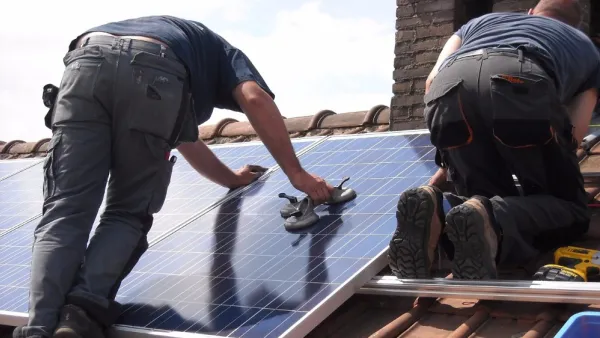
California Could Drastically Cut Solar Incentives
Rooftop solar customers in California could face higher costs and reduced incentives if a proposed overhaul of the state's solar program is approved by the Public Utilities Commission.
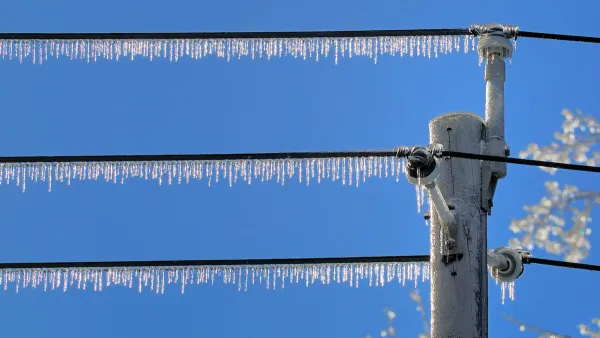
Texas Grid Holds Up to Freezing Temperatures
Efforts made to prepare the state’s infrastructure for winter storms after 2021’s disastrous freeze are paying off.

San Diego to Install Solar ‘Microgrids’
The self-sufficient energy systems will help the city improve its resiliency during power outages.

The state-sanctioned urbicide of Austin
People don’t kill cities. Freeways do.

US to reduce Colorado River water deliveries to Mexico
A new Colorado Treaty amendment reduces Mexico’s Colorado River water allocation by 250,000 acre feet.

New Jersey’s second-largest city bans standalone data centers
Jersey City will continue to allow co-location facilities, such as those meant for research institutions that store their own data.

Amtrak not solely to blame for New Jersey commuter rail's unreliability, report finds
A new study from the Garden State Initiative found that NJ Transit’s budget grew 20% across a 4 year period, but reliability declined significantly over the same period.

EPA erases limits on planet-warming pollution from power plants
Under Monday’s plan, power plants would still have some limits on how much mercury, arsenic and other contaminants they can emit.

Phoenix announces new on-demand transit service, more frequent RAPID buses
Both new services will launch in October, and are part of Phoenix's Project Effective Access Solutions for Easing Congestion.

FREE Course: Walkable City 1: Why Walkability?
After describing his path towards focusing on walkability as the essence of good planning, Jeff Speck marches through his five principal reasons for making more walkable places.
Reinventing Malls: Planning Alchemy—Turning Gray Fields Into Gold
The course focuses on the opportunities and imperatives that shape reinvention of mall sites.

Eagle County Government
Harvard University Graduate School of Design
Nashville Planning Department
The Architects Foundation
University of Cincinnati Online
The Pocatello Development Authority
The Urban Renewal Agency of the City of Pocatello
Journal of the American Planning Association