The $1.2-billion solar farm would provide power to data centers owned by Microsoft, Meta, and others.


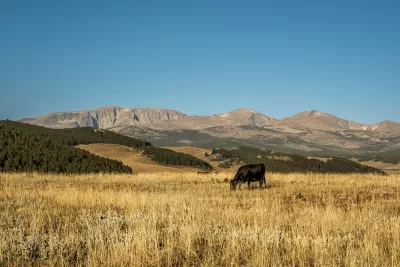
Residents near Cheyenne, Montana are expressing concern about a $1.2-billion solar farm project that will provide power to data centers nearby, reports Pat Maio in Cowboy State Daily.
The project will include over 1 million solar panels and a large battery storage system to be built on land leased from local property owners. “The proposed site is on virgin dry prairie grasslands that receive little rainfall and is subject to frequent high winds and hailstorms,” prompting concerns about potential lithium-based fires. The project infrastructure could also damage the fragile grassland ecosystem and have spillover effects on adjacent ranchland, while construction will bring hundreds of trucks through the area over two years.
According to Paio, “Wyoming’s Industrial Siting Council, the governmental body within the Department of Environmental Quality that considers such solar farm project proposals, approved the construction project in March, a 90-day fast track for the concept, which still needs approval from Laramie County commissioners.”
FULL STORY: Massive $1.2 Billion Panel Solar Farm Planned For South Cheyenne

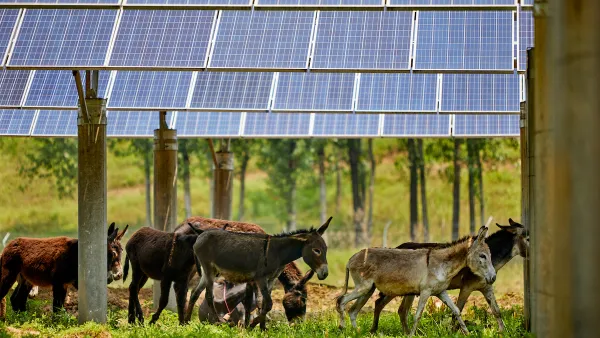
Making Solar Energy Land Use More Efficient
How an ‘ecovoltaic’ approach can balance energy production with conservation of sensitive land.
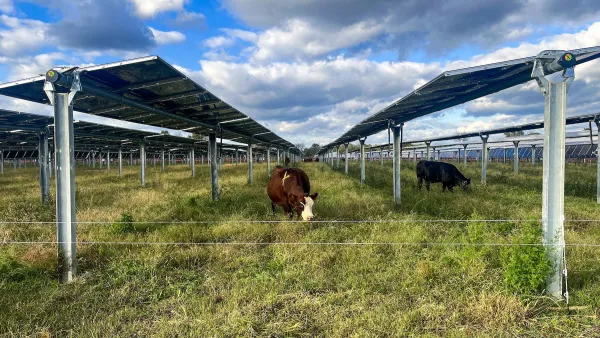
Cows at Tennessee's 'Silicon Ranch' graze under solar panels
The project aims to prove that agriculture and solar energy production can work in tandem.
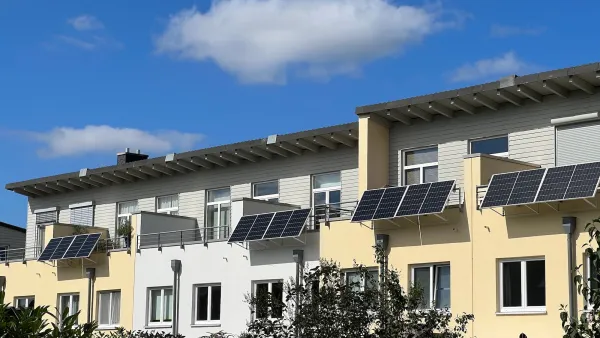
28 States and DC Could Legalize ‘Balcony Solar’
Plug-in solar panels, which are becoming popular across Europe, live in a regulatory gray area in the United States.

Planetizen Federal Action Tracker
A weekly monitor of how Trump’s orders and actions are impacting planners and planning in America.

The state-sanctioned urbicide of Austin
People don’t kill cities. Freeways do.

US to reduce Colorado River water deliveries to Mexico
A new Colorado Treaty amendment reduces Mexico’s Colorado River water allocation by 250,000 acre feet.

5 New England states march closer to 800 megawatt wind energy project
Securing federal approval for the project may be complicated under the Trump administration, which has historically been hostile towards domestic wind power.

Baltimore to break ground on $50 million Transit Priority Project
The project will bring faster bus trips, safer streets and better bike connections to Baltimore.

Airbnb launches $250 million 'last-dollar financing' housing accelerator, makes first investment in Austin
The company will put $6.4 million towards affordable housing development in Texas’ capital.

FREE Course: Walkable City 1: Why Walkability?
After describing his path towards focusing on walkability as the essence of good planning, Jeff Speck marches through his five principal reasons for making more walkable places.
Reinventing Malls: Planning Alchemy—Turning Gray Fields Into Gold
The course focuses on the opportunities and imperatives that shape reinvention of mall sites.

Eagle County Government
Harvard University Graduate School of Design
Nashville Planning Department
The Architects Foundation
University of Cincinnati Online
The Pocatello Development Authority
The Urban Renewal Agency of the City of Pocatello
Journal of the American Planning Association