Seating in the public realm often isn’t designed to accommodate varied body types, ages, and abilities.


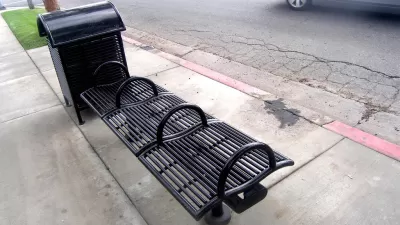
In an op-ed in Next City, Alanah Nichole Davis calls on cities to consider how street furniture and public seating accommodate — or don’t — people of various body types.
For those at the intersection of factors like weight, pregnancy, age and disability, the challenge of finding suitable public seating can disrupt a sense of belonging and inhibit our ability to thrive. Something as simple as taking a walk in a park or meeting a friend for lunch may become a daunting task due to design shortcomings in open spaces.
Davis cites programs in cities like Boston and New York aimed at making public seating more accessible. Boston’s age-friendly bench initiative installs benches that make sitting and standing easier for elderly people near key destinations.
Davis poses the argument another way: “Hostile architecture and defensive design are known for discouraging humans who might be unhoused from staying in an area for too long. But if an armrest, chair width or other seating features discourage varied body types — whether housed or unhoused residents or visitors — from sitting comfortably in our cities, isn’t that hostile, too?”
Read the full story: Urban Seating Isn’t Designed for My Body. It’s Time To Change That.

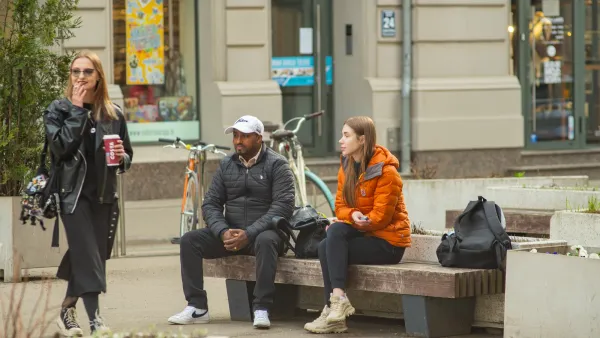
Where have all the public benches gone?
Public seating can be an indicator of broader trends in who gets to use public space — and how.

Oregon cities are excluding a key tool that could help their housing goals: maps
An effort to use geospatial analysis to understand how housing and access to opportunity are distributed in Oregon cities has largely stalled.
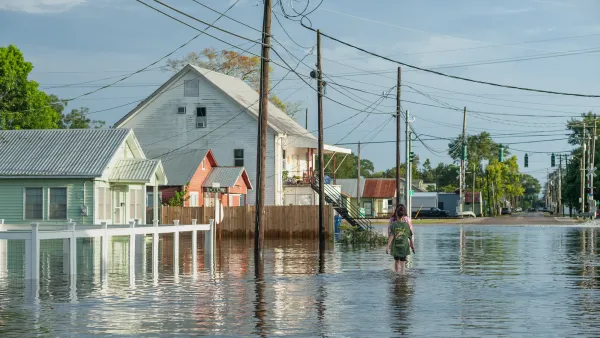
Study: Historically redlined neighborhoods face higher risk of extreme flooding
A new study indicates that structural disinvestment can translate into serious risk for vulnerable communities.

Planetizen Federal Action Tracker
A weekly monitor of how Trump’s orders and actions are impacting planners and planning in America.

California plans to bury El Niño’s downpour
If the state plays its cards right, it may be able to store a billion acre-feet of El Niño’s water in aquifers.

Chicago breaks ground on $3 billion megadevelopment
The new neighborhood, titled Foundry Park, will one day host 3,700 residences.

Satanic place names
From streams and lakes to valleys and canyons, I mapped more than 1,000 places named after the Devil.

California High-Speed Rail Authority CEO resigns after $600,000 scandal
Under Ian Choudri, the authority used taxpayer dollars to fund first class flights and trips to nightclubs.

Want to study the Missouri River? Soon, you may need unanimous approval from 10 states
Legislation would require 10 governors’ permission to study or build projects moving water outside the basin.

FREE Course: Walkable City 1: Why Walkability?
After describing his path towards focusing on walkability as the essence of good planning, Jeff Speck marches through his five principal reasons for making more walkable places.
Reinventing Malls: Planning Alchemy—Turning Gray Fields Into Gold
The course focuses on the opportunities and imperatives that shape reinvention of mall sites.

City of Rosemead
Rutgers University, Edward J. Bloustein School of Planning and Public Policy
One Hundred Miles
Hunter College, City University of New York (CUNY)
The Architects Foundation
University of Cincinnati Online
City of Cambridge
Montrose County
The Pocatello Development Authority