The city once had an extensive streetcar system. Can it revive public transit once again?


An article in Atlanta Magazine by Rachel Garbus reminds readers that Atlanta once had a thriving public transportation system. “For the first half of the twentieth century, Atlanta’s public transportation system rivaled even that of bigger Northern cities like Baltimore and Pittsburgh. By 1928, the city’s streetcar system was so extensive, you could hop on in East Point and ride up to North Druid Hills, only changing trains once.”
The article includes historic photos of the city’s former electric streetcar system and explains how the system grew, then declined. At first, the (segregated) streetcars were operated by private companies. “Georgia officials mostly ignored public transit, pouring public dollars into highways instead. By the time MARTA took over transit as a public agency in 1972, the car had already won the fight for metro Atlanta.”
Now, traces of this history remain as opposition to public transit projects face opposition from “transit skeptics who think it’s a waste of taxpayer money to homeowners concerned about outsiders coming to their neighborhoods.”
Nicholas Bloom, author of The Great American Transit Disaster, says Atlanta may never reach world-class transit city status — “there’s been too much development to reverse engineer a public transit system” — “but he sees many opportunities to get people out of the cars into other modes of transportation.”
FULL STORY: Atlanta used to have extensive public transit, actually


What Should Transit on the BeltLine Look Like?
Supporters of a proposed streetcar extension argue that Atlanta’s popular BeltLine corridor was always meant to include transit, making it more than just a recreational area.
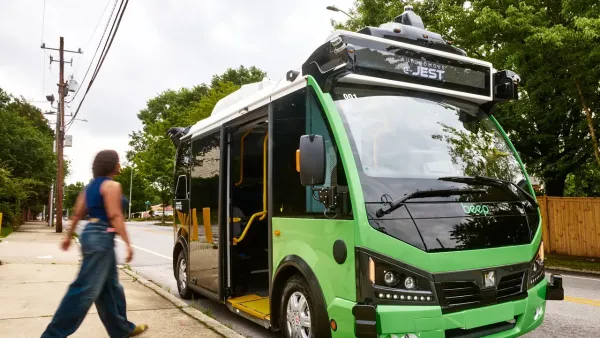
Atlanta launches autonomous Beltline shuttle
The ATL Spoke service connects the Beltline to a MARTA rail station.

Atlanta could add dedicated bike lane to Beltline
A city councilmember says a dedicated lane would prevent conflicts between cyclists and pedestrians, but others worry it would impede efforts to build transit along the Beltline.

The state-sanctioned urbicide of Austin
People don’t kill cities. Freeways do.

US to reduce Colorado River water deliveries to Mexico
A new Colorado Treaty amendment reduces Mexico’s Colorado River water allocation by 250,000 acre feet.

New Jersey’s second-largest city bans standalone data centers
Jersey City will continue to allow co-location facilities, such as those meant for research institutions that store their own data.

Amtrak not solely to blame for New Jersey commuter rail's unreliability, report finds
A new study from the Garden State Initiative found that NJ Transit’s budget grew 20% across a 4 year period, but reliability declined significantly over the same period.

EPA erases limits on planet-warming pollution from power plants
Under Monday’s plan, power plants would still have some limits on how much mercury, arsenic and other contaminants they can emit.

Phoenix announces new on-demand transit service, more frequent RAPID buses
Both new services will launch in October, and are part of Phoenix's Project Effective Access Solutions for Easing Congestion.

FREE Course: Walkable City 1: Why Walkability?
After describing his path towards focusing on walkability as the essence of good planning, Jeff Speck marches through his five principal reasons for making more walkable places.
Reinventing Malls: Planning Alchemy—Turning Gray Fields Into Gold
The course focuses on the opportunities and imperatives that shape reinvention of mall sites.

Eagle County Government
Harvard University Graduate School of Design
Nashville Planning Department
The Architects Foundation
University of Cincinnati Online
The Pocatello Development Authority
The Urban Renewal Agency of the City of Pocatello
Journal of the American Planning Association