Tying transit and land acquisition funding together could help produce more housing near transit hubs.


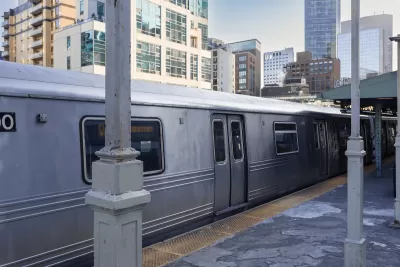
New research from the Urban Institute’s Yonah Freemark reveals that only a small percentage of housing development in the United States is located near transit. As Freemark explains, “I found that, in urban areas, tracts with transit stations added about 2 million housing units between 2000 and 2019. But those without stations added 17.6 million units. Too many new housing units are being added far from stations, increasing transportation costs for millions of Americans.”
Freemark adds, “One explanation for inadequate housing near transit is that transit agencies do not prioritize transit-adjacent housing development and lack a dedicated source of funding to acquire land for such projects. To help enable transit-oriented development, a federal land acquisition program that supplements transportation infrastructure grants could help transit agencies and local governments in acquiring properties to encourage housing development.”
Freemark recommends tying transit and land acquisition grants together via a “dedicated land acquisition program. This program’s funds could be used specifically to buy vacant or underused land, such as surface parking lots or one-story strip malls primed for redevelopment.” Cities and transit agencies could then use public-private partnerships with developers or social housing programs to build more affordable housing near transportation options.
Read the full story: Spurring Housing Development Near Transit through Federally Funded Land Acquisition

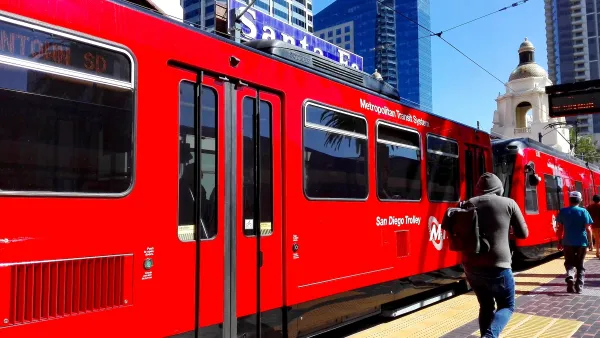
San Diego wants to limit upzoning law to just 16% of transit-adjacent parcels
The city's planning director says some areas are unfit for immediate upzoning due to a lack of resources or hazards such as wildfire risk.
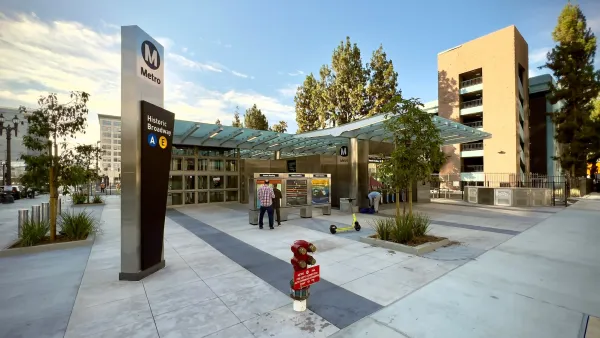
LA Delays State TOD Law to 2030 With its Own, Lower-density Plan
SB 79 allows cities to delay its implementation if they come up with alternate plans to boost density while retaining local control near transit.
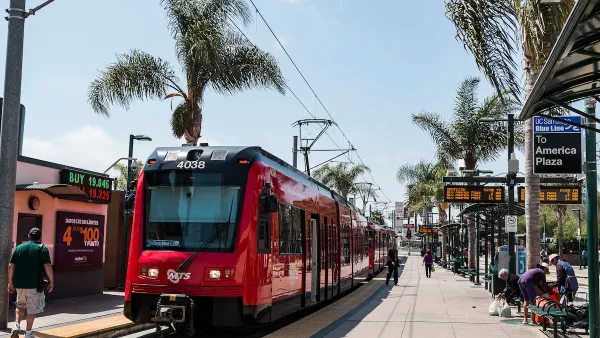
1,000 New Homes Sprouting Around San Diego Trolley Station
Multiple projects, helped along by city and state incentives, will densify the area around the Palm Avenue station.

Planetizen Federal Action Tracker
A weekly monitor of how Trump’s orders and actions are impacting planners and planning in America.

The state-sanctioned urbicide of Austin
People don’t kill cities. Freeways do.

US to reduce Colorado River water deliveries to Mexico
A new Colorado Treaty amendment reduces Mexico’s Colorado River water allocation by 250,000 acre feet.

Brightline West’s future may rely on $6 billion federal loan
The company has until Nov. 2 to make a $400 million equity investment into its proposed high-speed rail line.

LA Metro’s ultimatum: no extra buses for LA28 if federal funding isn’t imminently secured
If Metro does not provide additional buses, LA28 organizers will have to find a new way to manage Olympic traffic. LA28’s budget does not include a line item for transit.

Colorado’s Largest Data Center Could Rise Next to Homes — Without a Public Hearing
The proposed campus would consume 11 times the power of Denver International Airport; as it has across the country, opposition mounts.

FREE Course: Walkable City 1: Why Walkability?
After describing his path towards focusing on walkability as the essence of good planning, Jeff Speck marches through his five principal reasons for making more walkable places.
Reinventing Malls: Planning Alchemy—Turning Gray Fields Into Gold
The course focuses on the opportunities and imperatives that shape reinvention of mall sites.

Eagle County Government
Harvard University Graduate School of Design
Nashville Planning Department
The Architects Foundation
University of Cincinnati Online
The Pocatello Development Authority
The Urban Renewal Agency of the City of Pocatello
Journal of the American Planning Association