The County and City of Los Angeles are working together on community engagement efforts for their Urban Forest Management Plans (UFMPs).



Made up of trees on both public and private lands, the urban forest is an essential part of a healthy, thriving, and resilient community. When spread equitably and supported by other urban greening measures, a well-managed urban forest throughout Los Angeles County can deliver a wide range of benefits, such as healthier soils, biodiversity, habitats, shading from heat, and greater community health and well-being.
The County of Los Angeles Chief Sustainability Office (CSO) is leading the effort to develop an Urban Forest Management Plan (UFMP) which is a blueprint that will guide the planting of new trees and the protection of mature trees throughout the region. OurCounty, L.A. County's Sustainability Plan, calls for the development of the UFMP to ensure a climate-appropriate, healthy urban tree canopy that is equitably distributed. A key goal for the UFMP is to address inequities in the distribution of trees and tree canopy as well as the benefits they offer. Research shows that lower-income neighborhoods and communities of color often have less tree canopy.
The CSO has been working with the City of Los Angeles to host 50 public workshops so that residents can help shape plans to better manage trees in their communities. For L.A. County residents, please visit this calendar to find a workshop near you. Also, community members are encouraged to a complete a survey about what they would like to see in their neighborhood when it comes to trees. In this article, Erin Stone discusses the current outreach efforts and explains what the workshops are like, including some of the public input provided at a meeting recently held at El Sereno Library.
FULL STORY: Want To Have A Say In The Future Of LA’s Trees? Here’s How

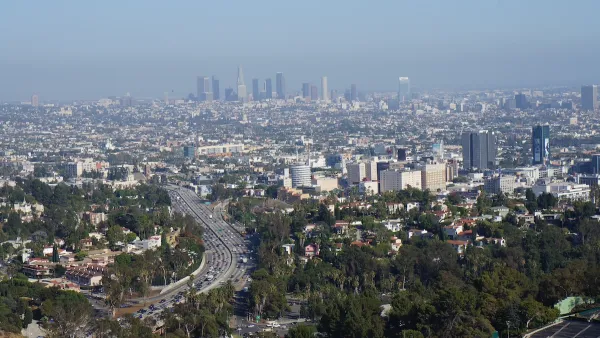
Updating LA’s Tree Rules Could Bring More Shade to Underserved Neighborhoods
A new USC study finds that relaxing Los Angeles’ outdated tree planting guidelines could significantly expand urban tree canopy and reduce shade disparities in lower-income neighborhoods, though infrastructure investments are also needed.
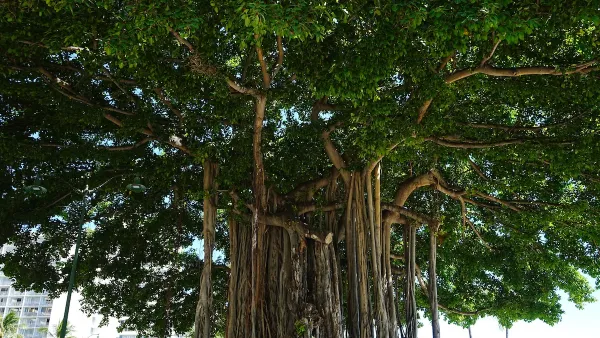
Growing Green: How Parks and Trees Shape Honolulu’s Future
Honolulu is expanding its urban tree canopy through community-driven park revitalization efforts, emphasizing the environmental, social, and cultural benefits of trees in creating a more resilient and equitable city.
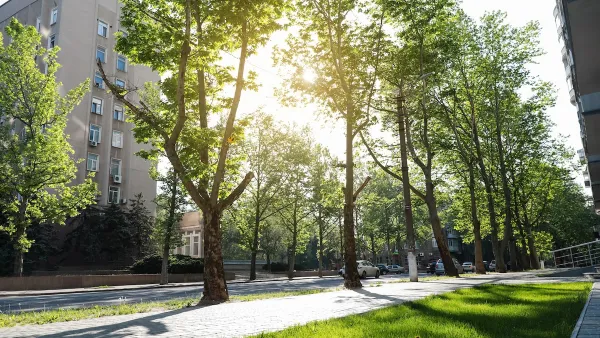
Mapping a Greener Future: Cal Poly Tackles Urban Canopy Challenges
Cal Poly, in partnership with Cal Fire, is leading the development of California’s new Strategic Plan for Urban Forestry, combining advanced data tools and interdisciplinary collaboration to expand tree canopy cover.

Planetizen Federal Action Tracker
A weekly monitor of how Trump’s orders and actions are impacting planners and planning in America.

The state-sanctioned urbicide of Austin
People don’t kill cities. Freeways do.

US to reduce Colorado River water deliveries to Mexico
A new Colorado Treaty amendment reduces Mexico’s Colorado River water allocation by 250,000 acre feet.

Mamdani overhauls NYC's Vision Zero plan with 100 new policy goals
The overhaul aims to reduce traffic deaths and make streets safer for pedestrians, cyclists and drivers through lower speed limits, new safety infrastructure and more.

Amtrak not solely to blame for New Jersey commuter rail's unreliability, report finds
A new study from the Garden State Initiative found that NJ Transit’s budget grew 20% across a 4 year period, but reliability declined significantly over the same period.

EPA erases limits on planet-warming pollution from power plants
Under Monday’s plan, power plants would still have some limits on how much mercury, arsenic and other contaminants they can emit.

FREE Course: Walkable City 1: Why Walkability?
After describing his path towards focusing on walkability as the essence of good planning, Jeff Speck marches through his five principal reasons for making more walkable places.
Reinventing Malls: Planning Alchemy—Turning Gray Fields Into Gold
The course focuses on the opportunities and imperatives that shape reinvention of mall sites.

Eagle County Government
Harvard University Graduate School of Design
Nashville Planning Department
The Architects Foundation
University of Cincinnati Online
The Pocatello Development Authority
The Urban Renewal Agency of the City of Pocatello
Journal of the American Planning Association