An archaeological site shows evidence of a unique layout of dense residential buildings interspersed with a network of roads and farmland.


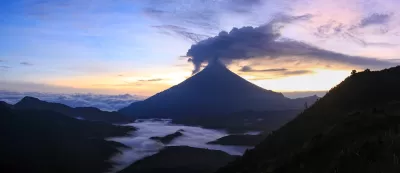
A set of newly unearthed ancient ruins reveal a unique style of ‘garden urbanism,’ writes Kiona N. Smith in Scientific American.
The site, in Ecuador’s Upano Valley, features “more than 6,000 earthen platforms that once supported houses and communal buildings in 15 urban centers, set amid vast tracts of carefully drained farmland and linked by a network of roads.” The layout is unique to Amazonia, with the nearest similar design seen in Central America.
According to Smith, “Nearly all the open space between communities would have been covered with hundreds of hectares of fields, bordered by shallow drainage ditches that fed into deeper canals. That close link between the fields and the urban centers of the Upano Valley is a unique hallmark of the landscape and the people who built it.” The site, known as Sangay, was likely built around 2,500 years ago.
Researchers say the Huapula, who still live in the region, moved into the site after it was abandoned between roughly 300 and 600 C.E. to take advantage of the existing infrastructure.
FULL STORY: Ancient Amazon Civilization Developed Unique Form of ‘Garden Urbanism’

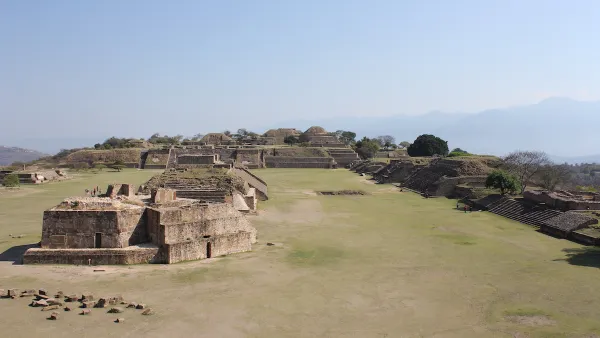
First Cities: Planning Lessons for the 21st Century
A new book about urban planning in the deep human past explores principles, strategies, and lessons relevant for today.
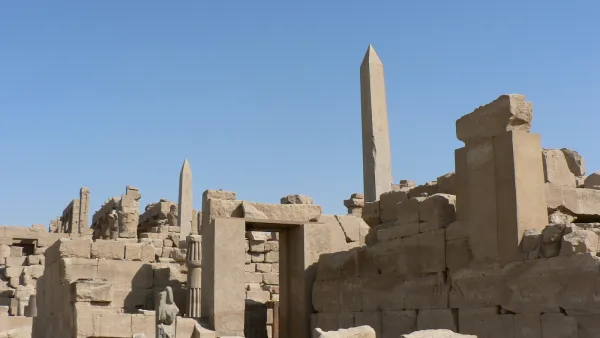
A Lost Ancient City Is Unearthed in Egypt
The newly unearthed "golden city" sheds light on everyday life at the height of ancient Egypt's power.
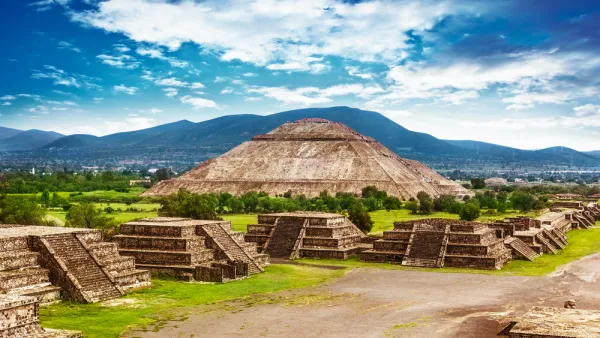
How Ancient and Modern Cities Compare (and Why Planners Should Care)
A new scholarly paper argues that ancient and modern cities can be usefully analyzed in a comparative perspective. But what you do with the comps depends on how much you value similarities versus differences in urban form.

Planetizen Federal Action Tracker
A weekly monitor of how Trump’s orders and actions are impacting planners and planning in America.

The state-sanctioned urbicide of Austin
People don’t kill cities. Freeways do.

US to reduce Colorado River water deliveries to Mexico
A new Colorado Treaty amendment reduces Mexico’s Colorado River water allocation by 250,000 acre feet.

5 New England states march closer to 800 megawatt wind energy project
Securing federal approval for the project may be complicated under the Trump administration, which has historically been hostile towards domestic wind power.

Baltimore to break ground on $50 million Transit Priority Project
The project will bring faster bus trips, safer streets and better bike connections to Baltimore.

Airbnb launches $250 million 'last-dollar financing' housing accelerator, makes first investment in Austin
The company will put $6.4 million towards affordable housing development in Texas’ capital.

FREE Course: Walkable City 1: Why Walkability?
After describing his path towards focusing on walkability as the essence of good planning, Jeff Speck marches through his five principal reasons for making more walkable places.
Reinventing Malls: Planning Alchemy—Turning Gray Fields Into Gold
The course focuses on the opportunities and imperatives that shape reinvention of mall sites.

Eagle County Government
Harvard University Graduate School of Design
Nashville Planning Department
The Architects Foundation
University of Cincinnati Online
The Pocatello Development Authority
The Urban Renewal Agency of the City of Pocatello
Journal of the American Planning Association