And why that may not be such a bad thing.



In an opinion piece in The Conversation, Nicholas Dagen Bloom argues that the flight of big box stores from central cities is in part due to “flawed corporate strategies” that set them up for failure in urban areas.
“Retailers saddled with high debt, overexpansion, shoplifting losses, slumping sales and online competition are shedding stores fast. But this contraction lopsidedly affects city dwellers, who often lack the shopping options and price competition suburbanites enjoy,” Dagen Bloom writes. A combination of higher poverty rates, a glut of new stores clustered too close together, and the media-induced panic over violent shoplifting crimes have led to a rash of downtown store closings.
As I see it, the urban chain store implosion raises questions about whether suburban-style retail really does much for cities. These stores are mediocre job creators, undercut local entrepreneurs, often pay relatively low property taxes and build ugly parking lots.
For Dagen Bloom, perhaps “shoehorning suburban-style stores into urban neighborhoods” was never the solution officials hoped it would be. Perhaps the future of downtown commerce lies in the more traditional small store.


Pop-Up Shops are Reviving Dormant Downtowns
The future of downtown retail is uncertain. In the meantime, pop-ups fill the gaps and provide small businesses with unique opportunities to showcase their wares.
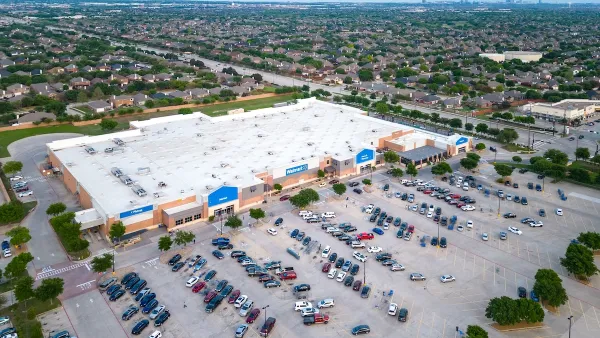
Is Driving Traffic to Big Box Stores True Economic Development?
Strong Towns’ Charles Marohn argues that planning for ‘commerce’ perpetuates an unsustainable, car-centric development model.
Pittsburgh downtown tax diversion plan draws criticism for lack of transparency
A proposed new development tax faces opposition from transit advocates.

Planetizen Federal Action Tracker
A weekly monitor of how Trump’s orders and actions are impacting planners and planning in America.

The state-sanctioned urbicide of Austin
People don’t kill cities. Freeways do.

US to reduce Colorado River water deliveries to Mexico
A new Colorado Treaty amendment reduces Mexico’s Colorado River water allocation by 250,000 acre feet.

5 New England states march closer to 800 megawatt wind energy project
Securing federal approval for the project may be complicated under the Trump administration, which has historically been hostile towards domestic wind power.

Baltimore to break ground on $50 million Transit Priority Project
The project will bring faster bus trips, safer streets and better bike connections to Baltimore.

Airbnb launches $250 million 'last-dollar financing' housing accelerator, makes first investment in Austin
The company will put $6.4 million towards affordable housing development in Texas’ capital.

FREE Course: Walkable City 1: Why Walkability?
After describing his path towards focusing on walkability as the essence of good planning, Jeff Speck marches through his five principal reasons for making more walkable places.
Reinventing Malls: Planning Alchemy—Turning Gray Fields Into Gold
The course focuses on the opportunities and imperatives that shape reinvention of mall sites.

Eagle County Government
Harvard University Graduate School of Design
Nashville Planning Department
The Architects Foundation
University of Cincinnati Online
The Pocatello Development Authority
The Urban Renewal Agency of the City of Pocatello
Journal of the American Planning Association