The Forest Service says storing carbon dioxide under national forest lands is essential to reducing greenhouse gas emissions and meeting climate goals.


The U.S. Department of Agriculture’s Forest Service wants to open national forest lands to permanent carbon dioxide storage, alarming environmentalists and advocates who say the project would pose significant health risks to surrounding communities and the environment.
As Pam Radtke explains in an article for Floodlight, republished in Grist, the Forest Service says “storage can be managed safely, and such regulatory changes are needed to meet the nation’s climate goals.” However, carbon dioxide pipelines have ruptured in the past, hospitalizing 49 people in one incident in Mississippi in 2020. “Concentrations of the gas, which is odorless and heavier than oxygen, can also prevent combustion engines from operating. [Victoria] Bodan Tejeda, of the Center for Biological Diversity, worries that people even a mile or two from a carbon dioxide leak could start suffocating and have no way to escape.”
Permanent storage would also go against decades of Forest Service policy, which typically only permits temporary use of forest lands. “Drilling rigs and heavy equipment would be brought into forests to evaluate whether the spaces under the forests were suitable for carbon storage. Trees would have to come down to make way for that equipment, and many more trees would likely be felled to make way for the pipelines.”
According to the Forest Service, “the Nov. 3 proposal would allow it to evaluate such permanent storage requests; it is not currently considering any specific proposals to store carbon under its lands.”
FULL STORY: Plan to stash planet-heating carbon dioxide under U.S. national forests alarms critics


Exxon Wants 'Financial Incentive' for $100 Billion Carbon Capture Hub
The company's proposed $100 billion carbon capture project would require a "large-scale" public-private partnership and could capture up to 100 million tons of carbon per year.
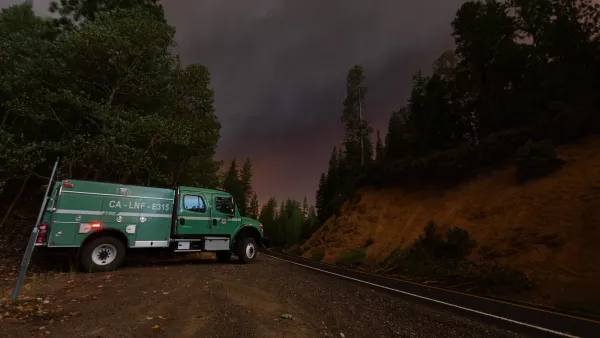
Study: Building More Forest Roads Would Quadruple Fire Risk
The administration plans to rescind the 2001 Roadless Area Conservation Rule, which protects close to 60 million acres of national forest lands from road development.
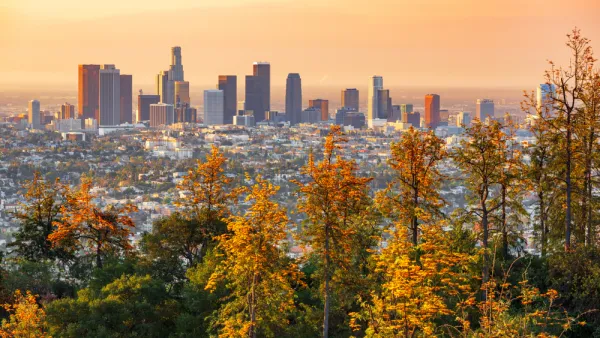
LA’s Trees Absorb More Carbon Than Expected, But Can’t Do It Alone
A USC study finds that Los Angeles’ urban trees absorb more carbon than expected, but while they provide crucial environmental benefits, they cannot replace the urgent need for systemic emissions reductions.

Planetizen Federal Action Tracker
A weekly monitor of how Trump’s orders and actions are impacting planners and planning in America.

The state-sanctioned urbicide of Austin
People don’t kill cities. Freeways do.

US to reduce Colorado River water deliveries to Mexico
A new Colorado Treaty amendment reduces Mexico’s Colorado River water allocation by 250,000 acre feet.

Mamdani overhauls NYC's Vision Zero plan with 100 new policy goals
The overhaul aims to reduce traffic deaths and make streets safer for pedestrians, cyclists and drivers through lower speed limits, new safety infrastructure and more.

Amtrak not solely to blame for New Jersey commuter rail's unreliability, report finds
A new study from the Garden State Initiative found that NJ Transit’s budget grew 20% across a 4 year period, but reliability declined significantly over the same period.

EPA erases limits on planet-warming pollution from power plants
Under Monday’s plan, power plants would still have some limits on how much mercury, arsenic and other contaminants they can emit.

FREE Course: Walkable City 1: Why Walkability?
After describing his path towards focusing on walkability as the essence of good planning, Jeff Speck marches through his five principal reasons for making more walkable places.
Reinventing Malls: Planning Alchemy—Turning Gray Fields Into Gold
The course focuses on the opportunities and imperatives that shape reinvention of mall sites.

Eagle County Government
Harvard University Graduate School of Design
Nashville Planning Department
The Architects Foundation
University of Cincinnati Online
The Pocatello Development Authority
The Urban Renewal Agency of the City of Pocatello
Journal of the American Planning Association