Tens of thousands of idle oil wells litter the state. Taxpayers are often on the hook for cleanup.


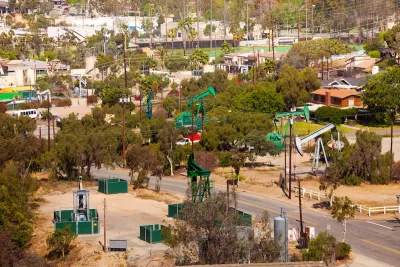
A new report from the Sierra Club sheds light on the hazards that defunct oil wells in Los Angeles pose to public health and the environment. According to an LAist article by Erin Stone, “L.A. County has more idle (and active) wells than any other urban area in the state, putting the health of thousands of Angelenos — largely low-income communities of color — at risk from chemicals that may leak from idle wells.”
As Stone explains, “The report used data from CalGEM — the state agency that regulates oil drilling operations — to identify operators of tens of thousands of idle wells across the state and found it could cost $10 billion to clean up all the idle wells across California.” Three companies—Chevron, Aera Energy and California Resources Corporation—two-thirds of the state’s idle wells, the report notes.
While state and federal laws technically require oil operators to plan for plugging idle wells, many are left abandoned, placing the responsibility—and cost—for remediation on the state and taxpayers. “There’s been some progress in advancing more oversight of idle wells in recent years — state rules that went into effect in 2019 require oil operators to regularly monitor their idle wells for leaks.” The report recommends stricter policies, including putting a time limit of up to a year for leaving idle wells unplugged.
Read the full story: Idle Oil Wells Are A Problem For Health And Climate. Who Should Pay For Cleaning Them Up?
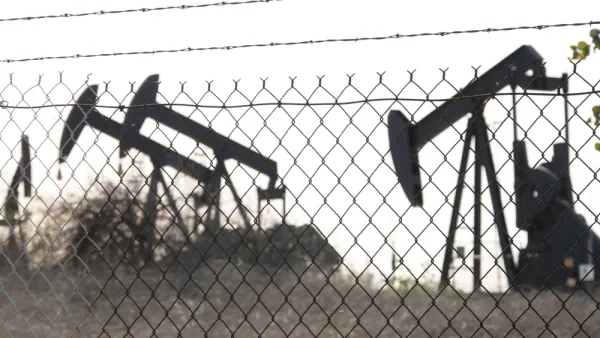
California Seals 21 Urban Oil Wells in South LA After Decades of Activism
The permanent closure of a long-troubled South Los Angeles oil site marks a hard-fought victory for residents and underscores the growing urgency of addressing hazardous idle wells in communities nationwide.

The Osage Nation’s Effort to Clean Up Abandoned Oil Wells
The Osage Nation is leading a complex and long-term initiative to identify, plug, and remediate thousands of orphaned oil wells on its reservation, protecting land, water, and community health for future generations.

The Growing Challenge of Orphan Oil Wells in America
Orphan oil wells—abandoned, undocumented, and often leaking methane—pose a widespread environmental and climate threat across the U.S., and finding them is just the beginning of a costly and urgent cleanup effort.

California plans to bury El Niño’s downpour
If the state plays its cards right, it may be able to store a billion acre-feet of El Niño’s water in aquifers.

Desperate measures: Advocates weigh draining Lake Powell to fill Colorado River
Draining the reservoir could reduce evaporation losses by a couple hundred thousand acre-feet.

Eastern Nebraska is running out of electricity
Data centers and electrification are straining eastern Nebraska’s grid, throttling economic development.

Houston gains petal-shaped cooling infrastructure to make streets more ‘delightful’
The city has installed the pavilions along 15 blocks in Houston.

After years of opposition to light rail, this L.A. city wants a $200 million station
Cerritos officials want the Southeast Gateway Line, a planned 14.5-mile light rail route through Los Angeles County, to stop in their city.

SpaceXAI may be fined $6 million for data center lacking water permits
A Mississippi agency also responds after a federal judge criticized the state’s Clean Air Act enforcement.

FREE Course: Walkable City 1: Why Walkability?
After describing his path towards focusing on walkability as the essence of good planning, Jeff Speck marches through his five principal reasons for making more walkable places.
Reinventing Malls: Planning Alchemy—Turning Gray Fields Into Gold
The course focuses on the opportunities and imperatives that shape reinvention of mall sites.

City of Rosemead
Rutgers University, Edward J. Bloustein School of Planning and Public Policy
One Hundred Miles
University of Michigan School for Environment and Sustainability (SEAS)
Hunter College, City University of New York (CUNY)
The Architects Foundation
City of Cambridge
Montrose County
The Pocatello Development Authority