Extreme weather and erosion threaten transit infrastructure around the country.


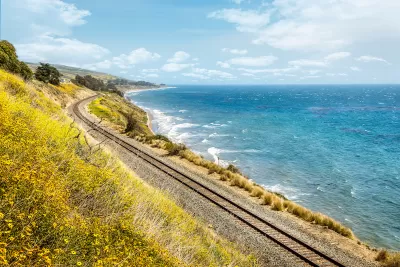
While transit agencies struggle to address the much-feared ‘fiscal cliff,’ physical cliffs pose another danger, writes Corrigan Salerno on Transportation for America.
As Salerno explains, “As climate change unfolds, transit will need the support to serve as communities’ resilient backbone through subtle, day-to-day challenges and demanding disasters.” In Southern California, one of the country’s top three busiest passenger rail corridors was disrupted for months due to coastal erosion that threatened the tracks. Now, the San Diego Association of Governments (SANDAG) is preparing a study for a new alignment that will relocate the tracks farther inland.
Salerno also points to the need for quick allocation and disbursal of emergency funds to repair weather-damaged infrastructure and restore service when disasters strike, similar to the FHWA’s Emergency Relief Program, which provides such funds for infrastructure repairs. “Just as repairs are needed for highways to continue functioning after a disaster, they’re needed to keep transit and passenger rail running on time so that people can get where they need to go.”
According to the article, “With the IIJA lapsing in 2026 and natural disasters on the rise with climate change, Congress needs to devise new policies to improve how the country restores public transit in the wake of earthquakes, hurricanes, wildfires, and even the less dramatic, predictable emergencies.”
FULL STORY: Transit’s physical cliff: Climate change

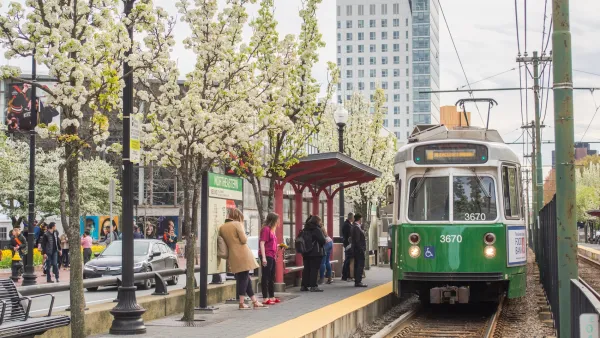
MBTA 'Resilience Roadmap' plans for climate change's impacts on transit infrastructure
The Massachusetts transit agency says its tunnels and power systems are at greatest risk from increasingly unpredictable extreme weather.
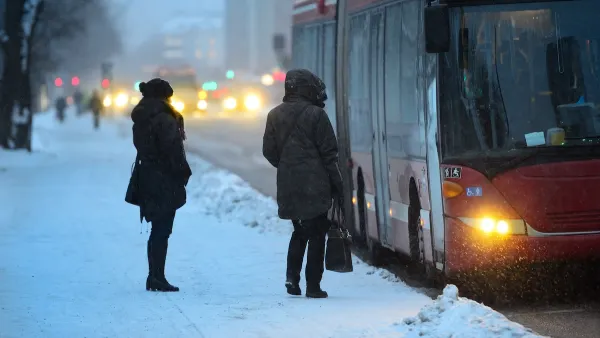
Study: Drops in Transit Ridership Linked to Extreme Weather
Unsurprisingly, people are less likely to use transit during extreme weather events, which are becoming more common around the country.

Planning Year in Review 2024: An Ongoing Housing Crisis, the Fight for Climate Resilience, and a Mixed Bag for Transportation
A pedestrian safety crisis, rising housing instability, and destructive extreme weather events set the stage for an eventful year.

Planetizen Federal Action Tracker
A weekly monitor of how Trump’s orders and actions are impacting planners and planning in America.

The state-sanctioned urbicide of Austin
People don’t kill cities. Freeways do.

US to reduce Colorado River water deliveries to Mexico
A new Colorado Treaty amendment reduces Mexico’s Colorado River water allocation by 250,000 acre feet.

5 New England states march closer to 800 megawatt wind energy project
Securing federal approval for the project may be complicated under the Trump administration, which has historically been hostile towards domestic wind power.

Baltimore to break ground on $50 million Transit Priority Project
The project will bring faster bus trips, safer streets and better bike connections to Baltimore.

Airbnb launches $250 million 'last-dollar financing' housing accelerator, makes first investment in Austin
The company will put $6.4 million towards affordable housing development in Texas’ capital.

FREE Course: Walkable City 1: Why Walkability?
After describing his path towards focusing on walkability as the essence of good planning, Jeff Speck marches through his five principal reasons for making more walkable places.
Reinventing Malls: Planning Alchemy—Turning Gray Fields Into Gold
The course focuses on the opportunities and imperatives that shape reinvention of mall sites.

Eagle County Government
Harvard University Graduate School of Design
Nashville Planning Department
The Architects Foundation
University of Cincinnati Online
The Pocatello Development Authority
The Urban Renewal Agency of the City of Pocatello
Journal of the American Planning Association