Cities and counties at risk of flooding and erosion from sea level rise can access state funding to implement coastal resiliency plans.



Northern California’s Marin County is developing a plan to address sea level rise threatening the coastal region, according to a report from Bay City News, in compliance with a new state law that “requires coastal governments to create a sea rise or shoreline resiliency plan in order to receive funding from the state to implement the plan.”
“As part of a state-mandated effort to create a shoreline resiliency plan, the county Board of Supervisors got a glimpse Tuesday of what the consequences of inaction could be if efforts are not made to protect the shoreline from rising sea levels,” the article explains. “Flooding in Marin County could impact 28,000 residents, 104,000 existing jobs, and 85,000 planned jobs, according to projections from the commission.”
Flooding could also impact rail and highway transportation networks and could affect mobility around the state, while water levels could surge by as much as 96 inches by the year 2100 without mitigation measures. Local officials are working to coordinate efforts among city and county governments in the region. “The projections are fueling a proposal to invest about $110 billion in shoreline resiliency around the Bay Area.”
FULL STORY: Marin County working to create shoreline resiliency plan to protect from sea level rise


Connecticut Shoreline Rail Vulnerable to Floods
Long stretches of Connecticut's "lifeblood" shoreline rail line lie in the path of rising seas and future floods. While moving the tracks further inland is prohibitively expensive, a resilience plan is still needed.
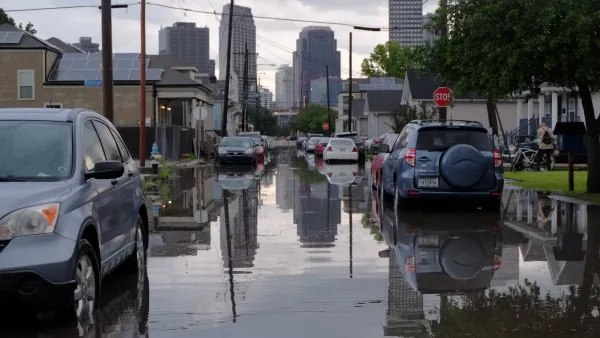
Study: New Orleans sea level rise is at 'point of no return'
Research shows that the city could be surrounded by water by the end of this century.
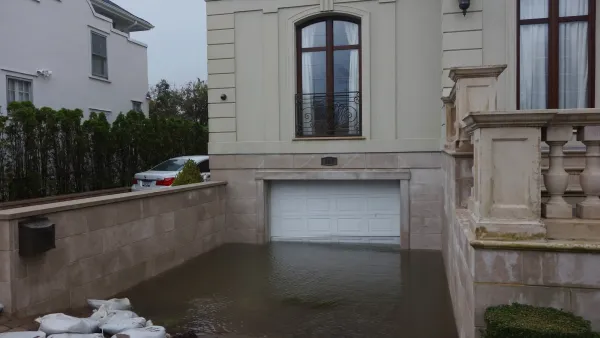
Over 500 NYC ‘Blue Zones’ at Risk of More Destructive Floods
High-risk flood zones cover roughly 20% of the city’s land.

Planetizen Federal Action Tracker
A weekly monitor of how Trump’s orders and actions are impacting planners and planning in America.

The state-sanctioned urbicide of Austin
People don’t kill cities. Freeways do.

US to reduce Colorado River water deliveries to Mexico
A new Colorado Treaty amendment reduces Mexico’s Colorado River water allocation by 250,000 acre feet.

5 New England states march closer to 800 megawatt wind energy project
Securing federal approval for the project may be complicated under the Trump administration, which has historically been hostile towards domestic wind power.

Baltimore to break ground on $50 million Transit Priority Project
The project will bring faster bus trips, safer streets and better bike connections to Baltimore.

Airbnb launches $250 million 'last-dollar financing' housing accelerator, makes first investment in Austin
The company will put $6.4 million towards affordable housing development in Texas’ capital.

FREE Course: Walkable City 1: Why Walkability?
After describing his path towards focusing on walkability as the essence of good planning, Jeff Speck marches through his five principal reasons for making more walkable places.
Reinventing Malls: Planning Alchemy—Turning Gray Fields Into Gold
The course focuses on the opportunities and imperatives that shape reinvention of mall sites.

Eagle County Government
Harvard University Graduate School of Design
Nashville Planning Department
The Architects Foundation
University of Cincinnati Online
The Pocatello Development Authority
The Urban Renewal Agency of the City of Pocatello
Journal of the American Planning Association