Research shows that the city could be surrounded by water by the end of this century.


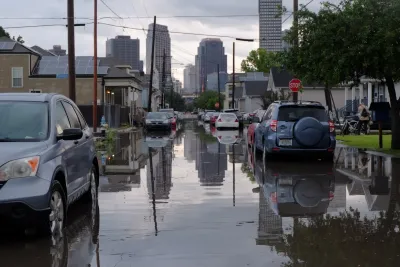
A new study published in the Nature Sustainability journal highlights the urgency of New Orleans' climate crisis, stating that the city has reached a "point of no return" in terms of future flood risks, reports Oliver Milman in The Guardian.
"Ongoing sea-level rise and the rampant erosion of wetlands in southern Louisiana will swallow up the New Orleans area within a few generations, with the new paper estimating the city 'may well be surrounded by the Gulf of Mexico before the end of this century'." The city faces threats from sea level rise, stronger hurricanes, and the subsidence of the coastline. The southern portion of Louisiana could experience a 3 meter to 7 meter rise in sea level, which would cause the shoreline to migrate as much as 62 miles inland — which would surround the cities of New Orleans and Baton Rouge.
According to the study, this makes southern Louisiana the "most physically vulnerable coastal zone in the world" and calls for "immediate action" to relocate New Orleans' 360,000 residents.
The city's levees, upgraded after Hurricane Katrina, are already not sufficient to save the city from the imminent threat. Jesse Keenan, an expert in climate adaptation at Tulane University and one of the study's co-authors, says "City, state and federal leaders should begin work to help support people moving away from the New Orleans region in a coordinated way, starting with the most vulnerable communities, such as those in Plaquemines parish who live outside the levee system." The below-sea-level city, Keenan says, is in a "terminal condition" and requires "palliative care."
According to the article, "Since the 1930s, Louisiana has lost 2,000 sq miles of land to coastal erosion, equivalent to the size of Delaware, with a further 3,000 sq miles set to vanish over the next 50 years. The rate of land loss is so rapid that a football pitch-sized area is wiped out every 100 minutes."
FULL STORY: ‘Point of no return’: New Orleans relocation must start now due to sea level, study finds

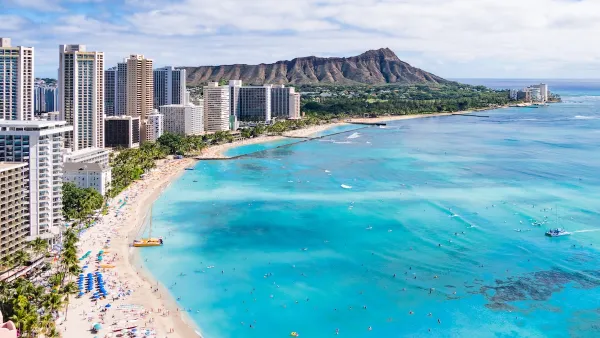
Rising Above: Innovative Solutions for Waikīkī’s Sea-Level Challenges
The University of Hawaiʻi at Mānoa’s award-winning Waikīkī sea-level rise adaptation project combines science, architecture, and community input to create scalable solutions for climate resilience and coastal flood mitigation.
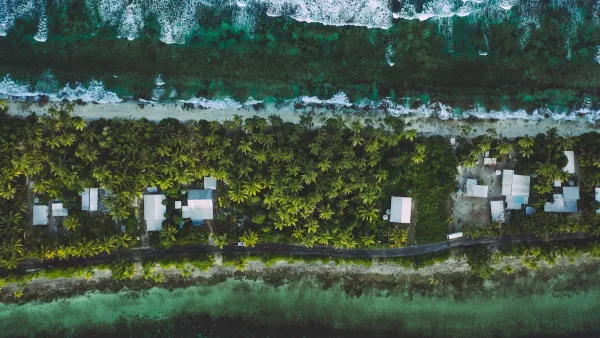
Sea Level Rise is Drowning This Pacific Island Nation; They Have a Plan
The nation of Tuvalu has created an ambitious plan to relocate its entire population and preserve key cultural and historic resources as rising seas threaten to wipe it out within three decades.
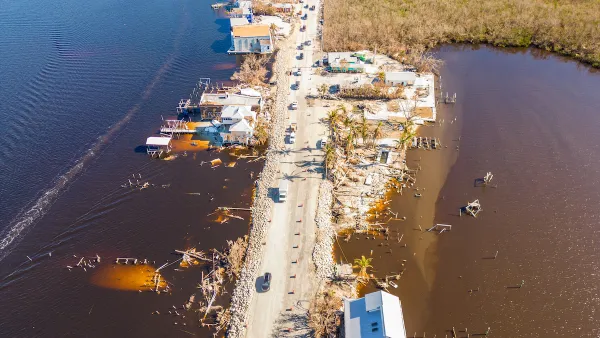
A Guide for Managed Retreat
Many communities at increased risk of flooding and wildfires will need to relocate. Here’s how local and regional governments can prepare.

Planetizen Federal Action Tracker
A weekly monitor of how Trump’s orders and actions are impacting planners and planning in America.

The state-sanctioned urbicide of Austin
People don’t kill cities. Freeways do.

US to reduce Colorado River water deliveries to Mexico
A new Colorado Treaty amendment reduces Mexico’s Colorado River water allocation by 250,000 acre feet.

5 New England states march closer to 800 megawatt wind energy project
Securing federal approval for the project may be complicated under the Trump administration, which has historically been hostile towards domestic wind power.

Baltimore to break ground on $50 million Transit Priority Project
The project will bring faster bus trips, safer streets and better bike connections to Baltimore.

Airbnb launches $250 million 'last-dollar financing' housing accelerator, makes first investment in Austin
The company will put $6.4 million towards affordable housing development in Texas’ capital.

FREE Course: Walkable City 1: Why Walkability?
After describing his path towards focusing on walkability as the essence of good planning, Jeff Speck marches through his five principal reasons for making more walkable places.
Reinventing Malls: Planning Alchemy—Turning Gray Fields Into Gold
The course focuses on the opportunities and imperatives that shape reinvention of mall sites.

Eagle County Government
Harvard University Graduate School of Design
Nashville Planning Department
The Architects Foundation
University of Cincinnati Online
The Pocatello Development Authority
The Urban Renewal Agency of the City of Pocatello
Journal of the American Planning Association