A glut of office buildings in the pro-development state is leading to some of the highest vacancy rates in the country, even as population growth spikes.


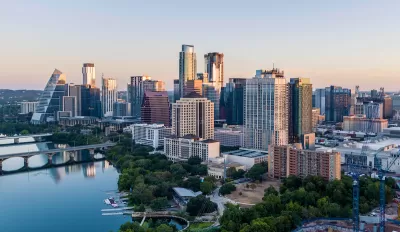
Writing in The Wall Street Journal, Konrad Putzier describes the mismatch between Texas cities’ booming population growth and the lingering vacancies in the same cities’ office buildings.
In Houston, Dallas, and Austin, roughly 25 percent of office space was vacant in the third quarter of 2023. “That was more than double New York’s vacancy rate of 12% and well above San Francisco’s vacancy rate of 17%,” Putzier writes, despite those cities having some of the nation’s highest return-to-office rates.
What does this mean? For Putzier, “Texas’ high vacancy rate offers more evidence that the U.S. office market’s biggest problem hasn’t been primarily remote work. It is a glut of buildings across the U.S., which has been decades in the making and helps explain why the country has long had much higher vacancy rates than Europe or Asia.”
Putzier explains that Texas is “an extreme case” due to its historically low land costs and lax regulations. “Most of the aging office buildings are in the suburbs around the three big cities. They are increasingly out of favor with a new generation of desk workers who tend to prefer modern buildings in walkable urban neighborhoods.” Now, the state’s biggest cities are seeing vacancy rates close to twice as high as in 2019, with some buildings seeing as much as 34 percent vacancy.
Read the full story: Texas Cities Are Booming, but Their Offices Are the Most Vacant

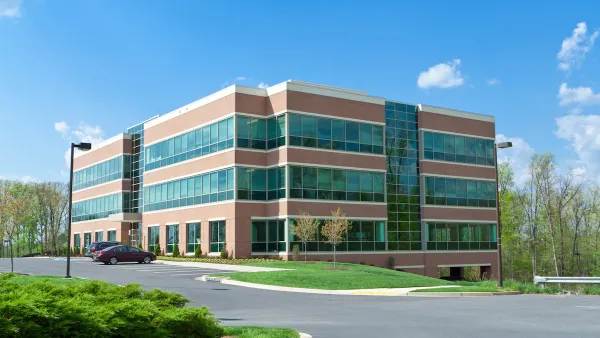
Revitalizing Suburban Office Space
Suburban office buildings are also losing tenants, but face some unique challenges compared to their urban counterparts.
One-fifth of Southern California Office Space is Vacant
Office buildings continue to lose tenants as the remote work trend persists.
The Future of Central Business Districts
Urbanist Richard Florida assesses post-pandemic possibilities for neighborhoods that once relied on 9-to-5 workers.

Planetizen Federal Action Tracker
A weekly monitor of how Trump’s orders and actions are impacting planners and planning in America.

The state-sanctioned urbicide of Austin
People don’t kill cities. Freeways do.

US to reduce Colorado River water deliveries to Mexico
A new Colorado Treaty amendment reduces Mexico’s Colorado River water allocation by 250,000 acre feet.

Brightline West’s future may rely on $6 billion federal loan
The company has until Nov. 2 to make a $400 million equity investment into its proposed high-speed rail line.

LA Metro’s ultimatum: no extra buses for LA28 if federal funding isn’t imminently secured
If Metro does not provide additional buses, LA28 organizers will have to find a new way to manage Olympic traffic. LA28’s budget does not include a line item for transit.

Colorado’s Largest Data Center Could Rise Next to Homes — Without a Public Hearing
The proposed campus would consume 11 times the power of Denver International Airport; as it has across the country, opposition mounts.

FREE Course: Walkable City 1: Why Walkability?
After describing his path towards focusing on walkability as the essence of good planning, Jeff Speck marches through his five principal reasons for making more walkable places.
Reinventing Malls: Planning Alchemy—Turning Gray Fields Into Gold
The course focuses on the opportunities and imperatives that shape reinvention of mall sites.

Eagle County Government
Harvard University Graduate School of Design
Nashville Planning Department
The Architects Foundation
University of Cincinnati Online
The Pocatello Development Authority
The Urban Renewal Agency of the City of Pocatello
Journal of the American Planning Association