Suburban office buildings are also losing tenants, but face some unique challenges compared to their urban counterparts.


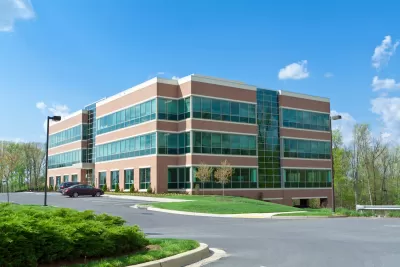
Suburban office buildings, like their urban counterparts, face higher vacancy rates since the pandemic. While, as Jared Brey explains in Governing, suburban office parks tend to be more isolated and thus less tied to the surrounding economy, their success or failure still has a major impact on their communities and local tax revenue. “Suburbs all over the country are working to redevelop office parks in hopes of heading off abandonment and decay.”
Additionally, the design of many suburban office centers, surrounded and isolated by seas of parking, puts them at a disadvantage. “Even before the pandemic, many suburbs recognized the need to revitalize those spaces, and build connections between office space, housing, public outdoor space and other commercial uses.”
Jurisdictions such as Arlington County, Virginia and Dublin, Ohio are working to support the redevelopment and revitalization of commercial areas through updated regulations that acknowledge changing conditions. “Zoning regulations for office districts currently don’t allow certain types of retail or higher education, for example. Some permitting processes slow things down, requiring developers to lock in certain uses or even specific types of tenants early in the process.”
FULL STORY: The Challenges Suburbs Face in Refilling Office Space

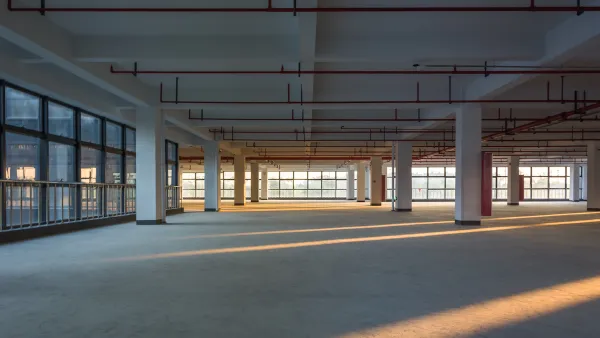
One-fifth of Southern California Office Space is Vacant
Office buildings continue to lose tenants as the remote work trend persists.
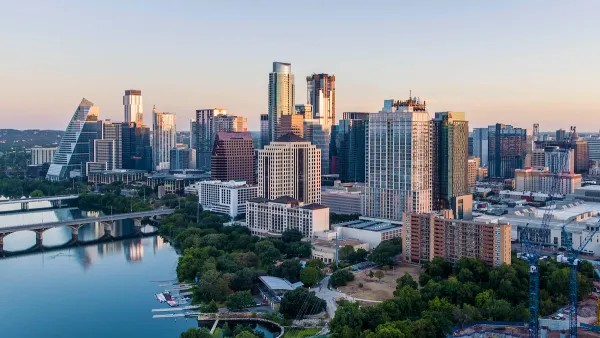
Texas Cities’ Office Vacancy Rates Close to Double New York, San Francisco
A glut of office buildings in the pro-development state is leading to some of the highest vacancy rates in the country, even as population growth spikes.
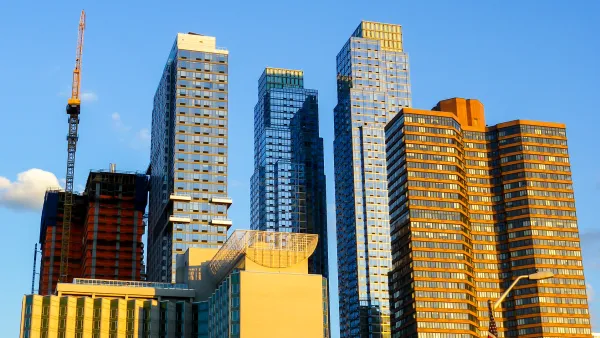
The Future of Central Business Districts
Urbanist Richard Florida assesses post-pandemic possibilities for neighborhoods that once relied on 9-to-5 workers.

Planetizen Federal Action Tracker
A weekly monitor of how Trump’s orders and actions are impacting planners and planning in America.

The state-sanctioned urbicide of Austin
People don’t kill cities. Freeways do.

US to reduce Colorado River water deliveries to Mexico
A new Colorado Treaty amendment reduces Mexico’s Colorado River water allocation by 250,000 acre feet.

5 New England states march closer to 800 megawatt wind energy project
Securing federal approval for the project may be complicated under the Trump administration, which has historically been hostile towards domestic wind power.

Baltimore to break ground on $50 million Transit Priority Project
The project will bring faster bus trips, safer streets and better bike connections to Baltimore.

Airbnb launches $250 million 'last-dollar financing' housing accelerator, makes first investment in Austin
The company will put $6.4 million towards affordable housing development in Texas’ capital.

FREE Course: Walkable City 1: Why Walkability?
After describing his path towards focusing on walkability as the essence of good planning, Jeff Speck marches through his five principal reasons for making more walkable places.
Reinventing Malls: Planning Alchemy—Turning Gray Fields Into Gold
The course focuses on the opportunities and imperatives that shape reinvention of mall sites.

Eagle County Government
Harvard University Graduate School of Design
Nashville Planning Department
The Architects Foundation
University of Cincinnati Online
The Pocatello Development Authority
The Urban Renewal Agency of the City of Pocatello
Journal of the American Planning Association