Owners of small buildings can get up to $50,000 per unit to fund decarbonization retrofits.



A new forgivable loan program from the city of Boston will help small housing owners switch their buildings to electric power, reports Ysabelle Kempe in Smart Cities Dive.
“There are several stipulations for the owners, who will be selected through an October lottery and can get up to $50,000 per unit: They must live in the building, have a household income below a certain threshold and charge below a certain amount for rent, plus the building must have been built before 1999.”
The program is part of a larger effort to reduce dependence on fossil fuels and introduce renewable energy alternatives. “The city says the work will give residents better indoor air quality and comfort, along with lower utility bills. But the city also wants to avoid the upgraded housing resulting in the displacement of current tenants, and building owners given grants are not allowed to displace tenants in good standing or unreasonably raise rent as a result of the retrofits.”
FULL STORY: Boston launches pilot to help small housing owners go electric


How to Decarbonize the Electric Grid
Eliminating fossil fuels means shifting how electricity is produced and distributed from the source.
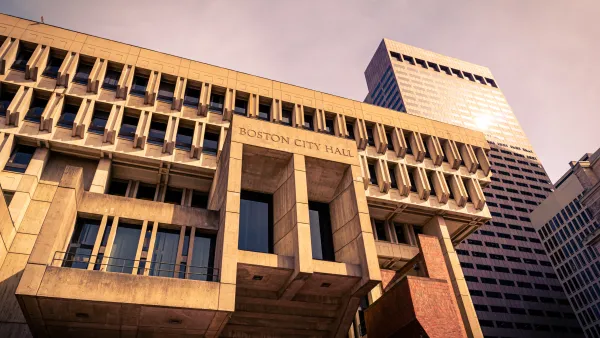
Boston Eliminates Fossil Fuels in New City-Owned Buildings
Mayor Michelle Wu said the new rule will help boost demand for green materials and create new jobs in the green building sector.

Cincinnati To Electrify Municipal Fleet by 2035
The city of Cincinnati will beef up its efforts to shift to renewable energy starting next week with electric police cars, fire trucks, and other city vehicles.

Planetizen Federal Action Tracker
A weekly monitor of how Trump’s orders and actions are impacting planners and planning in America.

The state-sanctioned urbicide of Austin
People don’t kill cities. Freeways do.

US to reduce Colorado River water deliveries to Mexico
A new Colorado Treaty amendment reduces Mexico’s Colorado River water allocation by 250,000 acre feet.

5 New England states march closer to 800 megawatt wind energy project
Securing federal approval for the project may be complicated under the Trump administration, which has historically been hostile towards domestic wind power.

Baltimore to break ground on $50 million Transit Priority Project
The project will bring faster bus trips, safer streets and better bike connections to Baltimore.

Airbnb launches $250 million 'last-dollar financing' housing accelerator, makes first investment in Austin
The company will put $6.4 million towards affordable housing development in Texas’ capital.

FREE Course: Walkable City 1: Why Walkability?
After describing his path towards focusing on walkability as the essence of good planning, Jeff Speck marches through his five principal reasons for making more walkable places.
Reinventing Malls: Planning Alchemy—Turning Gray Fields Into Gold
The course focuses on the opportunities and imperatives that shape reinvention of mall sites.

Eagle County Government
Harvard University Graduate School of Design
Nashville Planning Department
The Architects Foundation
University of Cincinnati Online
The Pocatello Development Authority
The Urban Renewal Agency of the City of Pocatello
Journal of the American Planning Association